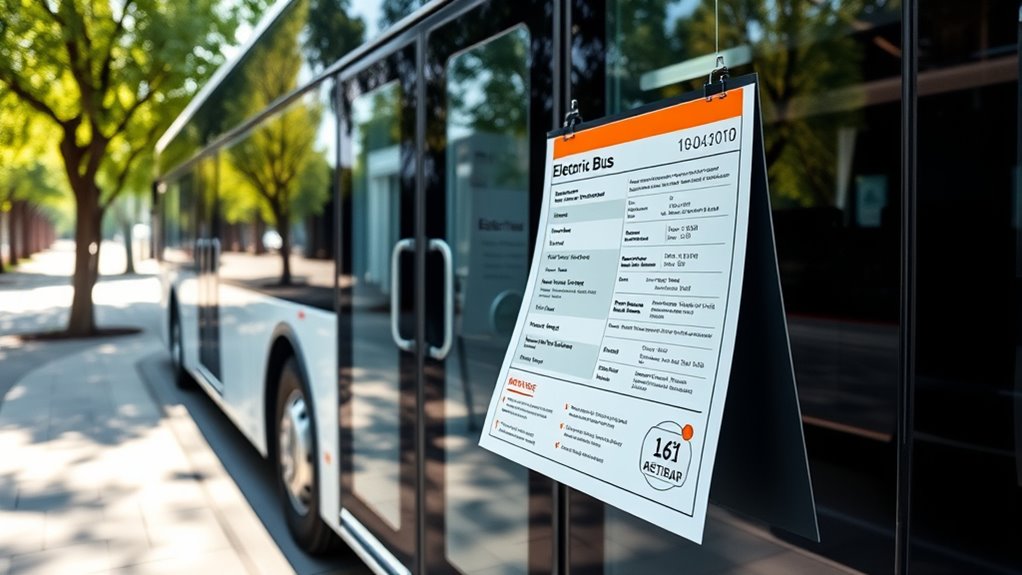

To understand an electric bus specification sheet, focus on key details like battery capacity, charging protocols, and infrastructure needs. Check the battery size in kWh to see if it fits your route requirements. Look at charging standards to ensure compatibility with your stations and note power levels for fast charging. Also, review procedures for safe and effective recharging and consider battery warranty info. Continuing will help you grasp how these factors influence your fleet’s performance and maintenance.
Key Takeaways
- Focus on battery capacity (kWh) and range to assess operational suitability and route planning.
- Check charging protocols and connector types (e.g., CCS, CHAdeMO) for compatibility and charging speed.
- Review infrastructure requirements like voltage, current, and maximum power to ensure supporting facilities.
- Understand charging procedures and battery care instructions to maintain battery health and safety.
- Consider battery warranty, lifespan, and additional charging specs for long-term fleet management.

When you’re looking at an electric bus specification sheet, understanding the key details can seem overwhelming at first. But with a clear focus, you can quickly grasp the essential information needed to evaluate whether the bus fits your needs. One of the most critical aspects is the battery capacity, which indicates how much energy the bus’s battery can store. A larger battery capacity usually means a longer range, allowing the bus to travel more miles before needing a recharge. This figure is often expressed in kilowatt-hours (kWh). Knowing the battery capacity helps you understand how suitable the bus is for your routes, especially if you require extended service without frequent charging stops. Alongside this, check for details about the charging protocols, which specify how the battery recharges. These protocols include the type of charging connector, charging speed, and whether the bus supports fast charging or standard AC charging. Fast charging protocols can considerably reduce downtime, enabling the bus to be recharged to a substantial level in 30 minutes or less, which is ideal for busy transit schedules. Conversely, standard charging might take several hours, so knowing these details helps you plan your maintenance and operational schedule effectively. Many specification sheets also mention the charging voltage and current, which are essential for ensuring that your existing infrastructure can support the bus’s charging needs or if upgrades are necessary. It’s important to understand whether the bus uses CCS (Combined Charging System), CHAdeMO, or other standards, as compatibility with your charging stations will influence installation costs and operational efficiency. Additionally, high power charging capabilities can significantly impact your fleet’s turnaround time, especially during peak hours. Furthermore, pay attention to the recommended charging procedures, which include the step-by-step process for safe and efficient recharging. Some buses require specific pre-conditioning or cooling procedures before charging, especially in extreme weather conditions. Understanding these protocols can help prevent damage to the battery and extend its lifespan. Some specification sheets also detail the maximum charging power the bus can handle, expressed in kilowatts (kW). This information tells you how quickly you can expect the battery to recharge and whether your current charging stations can meet the bus’s requirements. Finally, consider any notes about the battery’s warranty or expected lifespan, as these factors can influence your long-term planning and budgeting. By carefully reviewing the battery capacity and charging protocols, you’ll be better equipped to make informed decisions, ensuring your electric buses operate efficiently and reliably within your fleet.

The 2027-2032 World Outlook for Electric Bus Charging Stations
As an affiliate, we earn on qualifying purchases.
As an affiliate, we earn on qualifying purchases.
Frequently Asked Questions
How Do I Compare Different Electric Bus Models Effectively?
To compare different electric bus models effectively, focus on battery lifespan and cost comparison. Check how long the batteries last under typical use and consider warranty coverage. Look at the total cost of ownership, including initial price, maintenance, and charging expenses. This helps you determine which model offers the best value for your needs, ensuring you choose a bus that balances performance, durability, and affordability.
What Maintenance Is Required for Electric Bus Batteries?
You need to regularly check your electric bus batteries’ health, focusing on their battery lifespan and charging cycles. Keep an eye on the battery’s temperature and voltage, and guarantee proper charging practices to avoid overcharging or deep discharges. Periodically inspect for corrosion or damage, and follow manufacturer guidelines for maintenance. Proper care extends battery life, minimizes performance issues, and ensures your bus runs reliably over its lifespan.
Are There Incentives or Subsidies for Electric Bus Purchases?
Yes, you can benefit from government incentives and subsidy programs when purchasing an electric bus. These programs aim to promote cleaner transportation and often provide substantial financial support, reducing your overall costs. Check with local, state, or federal agencies to find available grants, rebates, or tax credits. Taking advantage of these incentives can make your electric bus investment more affordable and help you meet sustainability goals efficiently.
How Does Charging Infrastructure Impact Bus Operation?
Charging infrastructure greatly influences your bus operations; studies show poorly planned stations can cause 30% delays. You need to carefully consider charging station placement to guarantee buses can charge efficiently without disrupting routes. Also, evaluate grid capacity considerations, so your power supply supports charging demands. Proper infrastructure enables smooth, reliable operations, reduces downtime, and maximizes your electric bus investment. Planning ahead keeps your fleet running seamlessly and optimizes overall performance.
What Safety Features Are Standard on Electric Buses?
You’ll find that standard safety features on electric buses include robust safety standards like emergency shutdowns, fire suppression systems, and reinforced battery compartments. These features protect your passengers and vehicle, guaranteeing safety during operation. Additionally, monitoring systems help extend battery life by preventing overcharging or overheating. By adhering to safety standards, you secure reliable performance and safeguard everyone on board, making safety a top priority in your electric bus operation.

6 in 1 Cigarette Lighter USB Charger,PD+QC3.0 Car Charger USB C Fast Charge with Voltage Display,Multi Port Super Fast Cars Chargers Adapter Car Accessories for 12V/24V Vehicles
6-Port Configuration: This car cigarette lighter adapter contains six charging openings: 1* SCP/QC3.0 port, 2* 3.1A connectors, 2*…
As an affiliate, we earn on qualifying purchases.
As an affiliate, we earn on qualifying purchases.
Conclusion
Now that you know how to read an electric bus spec sheet, you’re like a captain steering through a sea of numbers and details. With each feature clearly understood, you can confidently navigate your choices, avoiding hidden storms. Remember, every specification is a lighthouse guiding your decision-making. So, step aboard this knowledge ship, and let it lead you safely to the perfect electric bus—your trusty vessel on the journey ahead.

Schumacher Electric 6A Car Battery Charger and 50A Engine Starter, 4-in-1 Solution, Maintainer, 10A Boost, for 12V Power Sport, Automotive, and Marine Batteries, SC1361
4-in-1 Device – Starts, charges, maintains, and reconditions batteries
As an affiliate, we earn on qualifying purchases.
As an affiliate, we earn on qualifying purchases.

4 Pieces Electrical Motor Maintenance Marking Feet Repairing Tools Maintenance Tools Easy To Install
and
As an affiliate, we earn on qualifying purchases.
As an affiliate, we earn on qualifying purchases.