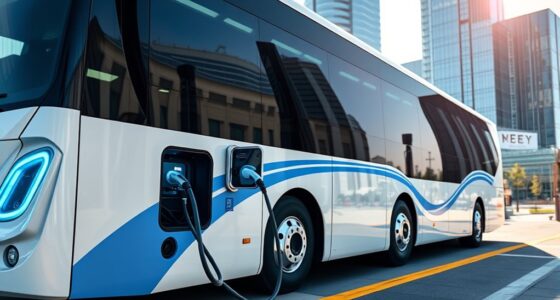
Regenerative braking works by turning the electric bus’s motor into a generator when you press the brake pedal. This captures the kinetic energy that would normally be lost as heat and stores it in the battery. This process not only makes your bus more energy-efficient and extends its range but also reduces wear on the brakes. As system technology advances, understanding how regenerative braking recovers energy can help you see its full benefits—and there’s more to discover.
Key Takeaways
- Regenerative braking uses the electric motor as a generator to convert kinetic energy into electrical energy during braking.
- It captures energy that would normally be lost as heat and stores it in the vehicle’s battery for later use.
- The system engages automatically when the brake pedal is pressed, reducing reliance on traditional friction brakes.
- Effective energy recovery depends on battery capacity, health, and the system’s sophistication.
- Benefits include increased driving range, reduced brake wear, lower maintenance costs, and overall improved energy efficiency.
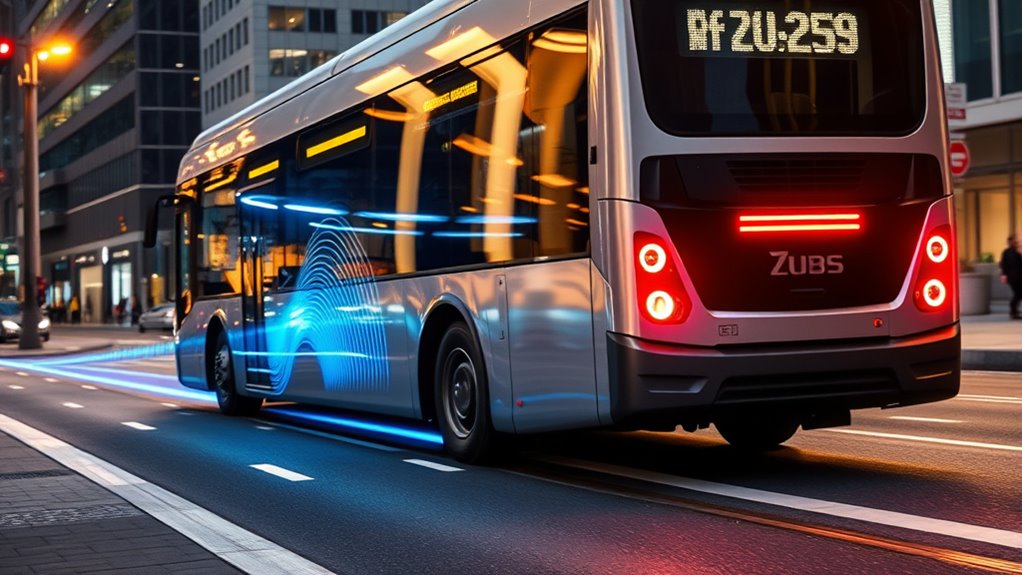
Regenerative braking is a technology that helps electric and hybrid vehicles recover energy during braking, instead of wasting it as heat. When you press the brake pedal, instead of solely relying on traditional friction brakes, the vehicle’s electric motor switches roles and acts as a generator. This process captures the kinetic energy that would otherwise dissipate and converts it into electrical energy. This recovered energy is then stored in the vehicle’s battery, improving overall battery efficiency and extending driving range. For electric buses, which often travel long distances and frequent stops, regenerative braking becomes a fundamental feature to optimize energy use and reduce fuel consumption.
Regenerative braking captures energy during stops, boosting efficiency and extending electric bus range.
As you brake, the system engages automatically, reducing the load on the mechanical braking system and decreasing wear on brake pads. This not only conserves energy but also reduces maintenance costs over time. The energy recovery process feeds directly into the battery, replenishing its charge without needing external power sources. This means your bus becomes more energy-efficient because it reuses energy that would have been lost, making every trip more sustainable. The more effectively the system recovers energy, the less you need to recharge from external sources, which can lower operational costs and carbon footprint.
Battery efficiency plays a key role in how well regenerative braking performs. Modern batteries can store and release energy quickly, allowing the system to maximize recovery during frequent stops typical in city routes. When the battery is in good condition and has sufficient capacity, more energy can be captured and reused, enhancing overall efficiency. Conversely, if the battery is near full or in poor condition, the system may not be able to recover as much energy, leading to less effective energy recovery and slightly lower efficiency. That’s why maintaining a healthy battery is essential to optimizing regenerative braking benefits.
Energy recovery isn’t just about saving energy; it’s about making your bus smarter and more sustainable. By harnessing energy during braking, you reduce reliance on external power sources and cut emissions. Plus, with ongoing advancements, regenerative braking systems are becoming more sophisticated, capable of recovering a higher percentage of braking energy and seamlessly integrating with other energy management systems. As a driver or fleet manager, understanding how regenerative braking works helps you appreciate the importance of regular maintenance to keep the system operating at peak efficiency. In the end, this technology isn’t just about saving energy—it’s about transforming how we think about transportation, making it cleaner, cheaper, and more efficient.
In addition, advancements in commercial grade heat pump technology are improving energy efficiency across various applications, which aligns with the goal of reducing operational costs and environmental impact in transportation sectors.
Top picks for "regenerative brak electric"
Open Amazon search results for this keyword.
As an affiliate, we earn on qualifying purchases.
Frequently Asked Questions
How Long Does Regenerative Braking System Last Before Maintenance?
Your regenerative braking system typically lasts around 8 to 10 years before needing maintenance, depending on usage and environment. Its durability relies on proper care and regular inspections. Maintenance intervals usually occur every 20,000 to 30,000 miles, ensuring the system stays efficient. Keep an eye on performance and promptly address any issues to maximize system durability and prevent costly repairs, ultimately extending the lifespan of your electric bus’s regenerative braking system.
Can Regenerative Braking Be Used While the Bus Is Stationary?
You can’t use regenerative braking while the bus is stationary because it relies on wheel movement to recover energy. When you approach a bus stop, the system engages during deceleration, capturing stationary energy and converting it into electrical power. This bus stop recovery process helps recharge the batteries efficiently. However, once the bus is completely still, regenerative braking doesn’t function until you start moving again.
What Are the Limitations of Regenerative Braking in Cold Weather?
In cold weather, regenerative braking can be less effective because low temperatures reduce battery efficiency and braking performance. You might notice decreased braking efficiency, which means the system doesn’t recover as much energy as it does in warmer conditions. To compensate, buses often rely more on traditional friction brakes during extreme cold. Keep in mind, cold temperatures can also slow battery charging, further limiting regenerative braking’s effectiveness.
How Does Regenerative Braking Affect Passenger Ride Comfort?
Regenerative braking can enhance passenger comfort by providing smoother deceleration and reducing sudden stops. It improves ride stability, making your journey more comfortable, especially during stops and turns. However, if not properly managed, it might cause minor jerks or uneven deceleration, affecting comfort. Overall, with advanced systems, regenerative braking helps create a steadier, more comfortable ride, making your travel experience smoother and more enjoyable.
Are There Safety Concerns Associated With Regenerative Braking Systems?
You might wonder if regenerative braking systems pose safety concerns. Generally, they’re safe when properly maintained, but system malfunctions could lead to unexpected braking behavior. That’s why emergency protocols are in place to handle such situations. Regular inspections guarantee the system works correctly, reducing risks. If you notice any irregular braking, you should report it immediately to prevent potential hazards. Overall, with proper safeguards, regenerative braking enhances safety.
Conclusion
Imagine gliding down a busy street, your electric bus gracefully converting its slowing momentum into stored energy, like a river feeding a reservoir. Regenerative braking transforms your bus’s descent into a silent, efficient recharge, conserving power with every stop. As you watch the city move around you, know that each brake isn’t just about stopping—it’s about capturing energy, like catching sunlight in a jar, and giving it new life to power your journey forward.