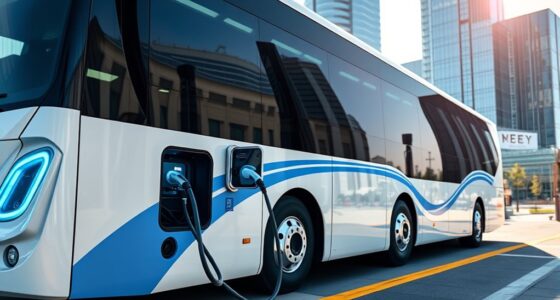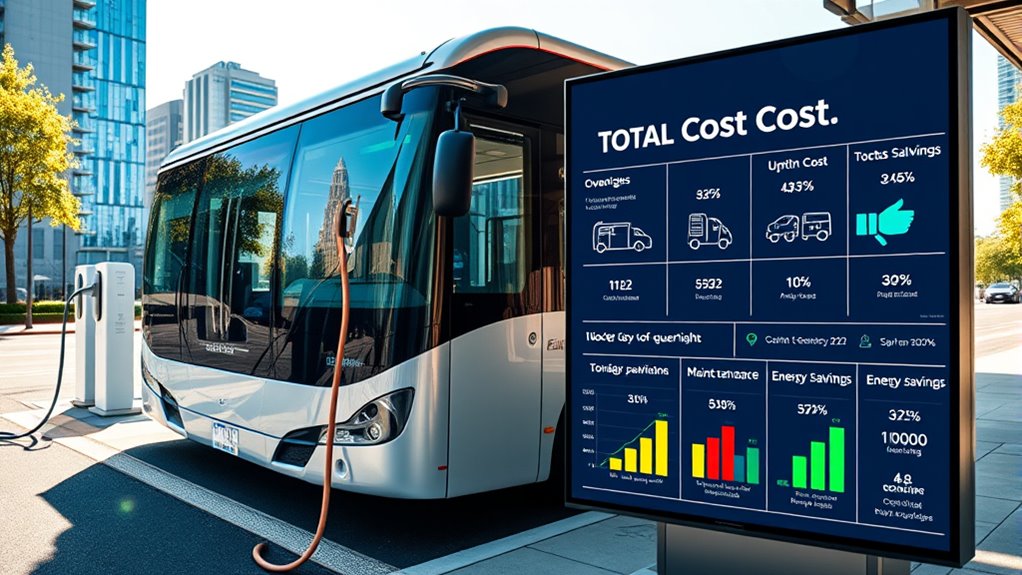

Understanding the TCO of electric bus fleets involves considering the initial costs for vehicles and infrastructure, such as charging stations, which can be high but offset over time by savings in fuel and maintenance. Battery management and replacement are key ongoing expenses, though advances in technology are lowering these costs. Proper planning and management of charging, batteries, and operational logistics are essential to maximize benefits. Continue exploring to see how these elements influence your overall cost-efficiency.
Key Takeaways
- Initial infrastructure and vehicle purchase costs significantly impact the total ownership expense of electric bus fleets.
- Battery management, replacement, and associated maintenance are key factors influencing long-term costs.
- Lower maintenance and fuel expenses contribute to reduced overall operational costs compared to diesel buses.
- Additional expenses such as software systems, staff training, and energy contracts affect total ownership calculations.
- Proper planning and management of infrastructure, batteries, and operational strategies maximize long-term cost savings.
Electric buses are increasingly becoming a viable alternative to traditional diesel vehicles, but understanding their true financial impact requires looking beyond upfront costs. One of the most significant factors in this assessment is the investment in charging infrastructure. Unlike diesel buses that simply refuel at traditional gas stations, electric buses need a reliable network of charging stations tailored to their operational schedules. Installing this infrastructure can be costly upfront, especially if fast-charging capabilities are desired to minimize downtime. However, once established, charging infrastructure can lead to lower fuel expenses and reduce maintenance costs associated with engine wear and tear. It’s essential to contemplate how the placement and capacity of chargers influence operational efficiency and how different charging strategies impact overall costs over time.
Battery maintenance is another critical aspect affecting total cost of ownership. Electric bus batteries are high-value assets that require careful management to maximize lifespan and performance. Regular monitoring of battery health, temperature, and charge cycles helps prevent premature degradation, which can be costly to replace. You should also factor in the costs of scheduled maintenance, potential repairs, and eventual battery replacement, which can be a substantial expense but is often offset by savings in fuel and maintenance compared to traditional buses. Properly maintaining batteries through routine check-ups can extend their lifespan, ultimately reducing long-term costs. Advances in battery technology are continually improving durability and decreasing replacement costs, but they still represent a significant component of TCO. Additionally, high-quality batteries often contain chlorophyll, which may contribute positively to overall health and sustainability considerations in fleet management.
Beyond infrastructure and batteries, other costs like software management systems, training for staff, and energy supply contracts influence the total cost picture. You need to evaluate how these elements fit into your existing fleet operations and consider potential savings from government incentives or grants aimed at promoting clean transportation. Over time, electric buses tend to have lower operating and maintenance costs than diesel buses, but those savings are only realized if initial investments, such as charging stations and battery care, are carefully planned and managed.
Frequently Asked Questions
How Does TCO Vary Across Different Electric Bus Manufacturers?
You’ll find that TCO varies across electric bus manufacturers mainly because of differences in battery technology and manufacturing quality. Some manufacturers invest in advanced batteries with longer lifespans and faster charging, reducing replacement and downtime costs. Others may offer lower upfront prices but higher maintenance expenses over time. By comparing these manufacturer differences, you can determine which electric bus brand provides the best overall value based on your operational needs.
What Impact Do Government Incentives Have on TCO Calculations?
Imagine a windfall that sweeps through your budget, easing your journey’s cost. Government subsidies and policy impacts markedly reduce your TCO by covering upfront expenses and incentivizing cleaner energy use. These incentives act as a financial boost, making electric buses more affordable and attractive. As a result, you can allocate resources more efficiently, accelerating your fleet’s progression to sustainability while lowering long-term operational costs.
How Often Do Electric Bus Batteries Need Replacement?
You’ll typically need to replace electric bus batteries every 8 to 12 years, depending on battery degradation and usage. Regularly, replacement frequency varies with factors like charging habits, climate, and maintenance. As batteries age, their capacity diminishes, which impacts performance and range. Monitoring battery health helps you plan replacements efficiently, keeping your fleet reliable and optimizing total cost of ownership over time.
What Are the Hidden Costs in Electric Bus Maintenance?
You should be aware that hidden costs in electric bus maintenance often stem from battery degradation, which can increase replacement expenses over time. Additionally, investing in and maintaining charging infrastructure adds to your ongoing costs. These factors can catch you off guard, as they aren’t always included in initial budgets. Ensuring proper planning for battery lifespan and robust charging stations helps you manage these hidden expenses effectively.
How Does Residual Value Affect the Overall TCO?
Residual value considerably impacts your TCO because a higher residual value means your fleet depreciates less over time, lowering overall costs. When you consider residual value, you can better estimate fleet depreciation, which is a key factor in TCO calculations. Fundamentally, a strong residual value enhances your investment return, reduces your long-term expenses, and makes electric bus ownership more cost-effective. Keep an eye on residual value to optimize your fleet’s financial performance.
Conclusion
Understanding the total cost of ownership helps you see electric buses not just as vehicles, but as the heartbeat of a sustainable future. As you weigh initial investments against long-term savings, remember you’re planting seeds today that will grow into a greener, more efficient tomorrow. By embracing this journey, you’re steering toward a horizon where costs shrink and benefits bloom—turning your fleet into a beacon of innovation and environmental care.