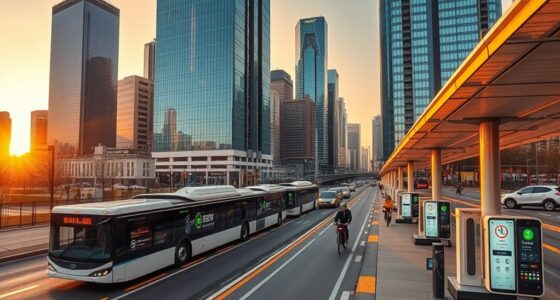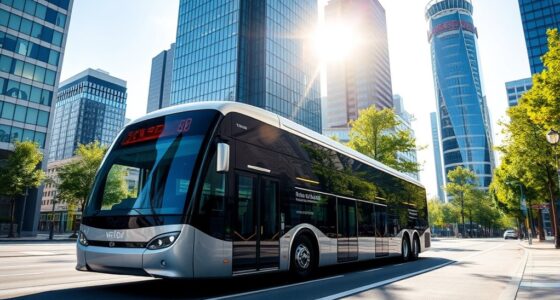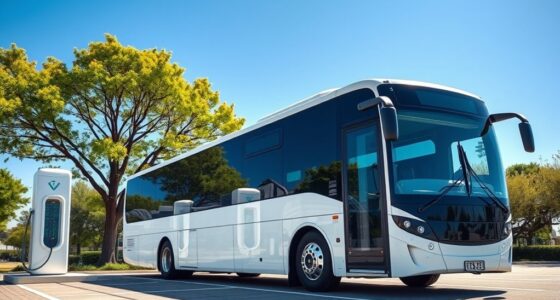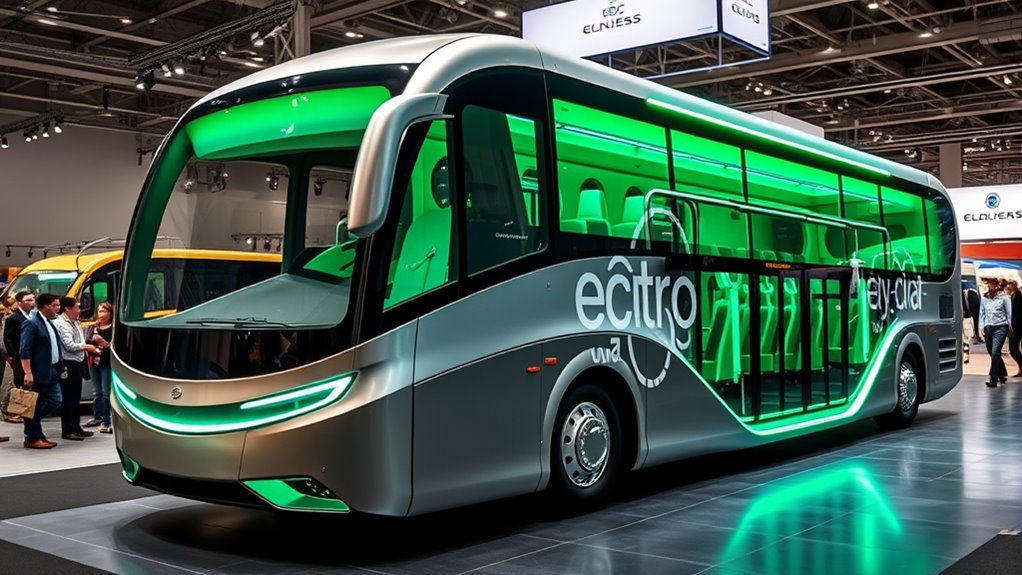
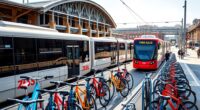
Busworld 2025 shows that the next decade of bus design will focus on sustainability, with electric propulsion leading the way and larger batteries for longer ranges. Passenger comfort will improve with spacious, ergonomic interiors, smart climate control, and better accessibility features. Advanced technology like digital displays, onboard Wi-Fi, and USB ports will enhance convenience. Sleek, modern exteriors reflect a shift toward more environmentally friendly, connected, and user-oriented buses—stay with us to uncover the full picture.
Key Takeaways
- Emphasis on electric propulsion and larger batteries for longer, more reliable routes.
- Interior designs focus on passenger comfort with ergonomic seating and advanced climate control systems.
- Integration of smart technology, including digital displays, Wi-Fi, USB ports, and accessibility features.
- Exterior aesthetics showcase sleek, modern, and sustainable vehicle designs with streamlined appearances.
- Overall trends highlight quieter, healthier, and more connected bus experiences aligned with environmental goals.

As Busworld 2025 unfolds, the focus shifts toward innovative bus designs that prioritize sustainability, efficiency, and passenger comfort. You’ll notice that electric propulsion dominates the discussion, signaling a clear move away from traditional diesel engines. Manufacturers are investing heavily in electric powertrains because they not only reduce emissions but also lower operational costs. You’ll see buses with sleek, modern exteriors, but the real transformation is happening inside. Electric motors are quieter and smoother, creating a more relaxed and less stressful ride for you and other passengers. This quiet operation enhances passenger comfort considerably, making commutes more pleasant and less exhausting.
Electric motors make buses quieter and smoother, significantly boosting passenger comfort and creating a more relaxing ride.
Designers are also rethinking the passenger experience from the ground up. Expect to find spacious, ergonomic seating layouts that maximize space without sacrificing comfort. High-quality materials, adjustable seating, and improved legroom are becoming standard, ensuring you feel less cramped during your journey. Additionally, large, panoramic windows and smart climate control systems contribute to a more enjoyable environment. You’ll notice that air conditioning and heating are more efficient, maintaining a comfortable temperature regardless of the weather outside. Some buses incorporate advanced HVAC systems that improve air quality, which is especially important given current health considerations. These features work together to create a healthier, more inviting space for you to relax or work during your trip. Furthermore, the integration of raw food diet principles in bus design is inspiring innovations that prioritize natural and sustainable materials, reflecting a broader shift toward environmentally conscious manufacturing.
Another key trend is the integration of smart technology to enhance passenger comfort and convenience. You’ll find intuitive digital displays providing real-time updates on routes, stops, and energy consumption, helping you plan your journey better. Many buses now include USB charging ports, Wi-Fi connectivity, and even onboard entertainment options, turning transit time into productive or relaxing moments. Accessibility features are also expanding, with low-floor designs, tactile guidance, and audio-visual alerts making public transportation more inclusive for everyone.
From an aesthetic perspective, bus designs are becoming more streamlined and user-friendly. The emphasis on sustainability doesn’t just mean greener materials but also smarter use of space and energy. The emphasis on electric propulsion means buses can be designed with larger batteries, giving you longer ranges and less downtime between charges. This focus on efficiency ensures that buses operate reliably and consistently, reducing delays and making public transit more dependable. The future of bus design, as revealed at Busworld 2025, promises a more sustainable, comfortable, and connected experience—one that puts your needs at the core of every innovation.
Top picks for "busworld reveal about"
Open Amazon search results for this keyword.
As an affiliate, we earn on qualifying purchases.
Frequently Asked Questions
What Specific Technological Innovations Will Define Future Buses?
You’ll see electric propulsion become standard, making buses cleaner and more efficient. Smart connectivity will also define future buses, allowing seamless communication between vehicles, infrastructure, and passengers. These innovations will enhance safety, improve route management, and provide real-time information. As a result, your bus rides will be more sustainable, convenient, and integrated into smarter urban mobility systems, shaping the future of public transportation.
How Will Sustainability Influence Bus Design Choices?
You’ll notice sustainability shaping bus design with a focus on eco-friendly materials and emission reduction. Manufacturers will prioritize lighter, greener materials to lower environmental impact while integrating advanced tech to cut emissions. These choices not only support greener cities but also appeal to eco-conscious passengers. Expect future buses to blend sustainability seamlessly into their design, making every ride a step toward a cleaner, healthier planet.
Will Autonomous Driving Features Be Standard in Future Buses?
Autonomous driving features will likely become standard in future buses, enhancing safety systems and operational efficiency. You’ll see advanced autonomous features that reduce human error and improve passenger safety. These buses will incorporate smart safety systems, such as collision avoidance and adaptive cruise control, making your ride safer and more reliable. As technology advances, autonomous capabilities will be integrated seamlessly, transforming bus travel into a more efficient, safer experience for everyone.
How Will Passenger Comfort Evolve in Upcoming Bus Models?
You’ll notice passenger comfort improves with smarter seating ergonomics and advanced climate control in upcoming bus models. Designers focus on adjustable, supportive seats that reduce fatigue, while climate systems automatically adapt to passenger needs, ensuring a comfortable ride regardless of weather. These innovations make your journey more pleasant, encouraging public transit use and enhancing overall travel experiences as bus design continues to prioritize passenger well-being.
What Are the Projected Costs of Implementing New Bus Technologies?
You should consider that the projected costs of implementing new bus technologies vary, but a thorough cost analysis helps you plan your budget effectively. Expect initial expenses to be higher due to advanced features like electrification and smart systems. However, ongoing savings from reduced fuel and maintenance costs can offset these investments over time. Proper budget planning guarantees you can adopt innovative solutions without straining your finances.
Conclusion
As Busworld 2025 boldly beckons a bus-building breakthrough, you’ll see a shift toward sleek, sustainable, and smart designs shaping your future rides. This showcase signals a sweeping, sustainable shift in styling, safety, and technology, promising a brighter, better bus experience. So, stay savvy and excited—because the bus of tomorrow is shaping up to be safer, smarter, and more sustainable, steering us toward a sensational, sustainable transportation future.