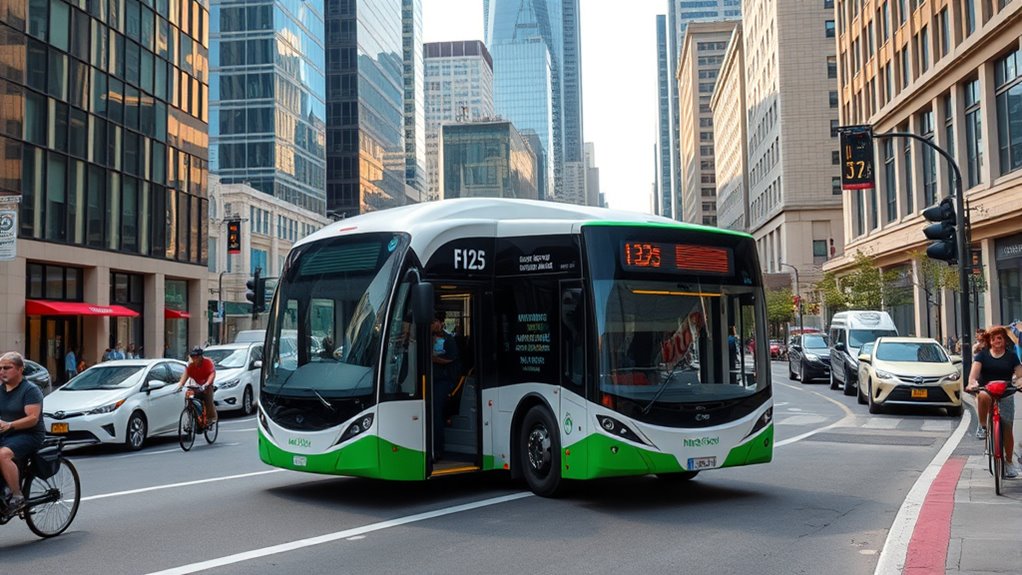
Electric buses play a key role in easing traffic congestion by utilizing dedicated lanes and smart technology that keep them moving efficiently. They help reduce private vehicle use, cut emissions, and lower noise levels, making your city more livable. With real-time tracking and improved infrastructure, their operation becomes seamless. If you want to discover how cities harness these benefits for better traffic flow, there’s more to explore.

Get business pricing on monitors, keyboards and dev gear
- Business-only prices and quantity discounts
- Tax-exempt purchasing
- Multiple users, one account, clear invoices
Key Takeaways
- Electric buses use dedicated lanes to avoid traffic delays and maintain consistent speeds.
- Their integration with smart traffic systems optimizes flow and reduces congestion.
- Increased electric bus adoption decreases private vehicle use, easing overall traffic load.
- Electric buses’ quick charging and efficient routes improve transit capacity and reduce road congestion.
- The quieter operation of electric buses minimizes noise-related disruptions, contributing to smoother traffic movement.
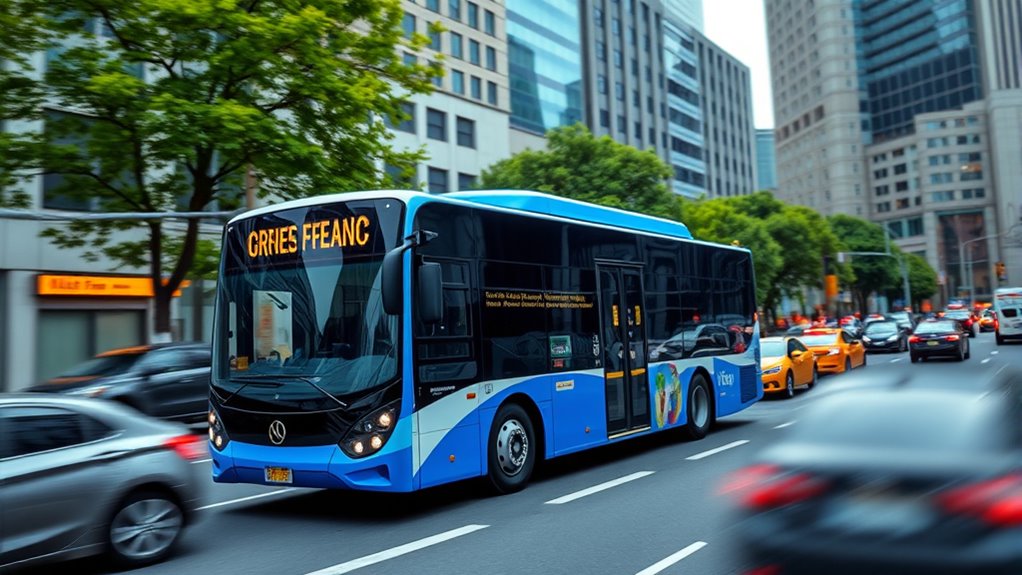
Electric buses are transforming urban transportation by offering a sustainable alternative to traditional diesel models, which helps reduce traffic congestion and improve air quality. By integrating smart technologies and dedicated lanes, electric buses can move more people efficiently, easing the pressure on city streets.
Electric buses revolutionize city transit, reducing congestion and emissions through smart tech and dedicated lanes.
When buses utilize dedicated Bus Rapid Transit (BRT) lanes, they avoid the delays caused by mixed traffic, maintaining consistent speeds and reducing overall congestion. This dedicated infrastructure allows electric buses to operate smoothly, making public transit a more attractive option for commuters. As a result, more people opt for buses instead of personal vehicles, further decreasing the number of cars on the road.
The operational efficiency of electric buses plays a significant role in reducing traffic congestion. With the help of data analytics, transit agencies can optimize routes and schedules, ensuring buses run at peak efficiency and avoid unnecessary detours or delays. Smart technologies also enable real-time tracking, allowing passengers to plan their trips better and reducing wait times. Additionally, the adoption of advanced battery technology enhances the range and charging speed of electric buses, supporting extended service hours and reducing downtime. This integration of cutting-edge technology is pivotal in maximizing the benefits of electric transit systems. Furthermore, ongoing innovations in battery management systems contribute to increased longevity and safety, making electric buses more reliable and appealing.
These improvements encourage more residents to choose electric buses over private cars, decreasing the overall vehicle count on city streets. Additionally, electric buses’ ability to coordinate with traffic management systems helps minimize idling and stop-and-go traffic, which are major contributors to congestion. Implementing integrated urban infrastructure further amplifies these benefits by providing seamless connectivity and support for electric transit.
Electric buses also support the development of integrated city infrastructure. As cities ramp up charging stations and incorporate renewable energy sources, buses can recharge quickly during off-peak hours, maintaining their operational range without disrupting schedules. This seamless integration reduces the need for buses to return to depots frequently, keeping more vehicles on the road and improving service reliability.
Furthermore, by linking electric buses with smart traffic lights and adaptive traffic systems, cities can better regulate flow and prevent bottlenecks. This coordinated approach ensures that electric buses contribute positively to overall traffic management, rather than adding to congestion.
Additionally, electric buses’ quieter operation and lower emissions contribute to a more livable urban environment. Reduced noise pollution and cleaner air make cities more appealing, encouraging residents to use public transit instead of driving.
As the market for electric buses grows—projected to reach a 50% global market share by 2032—cities can expect these benefits to multiply. The initial investment in infrastructure and technology is offset by lower operational costs, including reduced fuel and maintenance expenses.
Frequently Asked Questions
What Are the Upfront Costs of Adopting Electric Buses?
You’ll find that electric buses have high upfront costs, averaging around $352,000, which is about three and a half times more than diesel buses.
In the UK, a similar electric bus costs roughly £400,000, compared to £150,000 for diesel.
However, these costs can be offset with grants, subsidies, and partnerships, making adoption more feasible.
Charging infrastructure and installation add to the initial investment, but incentives can help reduce overall expenses.
How Do Electric Buses Compare in Lifespan to Diesel Buses?
Like a seasoned marathon runner, electric buses often outlast their diesel counterparts. They typically last 10–12+ years, thanks to corrosion-resistant frames and fewer moving parts.
Diesel buses can run 12–15 years, but electric models benefit from easier maintenance and advanced materials.
While initial costs are higher, electric buses’ longer lifespan and lower maintenance can make them a smarter, more sustainable choice over time.
Are There Enough Charging Stations for Widespread Electric Bus Use?
Right now, you might wonder if there are enough charging stations for widespread electric bus use. Fortunately, charging infrastructure is expanding across the U.S. and Canada, with many stations available for public use.
Programs like NEVI support this growth, and you can find stations through interactive maps that show real-time availability.
As infrastructure continues to grow and improve, you’ll see more reliable charging options that meet the needs of larger electric bus fleets.
What Are the Maintenance Requirements for Electric Buses?
You might think maintenance is complex, but electric buses actually need less upkeep than traditional ones. You’ll regularly check the battery pack, traction motor, and motor controller, ensuring electrical connections are secure.
Coolant levels and safety procedures are vital too. With proper training, using diagnostic tools, and maintaining charging infrastructure, you’ll extend the bus’s lifespan and save on costs.
This approach makes your fleet more reliable and eco-friendly.
How Do Electric Buses Impact Urban Air Quality?
You’ll see electric buses considerably improve urban air quality by eliminating diesel exhaust, which reduces nitrogen oxides and particulate matter. They produce zero tailpipe emissions, cutting street-level pollution, especially in busy areas.
As a result, cities experience cleaner air, lower greenhouse gases, and fewer health issues like asthma and cardiovascular problems. Plus, air quality monitoring shows real-time improvements, making urban environments healthier and safer for everyone.
Conclusion
By switching to electric buses, you help reduce traffic congestion and improve air quality. An interesting statistic shows that cities with extensive electric bus fleets have seen up to a 30% decrease in traffic delays. This shift not only makes your daily commute smoother but also benefits the environment. Embracing electric buses is a smart move toward more efficient, eco-friendly urban transportation that directly impacts your quality of life.
Halloween Picks
halloween
As an affiliate, we earn on qualifying purchases.