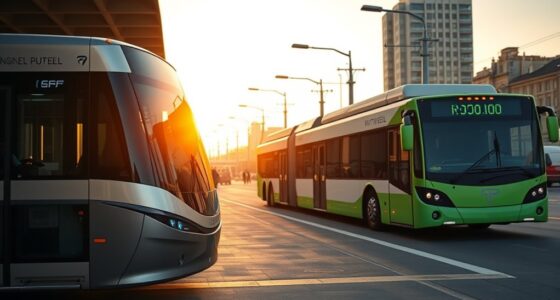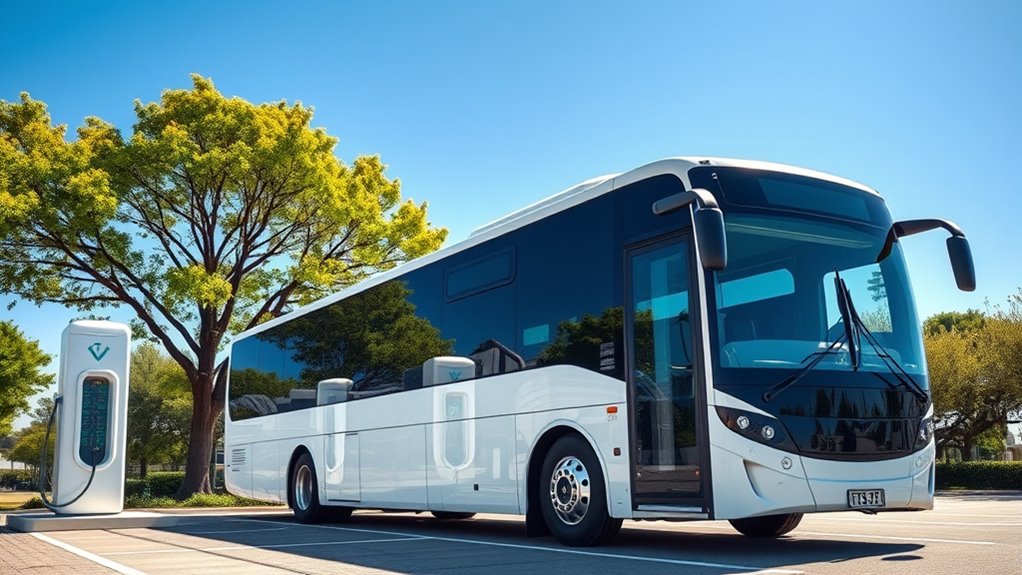

Solid-state batteries are set to revolutionize electric bus range by offering higher energy density, which means longer routes without frequent recharging. They also allow for faster charging times, reducing downtime, and improve safety through solid electrolytes that lower fire and leak risks. Although manufacturing challenges exist, ongoing advancements are making these batteries more reliable and affordable. If you want to discover how these innovations will shape urban mobility, keep exploring the potential ahead.
Key Takeaways
- Solid-state batteries offer higher energy density, enabling longer routes for electric buses without frequent recharging.
- Faster charging capabilities reduce downtime, making electric buses more practical for urban transit.
- Manufacturing challenges currently limit large-scale deployment, but ongoing research aims to improve scalability and cost-effectiveness.
- Enhanced safety features of solid electrolytes lower fire and leak risks, increasing reliability for public transportation.
- Widespread adoption of solid-state batteries will promote cleaner, safer, and more efficient urban mobility solutions.
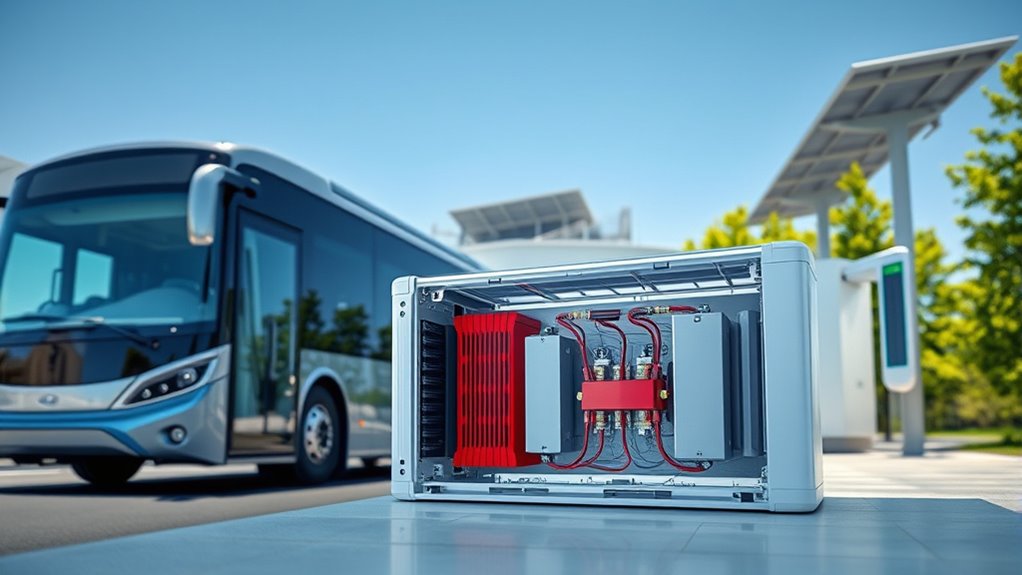
Solid-state batteries are an innovative technology poised to transform energy storage. They promise higher energy density, faster charging times, and improved longevity compared to traditional lithium-ion batteries. But as you consider their potential for electric buses, it’s essential to understand both the advantages and the hurdles that lie ahead. One of the main benefits of solid-state batteries is their enhanced safety profile. Unlike conventional batteries that use liquid electrolytes, solid-state versions employ solid electrolytes, which considerably reduce the risk of leaks, fires, or explosions. This makes them inherently safer, especially in large-scale applications like public transportation, where safety is paramount. You won’t have to worry as much about thermal runaway or battery malfunctions that could endanger passengers or disrupt operations. However, despite these safety benefits, manufacturing challenges remain a considerable obstacle. Producing solid-state batteries at scale is complex and costly. The fabrication process involves creating ultra-thin layers of solid electrolytes that must be perfectly uniform and free of defects. Achieving this consistency on a mass-production level is tricky, requiring new manufacturing techniques and precision engineering. These challenges drive up costs and slow down the timeline for commercial deployment, making it harder for transit authorities and manufacturers to adopt this technology widely. You might wonder how these issues could be overcome. Researchers and manufacturers are actively working on innovative solutions, such as developing more reliable solid electrolyte materials and refining manufacturing methods. Advances in materials science could lead to more scalable and cost-effective production processes in the near future. Meanwhile, ongoing research aims to address the durability and performance of solid electrolytes, ensuring they can withstand the demanding conditions of daily bus operation. Improving manufacturing techniques is essential for scaling up production and reducing costs, which will be critical for widespread adoption. As these technological and manufacturing hurdles are resolved, solid-state batteries are expected to become a game-changer for electric bus range. Their higher energy density means longer routes without recharging, reducing downtime and increasing efficiency for transit systems. Faster charging capabilities also mean less downtime between trips, making electric buses more practical and appealing for fleet operators. You can envision a future where public transportation becomes cleaner, safer, and more reliable thanks to solid-state batteries. While there’s still work to do in perfecting manufacturing processes and ensuring safety at scale, the promising benefits of this technology suggest a bright future for electric buses and the broader shift toward sustainable urban mobility.
Top picks for "solid state battery"
Open Amazon search results for this keyword.
As an affiliate, we earn on qualifying purchases.
Frequently Asked Questions
How Long Do Solid-State Batteries Last Compared to Lithium-Ion?
Solid-state batteries typically last longer than lithium-ion batteries due to their superior battery longevity and cycle life. You can expect solid-state batteries to endure around 300 to 500 charge cycles, sometimes more, before their capacity markedly diminishes. In contrast, lithium-ion batteries usually last about 200 to 300 cycles. So, if you’re looking for a longer-lasting option, solid-state batteries offer notable advantages in durability and overall lifespan.
Are Solid-State Batteries Environmentally Friendly to Produce?
Solid-state batteries are generally more eco-friendly to produce than traditional lithium-ion ones because they involve safer, cleaner manufacturing processes. You’ll find that eco-friendly manufacturing minimizes harmful waste and energy use. Plus, recycling and disposal are easier since solid-state batteries contain fewer toxic materials. This means they’re better for the environment over the long run, making them a more sustainable choice for electric buses and other applications.
What Are the Safety Advantages of Solid-State Batteries?
Solid-state batteries offer significant safety advantages thanks to their fire resistance and thermal stability. You won’t have to worry about thermal runaway or fires as much, since these batteries resist overheating and are less prone to catching fire during damage or failure. Their stable chemistry reduces the risk of leaks or explosions, making them a safer choice for electric buses and other vehicles, providing peace of mind for passengers and operators alike.
When Will Solid-State Batteries Be Commercially Available for Buses?
You can expect solid-state batteries for buses to hit the market within the next 3 to 5 years, but market adoption depends on overcoming several technological challenges. Manufacturers are actively working on improving durability, manufacturing scalability, and cost reduction. While promising breakthroughs are on the horizon, widespread commercial availability hinges on resolving these issues, so it’s a matter of time before you’ll see solid-state batteries powering more electric buses.
How Much Can Solid-State Batteries Reduce Charging Times?
Solid-state batteries can markedly reduce charging times by offering faster charging speeds and higher power output. You might see charging times cut by up to 50% or more compared to traditional lithium-ion batteries, enabling your bus to charge quickly and stay on the road longer. This improvement makes electric buses more practical for daily use, reducing downtime and increasing operational efficiency. As technology advances, these benefits will become even more pronounced.
Conclusion
Imagine a future where electric buses can travel over 300 miles on a single charge, thanks to solid-state batteries. These advanced batteries not only boost range but also charge faster and last longer, transforming public transportation. By 2030, experts predict solid-state tech will dominate the industry, making electric buses more practical and accessible. This leap forward means cleaner air, quieter streets, and a more sustainable world—powering your city’s journey to a greener future.