
Megawatt Charging Systems are transforming how you operate electric coaches by offering ultra-fast charging that can refill batteries in minutes, not hours. This technology supports high-capacity batteries and robust infrastructure, reducing downtime and boosting route flexibility. As these systems evolve, they promise even quicker charging and smarter energy management. Staying ahead means understanding how MCS can optimize your fleet’s efficiency and sustainability—continue to explore how this cutting-edge tech can benefit your operations.
Key Takeaways
- MCS enables ultra-fast charging, significantly reducing downtime for electric coaches and boosting operational efficiency.
- It requires specialized high-capacity infrastructure with advanced cooling and safety systems for reliable power delivery.
- Proper battery integration ensures safety, longevity, and quick acceptance of high power levels during rapid charging.
- Adoption of MCS supports route flexibility, resembling traditional diesel coach operations with minimal charging interruptions.
- Future advancements will bring even faster charging speeds and smarter energy management, driving sustainable fleet growth.
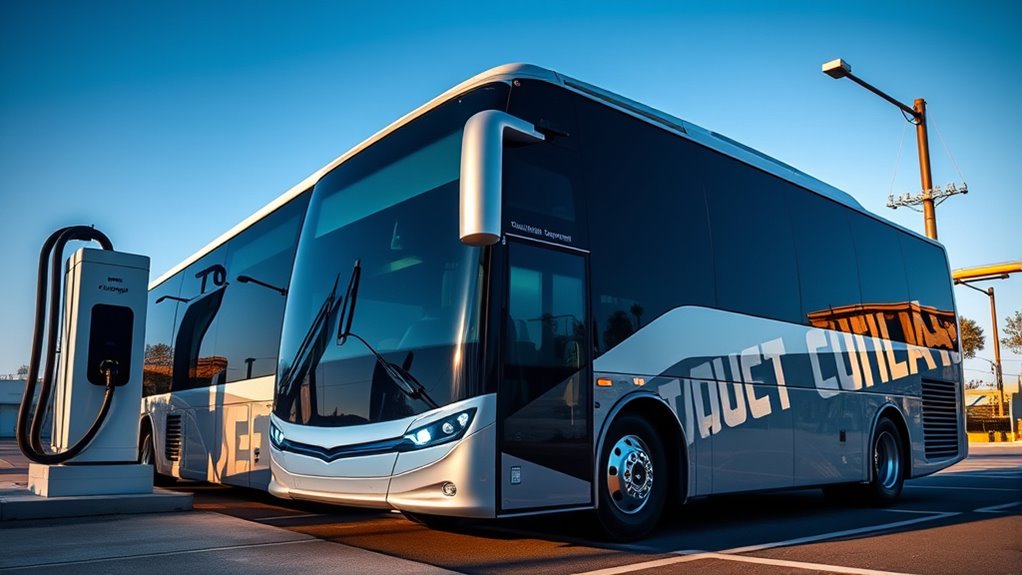
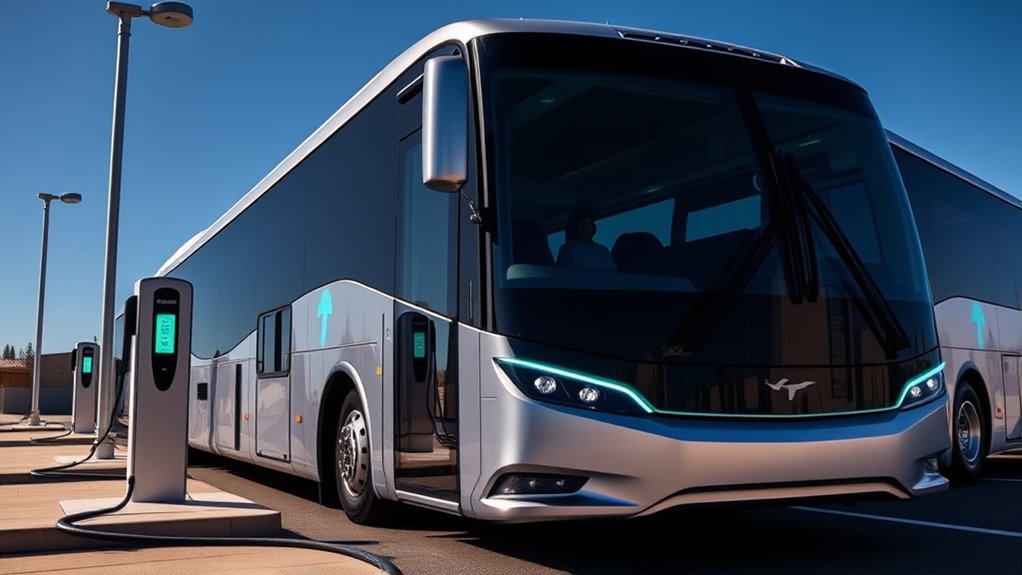
Megawatt Charging Systems (MCS) are revolutionizing electric vehicle charging by delivering ultra-fast power levels that considerably reduce charging times. As an electric coach operator or fleet manager, you’re likely aware that long charging stops hinder operational efficiency and limit route flexibility. MCS addresses these issues by providing high-capacity, rapid charging options that enable your vehicles to recharge in a fraction of the time traditional systems require. This advancement hinges on robust charging infrastructure designed specifically for high power delivery, supporting the demanding needs of large electric coaches.
One of the key aspects of implementing MCS is seamless battery integration. Your vehicles’ batteries must be engineered to handle the intense power transfer without compromising longevity or safety. Modern battery technology is evolving to accommodate these ultra-fast charging scenarios, featuring improved thermal management and higher charge acceptance rates. When properly integrated, these batteries allow for quick, reliable charging cycles, ensuring your coaches are ready to hit the road again sooner. The synergy between advanced battery systems and MCS infrastructure means you can maximize efficiency while safeguarding battery health, ultimately reducing total cost of ownership.
Seamless battery integration ensures rapid, safe charging while extending battery lifespan and reducing ownership costs.
Building the right charging infrastructure is essential if you want to fully leverage the benefits of MCS. This isn’t just about installing fast chargers; it’s about creating a network capable of supporting continuous high-power operation across your fleet. You need high-capacity electrical supply systems, sophisticated cooling solutions, and safety protocols to handle megawatt-level power transfer safely. Infrastructure planning also involves strategic placement of chargers at key terminals or depots, minimizing downtime and ensuring quick turnaround times for your coaches. As you expand your charging network, consider future scalability—today’s infrastructure should accommodate higher power levels and increased fleet size to stay ahead of evolving technology and demand. Incorporating safe and reliable power sources is crucial for maintaining consistent operation and protecting both personnel and equipment.
Adopting MCS isn’t just a technological upgrade; it’s a strategic move toward more sustainable and efficient operations. By integrating batteries optimized for rapid charging with a well-designed charging infrastructure, you can drastically cut down on downtime and increase route flexibility. This enables your fleet to operate more like traditional diesel coaches, with minimal interruption for charging. As the technology continues to develop, expect even faster charging capabilities and smarter energy management systems that further streamline your operations. Ultimately, embracing MCS puts you at the forefront of electric mobility, transforming how you manage your fleet and pushing toward a greener, more efficient future for transportation.
Top picks for "megawatt charg system"
Open Amazon search results for this keyword.
As an affiliate, we earn on qualifying purchases.
Frequently Asked Questions
How Will Megawatt Charging Systems Impact Charging Infrastructure Costs?
You’ll likely see a significant impact on charging infrastructure costs with megawatt charging systems. These systems can reduce overall expenses by enabling faster charging times, which means fewer chargers are needed for the same fleet size. Additionally, they support infrastructure expansion more efficiently, making it easier and more cost-effective to scale up charging networks. As a result, your investment in infrastructure becomes more sustainable and less costly over time.
Are Megawatt Charging Systems Compatible With Existing Electric Coach Models?
Yes, megawatt charging systems are generally compatible with existing electric coach models, but legacy compatibility can fluctuate. Some coaches may require retrofits, which pose challenges due to outdated components or design limitations. You’ll need to assess each vehicle’s infrastructure and consider retrofit challenges carefully to guarantee seamless integration. Upgrading may involve costs and technical adjustments, but the benefits of faster charging and future-proofing often outweigh these hurdles.
What Safety Standards Are in Place for High-Power Megawatt Charging?
Oh, safety standards for high-power megawatt charging? They’re quite strict, of course. You’ll find regulations addressing electromagnetic interference to prevent signal disruptions and thermal management to avoid overheating. These standards guarantee that even with immense power, your charging system remains safe and reliable. Manufacturers must adhere to these protocols, so you can trust that safety isn’t compromised, despite the impressive (and intimidating) power levels involved.
How Long Will It Take to Deploy Megawatt Charging Systems Nationwide?
You can expect nationwide deployment of megawatt charging systems within the next 5 to 10 years, as efforts focus on charging station deployment and grid capacity expansion. Advancements in infrastructure, government support, and private investments accelerate this timeline. While challenges remain, strategic planning and technological progress are making widespread adoption feasible, ensuring electric coaches can recharge quickly across diverse locations across the country.
What Maintenance Challenges Are Associated With Megawatt Charging Systems?
Maintenance of megawatt charging systems can feel like taming a wild beast. You’ll face cooling requirements to prevent overheating, which demands constant monitoring and regular upgrades. Cable management is vital to avoid damage and guarantee safety, but it can be a tangled nightmare if neglected. Staying proactive with these challenges keeps your system running smoothly, preventing costly repairs and ensuring your fleet stays charged and ready to go.
Conclusion
Now that you see the significance of Megawatt Charging Systems, it’s clear they’re the catalyst for cleaner, quicker, and cost-effective coach charging. By building bold, reliable, and rapid recharging routines, you’ll boost bus business, benefit the environment, and break barriers in mobility. Embrace this exciting evolution, empower your enterprise, and energize the electric future. With Megawatt Charging Systems, you’re not just upgrading—you’re releasing unlimited potential for progress and progressiveness.