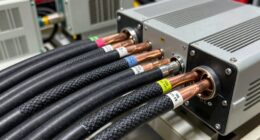
To effectively plan for electric and autonomous bus networks, you’ll need to reconsider your city’s infrastructure. This includes adding charging stations, creating dedicated bus lanes, and updating zoning rules to support new facilities. You should also develop accessible transit hubs with amenities and green spaces that boost community livability. Smart street designs that reduce congestion and support seamless integration are essential. Keep exploring to discover how these strategies can transform your urban environment into a more efficient, sustainable place.
Key Takeaways
- Strategically locate charging stations and depots, integrating them seamlessly into existing urban infrastructure.
- Develop dedicated bus lanes and protected corridors to improve efficiency and safety for autonomous buses.
- Transform traditional bus stops into multi-functional transit hubs with amenities and green spaces.
- Update zoning regulations to support flexible, modular infrastructure and promote adaptive transit environments.
- Design streets with buffer zones and pedestrian-friendly areas to enhance safety and facilitate seamless transit operations.
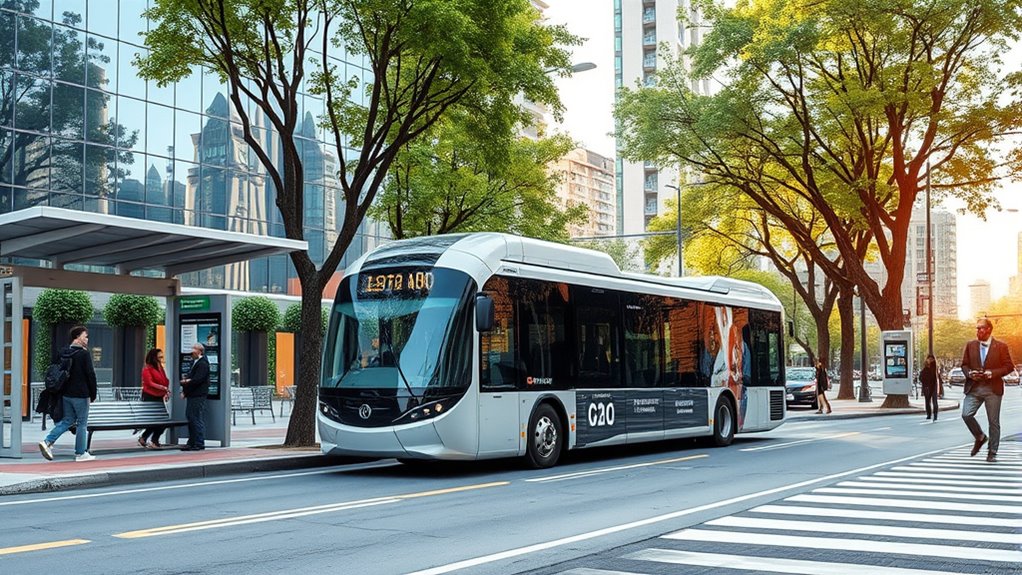
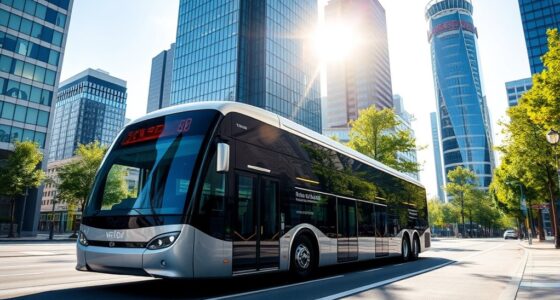
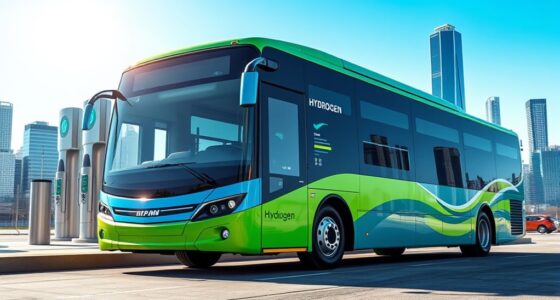
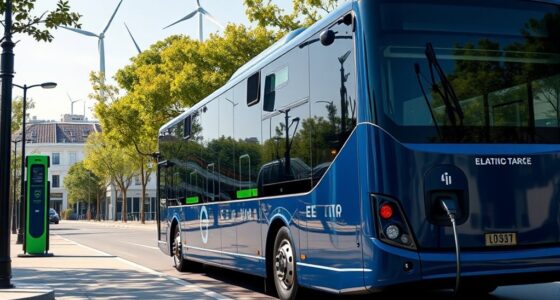
As cities increasingly adopt electric and autonomous buses, urban planning must evolve to support these innovative transit systems. The shift demands adjustments not only in transportation infrastructure but also in how public space is allocated and utilized. Electric buses require charging stations strategically placed throughout the city, which means rethinking existing layouts and repurposing certain areas to accommodate these facilities. Autonomous buses, on the other hand, often operate on fixed routes and can influence how streets are designed, managed, and integrated into the broader urban fabric. To facilitate this progression, zoning regulations need to be updated to prioritize the development of dedicated lanes, charging hubs, and maintenance depots that align with the new transit paradigm.
Urban planning must adapt to electric and autonomous buses by redesigning infrastructure and public spaces for a sustainable transit future.
Incorporating public space into planning efforts becomes critical as these bus networks expand. Traditional bus stops might give way to dynamic, accessible transit hubs that serve as community anchors. These hubs don’t just facilitate boarding; they can provide amenities, green spaces, and digital connectivity, transforming transit points into vibrant public spaces. This approach encourages greater use of public transportation, reduces reliance on private vehicles, and enhances neighborhood livability. When zoning regulations support the creation of such multi-functional spaces, cities can foster more sustainable, accessible, and community-oriented transit systems.
Furthermore, urban planning must consider how these buses influence street design and traffic flow. Autonomous buses can operate more efficiently in dedicated lanes, reducing congestion and improving safety. Zoning policies should incentivize the integration of these lanes into existing street networks, ensuring they are protected from private vehicle interference. Public space planning also involves creating buffer zones and pedestrian-friendly areas around bus routes, making transit easier and safer to access. By designating specific zones for charging infrastructure and bus depots, city planners can streamline operations while minimizing disruptions to other public spaces. Notably, incorporating attention to detail in planning processes enhances the effectiveness and adaptability of these transit systems.
Finally, implementing these changes requires a proactive approach to zoning regulations that support flexibility and innovation. Cities need to update codes to allow for modular infrastructure, temporary testing zones, and adaptive use of space. As you plan for electric and autonomous bus networks, your focus should be on creating a cohesive environment where public space, zoning, and transportation infrastructure work together seamlessly. This integrated strategy not only supports the deployment of new bus technologies but also enhances overall urban vitality, making cities more connected, sustainable, and enjoyable for everyone.

The 2027-2032 World Outlook for Electric Bus Charging Stations
As an affiliate, we earn on qualifying purchases.
As an affiliate, we earn on qualifying purchases.
Frequently Asked Questions
How Will Autonomous Buses Impact Local Traffic Congestion?
Autonomous buses can reduce local traffic congestion by optimizing routes and reducing the number of private vehicles on the road. You’ll notice improved pedestrian safety as these buses navigate more precisely, minimizing accidents. Plus, they can ease parking management by decreasing the demand for parking spaces, freeing up areas for pedestrians and cyclists. Overall, autonomous buses make your city’s traffic flow smoother while creating safer, more walkable environments.
What Funding Sources Are Available for Electric Bus Infrastructure?
You can access public funding through government grants and stimulus programs aimed at sustainable transportation. Private investment also plays a crucial role, with companies and venture capitalists financing electric bus infrastructure projects. Many cities partner with public agencies and private firms to secure funding, making it easier to develop charging stations and bus fleets. Combining these sources guarantees robust support, accelerating the shift to cleaner, smarter transit systems.
How Can Urban Planners Address Privacy Concerns With Autonomous Vehicles?
You should implement strict privacy policies and prioritize data security to address privacy concerns with autonomous vehicles. By clearly communicating how data is collected, stored, and used, you build public trust. Use encryption and regular security audits to protect user information. Incorporate transparency in your planning process, and guarantee regulations are in place to safeguard privacy rights, making autonomous vehicle integration safe and acceptable for communities.
What Are the Long-Term Maintenance Costs for Electric Bus Fleets?
Imagine a fleet of electric buses gliding smoothly through your city, each powered by batteries that last longer than you’d expect. Long-term maintenance costs depend on battery longevity and the charging infrastructure‘s efficiency. Regular upkeep, replacing batteries, and maintaining charging stations may seem costly, but advances in technology are lowering expenses. You’ll find that smart planning can keep these costs manageable, ensuring reliable service without draining your budget.
How Will Bus Network Changes Affect Underserved Communities?
You’ll see that bus network changes can improve access in underserved communities, but equity concerns remain. By actively engaging with these communities, you guarantee their needs are prioritized, reducing disparities. When you involve residents in planning, you build trust and create more inclusive transit solutions. These adjustments can lead to better mobility, but only if you address equity concerns and foster ongoing community engagement throughout the process.
autonomous bus dedicated lane
As an affiliate, we earn on qualifying purchases.
As an affiliate, we earn on qualifying purchases.
Conclusion
So, next time you marvel at a sleek, silent electric bus gliding through the city, remember it’s all part of your brilliant urban planning plan—because nothing screams progress like relying on technology that might just decide it’s had enough and takes an unscheduled nap. With autonomous buses, you’ll enjoy the thrill of unpredictable stops and the joy of figuring out if your route’s been rerouted by a robot. Truly, the future looks wonderfully, hilariously unpredictable.
multi-functional transit hub amenities
As an affiliate, we earn on qualifying purchases.
As an affiliate, we earn on qualifying purchases.

Urban Street Networks and Sustainable Transportation
As an affiliate, we earn on qualifying purchases.
As an affiliate, we earn on qualifying purchases.