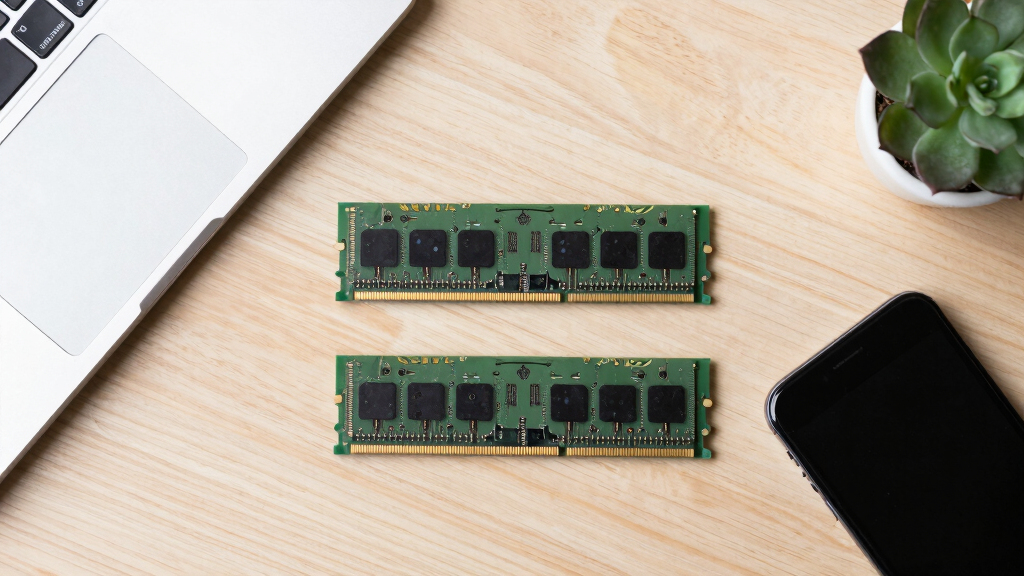

📊 Full opportunity report: When Does Cheap Memory Come Back? The 2027–2029 Question on ThorstenMeyerAI.com — validation score, market gap, and execution plan.

Get business pricing on monitors, keyboards and dev gear
- Business-only prices and quantity discounts
- Tax-exempt purchasing
- Multiple users, one account, clear invoices
TL;DR
Memory shortages are expected to persist until late 2028 or early 2029, with prices remaining elevated. Industry capacity additions are delayed, and demand remains strong, especially from AI applications.
Memory prices are unlikely to decrease significantly before late 2028 or early 2029, according to industry forecasts, as capacity expansion remains delayed and demand remains high, especially from AI sectors. This means consumers and businesses should not expect a return to affordable memory in the immediate future.
Major industry players such as Samsung, SK Hynix, and Micron project that the memory shortage will extend into 2027 and beyond, with a genuine easing of prices unlikely before 2028 or 2029. The primary reason is the lengthy timeline for building and ramping new fabs, with most capacity additions scheduled for 2028 and later. For example, Micron’s new fab in Clay, New York, has been postponed to 2030, while US-funded fabs under the CHIPS Act are expected to start only around 2028-2030.
Industry insiders note that physical constraints like cleanroom space and manufacturing lead times prevent faster capacity increases. The first wave of capacity relief begins around 2027, with additional expansions in 2028, but these are insufficient to bring prices back to pre-crisis levels, which are now expected to be permanently higher by 30–50%. The consensus is that the 2026 market conditions represent a new baseline, not a temporary spike.
When does cheap memory come back?
The question everyone’s really asking: do I just wait this out? The honest answer is a timeline, three scenarios, and news you may not want — the cheap memory you remember isn’t coming back. A less-expensive market probably is — later, and at a higher floor.
Capacity ramps ’27–’28; price climbs stop, then ease. Settles ~30–50% above pre-crisis — the new baseline, not a return to 2024.
AI keeps accelerating; OpenAI locked ~40% of DRAM through 2029; makers pause expansion to protect record margins; each HBM gen worsens the math.
AI demand moderates just as delayed ’27–’28 fabs all arrive → classic overshoot → prices crash. Not the bet — but never impossible in this industry.
The one relief valve that needs no fab is efficiency: if compression (Part 9) cuts how much memory each model needs, demand softens on the timescale of a software update, not a construction project. So the posture isn’t waiting — it’s the discipline this series has been about. Memory is now a scarce, valuable resource; treat it that way. Buy what you need, right-size, own what’s steady, rent what’s spiky, quantize either way. The people who do best won’t be the ones who guessed the bottom — they’ll be the ones who stopped needing so much. That’s the squeeze, end to end.
Implications for Consumers and Tech Industries
The persistent high prices and limited supply of memory chips will impact a wide range of sectors, from consumer electronics to AI infrastructure. Businesses should anticipate sustained costs, and consumers may face higher prices for devices that rely on memory. The outlook also influences strategic planning for memory manufacturers, who are likely to maintain tight supply to maximize profits amidst strong demand.
Popular right now

Hisense 85 U6 Pro Series Mini-LED ULED 4K UHD HDR Gaming AI Smart Fire TV (85U6SF Pro)

De'Longhi Dinamica Plus Fully Automatic Espresso Machine

KitchenAid Artisan 5-Quart Tilt-Head Stand Mixer, KSM150PS, Almond Cream
As an affiliate, we earn on qualifying purchases.
Factors Behind the Memory Shortage Timeline
The current memory crunch stems from physical and logistical constraints in manufacturing capacity. Building new fabs takes years, and the industry’s primary capacity additions are scheduled for 2028 and beyond. Meanwhile, demand from AI and data centers remains robust, with some companies like OpenAI securing long-term supply agreements for a significant portion of wafer output through 2029. Historically, the memory market has experienced boom-bust cycles, and experts warn a glut and price crash could still occur if demand moderates sharply or if capacity overshoots.
“The shortage could extend through 2027 and beyond, with a genuine easing only possible around 2028 or later.”
— Samsung and SK Hynix representatives
Uncertainties in Memory Market Recovery Timeline
While most industry forecasts point to 2028–2029 for a return to normal pricing, uncertainties remain. The pace of AI demand growth, potential supply overshoot, or unexpected technological breakthroughs could alter the timeline. Additionally, geopolitical factors and supply chain disruptions could further delay capacity expansions or impact prices.
Upcoming Capacity Expansions and Market Trends
Key developments to watch include the start of new fab operations in 2027 and 2028, particularly in the US and South Korea. Industry players will also explore demand-side solutions, such as memory compression techniques, to reduce pressure on supply. Monitoring how these factors influence prices and availability over the next few years will be crucial for industry stakeholders and consumers alike.
Key Questions
When can I expect memory prices to drop significantly?
Most forecasts suggest that prices will not return to pre-crisis levels before 2028 or 2029, due to delayed capacity additions and sustained demand.
Why is it taking so long to increase memory supply?
Building and ramping new fabs takes multiple years, with physical constraints like cleanroom capacity and manufacturing lead times limiting rapid expansion.
Will demand for AI keep memory shortages persistent?
Yes, demand from AI and data centers remains high and is expected to grow, which will continue to pressure supply and prices.
Could a market crash happen and cause prices to fall sharply?
While possible, a glut and crash are considered less likely in the near term, but the industry’s history of boom and bust means it cannot be ruled out entirely.
Source: ThorstenMeyerAI.com