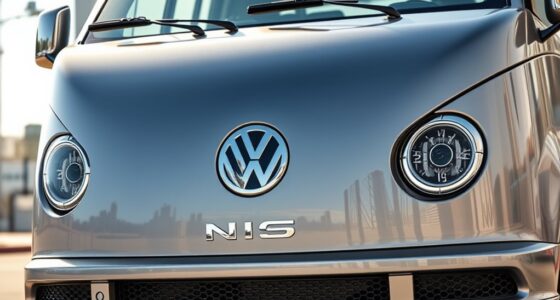

The Volkswagen T4 introduced the front-mounted engine layout, changing how vans are designed and driven. This shift improved weight distribution, making the vehicle more stable and easier to handle, especially in tight spaces. It also allowed for a lower interior floor, increasing cargo space and ease of loading. Safer and more efficient, the T4 set a new standard that influenced future van designs, and there’s more to discover about how this innovation transformed the industry.
Key Takeaways
- The T4 shifted van design by adopting a front-mounted engine, replacing rear or non-optimized placements.
- Front engine placement improved weight distribution, enhancing stability, handling, and safety.
- It enabled a lower interior floor, increasing cargo space and ease of loading.
- The new layout supported front-wheel drive, improving traction and vehicle dynamics.
- The T4’s engine placement set new industry standards, transforming van performance and design.

Have you ever wondered why some vehicles feature front-mounted engines? It’s a question that touches on how engine placement influences vehicle design and performance. When the T4 was introduced, it brought a significant shift in how vans and similar vehicles were built, primarily because of its front-mounted engine layout. Prior to this, many vans used rear-mounted engines or front engines that weren’t optimized for space efficiency. The T4’s adoption of a front-mounted engine was a game-changer, fundamentally altering vehicle dynamics and opening new possibilities for design and functionality.
Placing the engine at the front of the vehicle offers several advantages. First, it improves weight distribution, giving the van better balance and stability on the road. This is essential for vehicle handling, especially when carrying heavy loads. With the engine up front, the weight is more evenly distributed between the front and rear axles, which enhances grip and maneuverability. You’d notice that the T4 handles more confidently, especially in turns and on uneven surfaces, thanks to this optimized engine placement. It also makes for easier access to the engine bay during maintenance, saving time and effort—something fleet operators, mechanics, and everyday users appreciate.
Front engine placement improves balance, handling, and maintenance access, making vans more stable and easier to service.
The T4’s front-mounted engine also transformed the vehicle’s overall dynamics. Because the engine is situated at the front, the vehicle’s front wheels are responsible for both steering and power delivery, resulting in more predictable and responsive handling. This setup allows for a lower floor profile inside the van, creating more interior space and making loading and unloading easier. For you, this means more usable cargo space and a vehicle that’s easier to navigate through tight city streets or crowded parking lots. The design also reduces the vehicle’s overall length and weight compared to rear-engine models, making it more economical and agile.
Furthermore, front-mounted engines facilitate better crash safety because the engine can act as a crumple zone, absorbing impact energy in an accident. This added safety benefit was an important consideration with the T4, aligning with the evolving standards of vehicle safety. The T4’s engine placement also influenced its drivetrain layout, allowing for front-wheel drive configurations that further enhanced handling and interior space. This configuration also supports the integration of modern drivetrain technologies, contributing to improved efficiency and performance. This was a notable shift from older designs, which often struggled with poor traction and limited cargo capacity.
In essence, the T4’s introduction of a front-mounted engine revolutionized van design by improving vehicle dynamics, safety, and practicality. It set a new standard that many manufacturers would follow, emphasizing how strategic engine placement can redefine what a vehicle can do and how it feels on the road.

A-Premium 4PCS Front Engine Motor Mount Kit Compatible with Volkswagen Jetta 2005-2013, Eos 2007-2016, GTI/Rabbit 2006-2009, R32 2008 & Audi A3, A3 Quattro 2006-2013, 1.9L 2.0L 2.5L 3.2L, Side Support
[Vehicle Fitment-1]: Compatible with Volkswagen Eos 2007-2016 L4 2.0L, Eos 2007-2008 V6 3.2L, GTI 2006-2009 L4 2.0L, Fit…
As an affiliate, we earn on qualifying purchases.
As an affiliate, we earn on qualifying purchases.
Frequently Asked Questions
What Other Vehicles First Adopted Front-Mounted Engines Besides the T4?
You’ll find front-mounted engines in many vehicles like early sedans and sports cars, which adopted this design to improve engine cooling and optimize weight distribution. This setup helps keep the engine cooler by exposing it to airflow and balances the vehicle’s weight, enhancing handling and stability. Vehicles such as classic Ford Mustangs and early Honda Civics also used front-mounted engines, showcasing its widespread adoption across different types of cars.
How Did the T4’s Engine Placement Influence Van Safety Features?
Your T4’s front-mounted engine improved van safety by enhancing engine compartment safety and crash impact resilience. The engine’s placement in front of the passenger cabin absorbs some crash forces, reducing injury risks. It also allowed for better crumple zones and safety features, like reinforced front structures and improved crashworthiness. This design made the van more resilient in collisions, protecting occupants and minimizing damage to critical components during accidents.
Were There Any Major Design Challenges With Front-Mounted Engines in the T4?
You might think front-mounted engines in the T4 caused major design issues, but they actually improved engine cooling and weight distribution. However, challenges arose around balancing the weight to prevent front-heavy handling and ensuring proper cooling airflow. These issues required engineers to innovate with radiator placement and structural reinforcement, ultimately making the design more efficient and reliable. So, while challenges existed, they pushed improvements that benefited overall vehicle performance.
How Did the T4’s Engine Layout Affect Interior Space Utilization?
With the T4’s front-mounted engine, you gain better engine compartment accessibility, making maintenance easier. However, it slightly reduces interior cargo volume because the engine sits at the front, encroaching on space that could be used for storage or passenger comfort. Despite this, the overall layout balances performance and practicality, allowing you to optimize interior space while ensuring straightforward engine access when needed.
What Maintenance Advantages Did the Front-Mounted Engine Design Provide?
You’ll find that the front-mounted engine design offers maintenance advantages like easier accessory accessibility, making it simpler to reach belts, alternators, and other components. Plus, it improves engine cooling efficiency by allowing better airflow over the radiator and cooling system. This setup reduces maintenance time and helps keep your van running smoothly, as you can quickly perform repairs or routine checks without extensive disassembly.

Snuopfy Car Trunk Organizer, Backseat Hanging Organizer with 8 Large Storage Bag Super Capacity -Trunk Organizer for SUV,Truck,Van -Your Space Saving Expert – Black
LATEST UPGRADES— Built from heavy-duty 600D Oxford fabric with Box-X Reinforced Stitching and dual-sided Velcro backing, this Trunk…
As an affiliate, we earn on qualifying purchases.
As an affiliate, we earn on qualifying purchases.
Conclusion
The T4’s front-mounted engine is like the heartbeat of a new era, pounding rhythm into the van’s design and function. It’s a revolution that shifts gears, transforming the T4 into a sleek, reliable workhorse. With each innovation, it’s as if the van breathes new life, opening doors to endless possibilities. Embrace this change, and you’ll see how a simple engine can orchestrate a symphony of progress on every journey.

Front License Plate Bracket Kit,Practical Front License Plate Holder with License Plate Frames & Screws Anti Theft,Universal Car Accessories Front License Plates Mount
Secure License Plate: Our license plate holder front bumper set is able to securely hold your license plate…
As an affiliate, we earn on qualifying purchases.
As an affiliate, we earn on qualifying purchases.

10PCS Engine Bay Cleaning Kit, Professional Under Hood Detailing Tools with Long Bendable Brush & Natural Bamboo Horsehair Brush, Applicators, Towel for Car, Truck
【COMPLETE 10-PCS UNDER HOOD DETAILING KIT】 Everything you need for a deep engine bay clean. This pro-grade set…
As an affiliate, we earn on qualifying purchases.
As an affiliate, we earn on qualifying purchases.