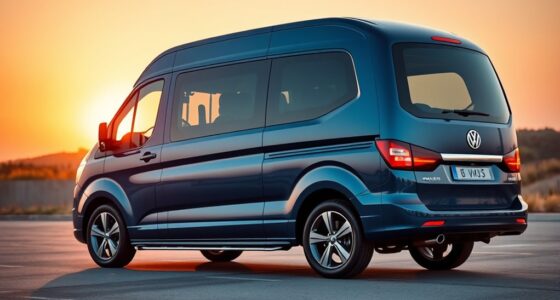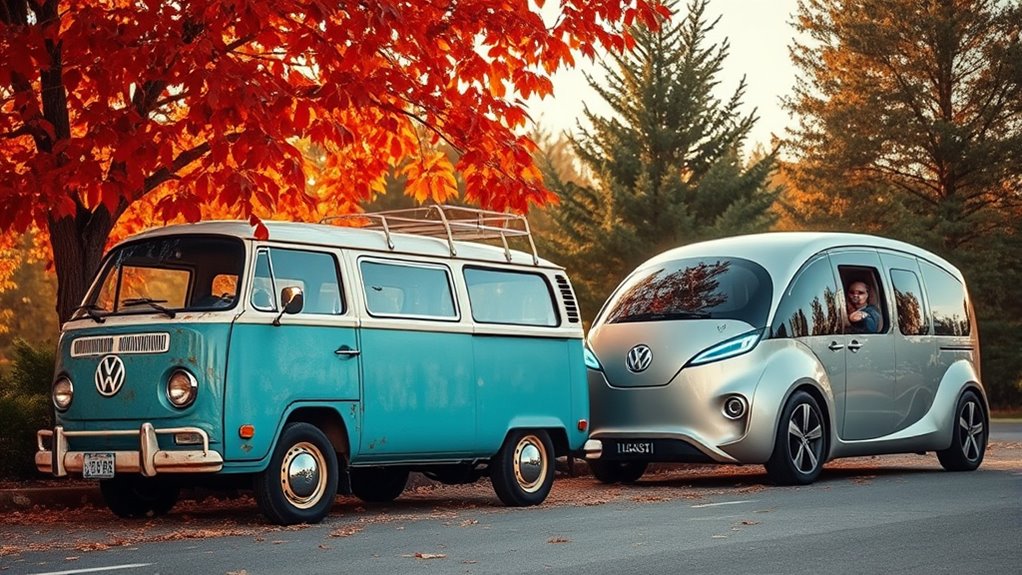

The VW Bus became less common because it couldn’t meet modern safety and environmental standards, leading to its decline. However, it’s now made a comeback as an electric vehicle, blending its iconic design with advanced technology and eco-friendly features. This revival preserves its cultural significance while embracing sustainability. If you want to understand how Volkswagen managed to honor its legacy while innovating, there’s much more to discover below.
Key Takeaways
- The VW Bus disappeared due to evolving automotive standards, environmental concerns, and shifts in consumer preferences.
- Its iconic design and cultural significance made it a nostalgic symbol of freedom and counterculture.
- Volkswagen revived the model by blending heritage with modern, eco-friendly electric technology and contemporary features.
- The electric comeback eliminates emissions, aligns with sustainability goals, and updates the vehicle for modern safety and efficiency.
- The revival demonstrates how iconic designs can evolve, honoring their legacy while embracing innovation for a new generation.
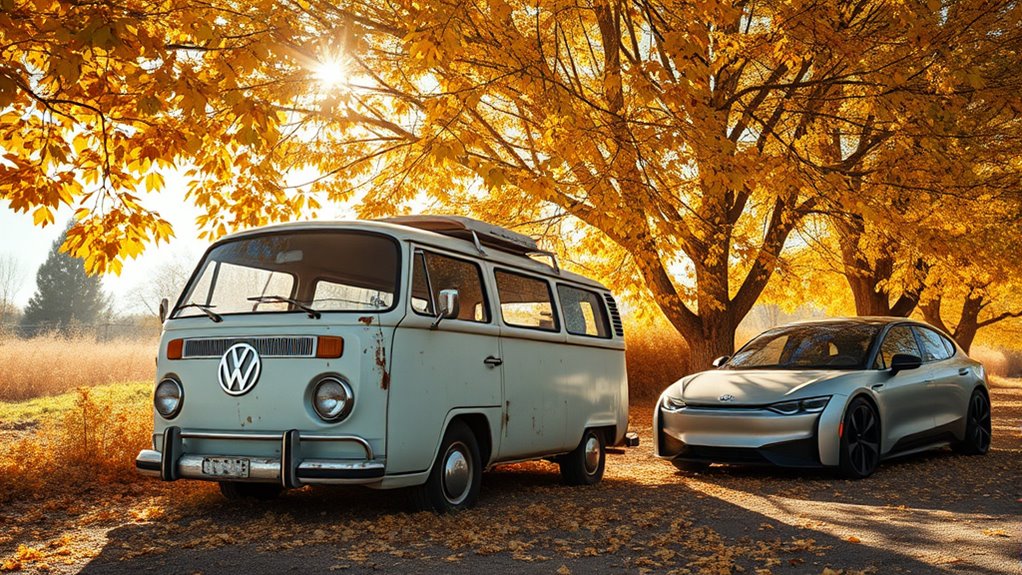
The VW Bus is making a surprising comeback as enthusiasts and manufacturers breathe new life into this classic icon. Once a symbol of freedom and counterculture in the 1960s and 70s, it’s now evolving to meet the demands of today’s drivers and environmental standards. This revival isn’t just about nostalgia; it’s a strategic blend of heritage preservation and modern design that captures the spirit of the original while pushing forward into the future. You can see that manufacturers are carefully respecting the bus’s legacy, keeping its iconic shape and cultural significance intact, but updating it with sleek lines, advanced materials, and contemporary features. This approach guarantees that the classic silhouette remains recognizable, yet relevant in the current era.
The heritage preservation aspect is vital here. It’s about honoring the VW Bus’s historic role in shaping the lifestyle of generations, but also recognizing the need for sustainability. Modern design elements are seamlessly integrated without overshadowing the vehicle’s roots. Think of it as a tribute wrapped in innovation: retro-inspired dashboards, authentic details, and nostalgic touches are paired with electric drivetrains, smart technology, and eco-friendly materials. This balance appeals to both longtime fans and new customers who want a vehicle that reflects their values and style. You feel connected to the past, but also confident that you’re driving something future-proof.
Manufacturers are also paying close attention to the environment, transforming the VW Bus from a nostalgic icon into a sustainable one. Electric powertrains eliminate emissions, making it a responsible choice for eco-conscious drivers. The goal isn’t just to recreate the bus but to reinvent it for a new generation. You’ll notice that the new models maintain the spirit of adventure and community that the original espoused, but now with the added benefit of zero emissions and lower running costs. It’s about preserving its cultural significance while adapting to modern expectations for safety, efficiency, and environmental impact. Additionally, integrating modern performance upgrades ensures the vehicle meets current driving standards and enhances overall usability.
In essence, this revival is a reflection of how heritage preservation and modern design can coexist harmoniously. You’re not just looking at a retro remake; you’re witnessing a thoughtfully reimagined vehicle that respects its history while embracing innovation. The VW Bus’s comeback proves that iconic designs can evolve without losing their soul, offering a vehicle that’s both a nostalgic nod and a forward-looking statement. And as you consider joining this movement, it’s clear that the future of the VW Bus is bright — electric, sustainable, and undeniably cool.
Top picks for "fall rise disappear"
Open Amazon search results for this keyword.
As an affiliate, we earn on qualifying purchases.
Frequently Asked Questions
What Inspired the VW Bus’s Modern Electric Redesign?
You’re inspired by design innovation and nostalgia marketing when exploring the VW Bus’s modern electric redesign. The goal is to blend iconic retro appeal with cutting-edge technology, creating a vehicle that feels familiar yet forward-thinking. This approach attracts both nostalgic enthusiasts and eco-conscious drivers, showing how the past and future can unite. Your focus on preserving the bus’s classic charm while embracing sustainability drives this exciting transformation.
How Does the New VW Bus Compare to the Original in Performance?
You might think the new VW Bus would outperform the classic design, but surprisingly, it balances modern performance with nostalgic charm. While the original was all about simplicity and ruggedness, the electric remake offers smoother acceleration and quieter rides. Ironically, the retro look masks its advanced tech, so you get the best of both worlds—classic style now powered by modern performance that’s more efficient and eco-friendly.
Are There Any Planned Future Models of the Electric VW Bus?
You might wonder if VW has plans for future electric bus models. Based on concept art and market forecasts, VW is likely to develop new versions to meet rising demand for eco-friendly vehicles. While no official announcements are made yet, the company’s focus on sustainability suggests they’re exploring innovative designs. Expect future models to incorporate advanced tech, appealing to both nostalgia and modern expectations.
What Are the Environmental Benefits of the Electric VW Bus?
Oh, the electric VW bus is practically a superhero for the planet! By running on solar energy, it dramatically reduces your carbon footprint, making you feel like a climate hero. No more fumes, just clean, silent rides. It’s a fun way to cut down emissions and help the environment without sacrificing style or adventure. So, hop in and turn your road trips eco-friendly—your planet will thank you!
How Has Customer Feedback Influenced the VW Bus Revival?
You’ve played a key role in shaping VW Bus’s revival through your feedback. Your nostalgic appeal for the classic design, combined with your desire for modern innovation, pushes VW to blend tradition with new technology. This has led to a more refined, eco-friendly electric bus that honors its roots while meeting today’s needs. Your input drives VW to create a vehicle that balances history’s charm with the future’s sustainability.
Conclusion
You can’t deny it—what’s happening with the VW Bus is nothing short of legendary. It vanished like a ghost and returned as an unstoppable electric juggernaut, ready to conquer the roads once more. This isn’t just a comeback; it’s a revolution that’ll shake your world and redefine your entire idea of adventure. Buckle up, because the ride of a lifetime is back, and it’s charging ahead full throttle into the future!