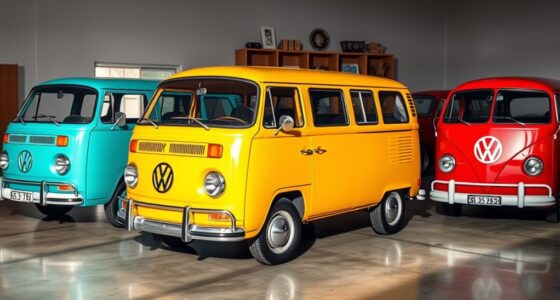
The VW Bus became a symbol of 1960s counterculture because it represented freedom, rebellion, and self-expression. Its distinctive, customizable design allowed young people to showcase their ideals of peace and love. It made road trips and communal living accessible, encouraging exploration and connection. Over time, it embodied the spirit of challenging authority and embracing diversity. If you want to understand how this iconic vehicle shaped cultural change, there’s more to discover below.

Get business pricing on monitors, keyboards and dev gear
- Business-only prices and quantity discounts
- Tax-exempt purchasing
- Multiple users, one account, clear invoices
Key Takeaways
- The VW Bus symbolized freedom and rebellion, embodying counterculture ideals like peace, love, and individualism.
- Its customization with psychedelic art and slogans made it a rolling expression of shared values.
- Practical, affordable, and accessible, it enabled a nomadic, independent lifestyle for young people.
- The bus became central to road trips, fostering community and exploration during the 1960s.
- Its association with peace movements and social change cemented its status as an icon of the era.

During the 1960s, the VW Bus became more than just a vehicle; it transformed into a powerful symbol of the counterculture movement. You might have seen it roll through towns and across open highways, its iconic shape instantly recognizable. For many young people, especially those involved in the hippie movement, the VW Bus represented freedom, rebellion, and a desire to break free from societal norms. It wasn’t just a mode of transportation; it was a mobile sanctuary where ideals of peace, love, and community could flourish. As you traveled along the highways in your VW Bus, you weren’t just going from point A to point B—you were participating in a movement that emphasized self-expression and living authentically.
The allure of the VW Bus was amplified by its association with road trips, which became a defining activity of the era. Road trips gave you the chance to explore the vast American landscape while forging bonds with others who shared your ideals. The bus’s spacious interior allowed for a makeshift home on wheels, where you could sleep, listen to music, and enjoy conversations that challenged the status quo. It symbolized a nomadic lifestyle rooted in spontaneity and adventure, allowing you to escape the confines of conventional life and embrace new experiences. Whether you were heading to a music festival, a protest, or just exploring the countryside, the VW Bus was your trusted companion.
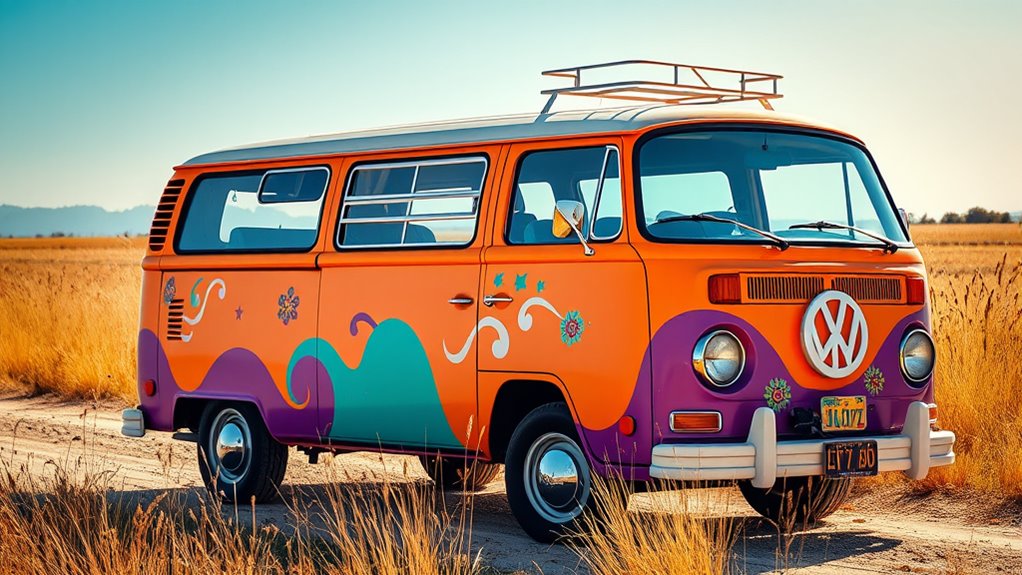
The hippie movement embraced the VW Bus as an emblem of their values. It became a rolling canvas for self-expression—painted with psychedelic designs, peace signs, and slogans promoting love and unity. This personalization helped forge a collective identity among those who traveled in them, making the bus more than just a vehicle; it became a statement. The bus’s practicality and affordability made it accessible to many young people who wanted to live differently. It fostered a sense of community among travelers, many of whom shared a common vision of peace, environmental consciousness, and social justice.
As you look back, it’s clear the VW Bus’s significance extends beyond its design. It encapsulated the spirit of a generation enthusiastic to challenge authority, embrace diversity, and seek personal liberation through road trips and shared experiences. Its presence on the road during the 1960s helped define an era, turning a simple van into an enduring icon of counterculture. You can see why it remains a symbol of freedom and rebellion today—an enduring reminder of a time when adventure and ideals went hand in hand.
As an affiliate, we earn on qualifying purchases.
Frequently Asked Questions
How Did the VW Bus Influence Other Countercultural Movements?
You see, the VW Bus influenced other countercultural movements by becoming a symbol of freedom and rebellion. Its practicality encouraged environmental activism, inspiring eco-friendly lifestyles and sustainable travel. Artists and activists used the bus for artistic expression, customizing and decorating it to showcase their messages. This iconic vehicle fostered a sense of community and independence, motivating various movements to embrace alternative lifestyles, environmental concerns, and creative expression.
Were There Specific Models of VW Bus Popular Among Hippies?
You’ll notice vintage models like the classic Type 2 VW Bus, especially the early ones from the 1960s, were popular among hippies. Many of these buses underwent custom conversions, transforming them into mobile homes and gathering spots. These personalized touches made each bus unique, helping hippies express their individuality and values. Their affordability and versatility also made vintage models the perfect choice for those embracing a nomadic, countercultural lifestyle.
How Did the VW Bus’s Design Contribute to Its Counterculture Image?
Your VW Bus’s design, especially its van’s aesthetics, played a pivotal role in shaping its counterculture image. Its rounded, simple lines symbolize freedom and non-conformity, while the spacious interior invites community and adventure. The design symbolism reflects a desire to reject mainstream norms, encouraging self-expression and mobility. This unique look makes it an icon of rebellion, freedom, and unity among the 1960s counterculture movement.
Did the VW Bus Have Any Political Symbolism During the 1960S?
Ever see a VW Bus and wonder if it carried political symbolism? It certainly did, embodying the activist identity of the 1960s counterculture. You can imagine it as a rolling statement of peace, love, and rebellion, often painted with slogans advocating for civil rights, anti-war protests, and environmental causes. The bus became more than transportation; it symbolized a movement, uniting people who sought change and believed in collective action.
What Role Did the VW Bus Play in Anti-War Protests?
You see, the VW Bus played a crucial role in anti-war protests by becoming a mobile base for activists. Its van life appeal allowed protesters to travel easily, spreading their message and fostering community. Environmental activism also flourished around these buses, emphasizing sustainability. The VW Bus symbolized resistance, freedom, and unity, making it a powerful tool for those who opposed war and sought a greener, more peaceful future.
psychedelic art VW Bus accessories
As an affiliate, we earn on qualifying purchases.
As an affiliate, we earn on qualifying purchases.
Conclusion
Just as a river carves its path through rugged terrain, the VW Bus carved its way into the heart of the 1960s counterculture. It became more than a vehicle—it was a floating island of freedom, a symbol of rebellion and unity. When you see it, think of a wandering spirit, forever seeking new horizons and breaking boundaries. The VW Bus isn’t just a van; it’s a rolling allegory of change, adventure, and the pursuit of a freer world.
van life camping gear for VW Bus
As an affiliate, we earn on qualifying purchases.
As an affiliate, we earn on qualifying purchases.
As an affiliate, we earn on qualifying purchases.
Fall Picks
fall essentials
As an affiliate, we earn on qualifying purchases.