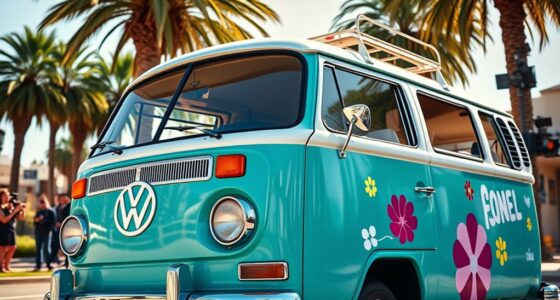
The VW Bus in the hippie movement serves as a powerful symbol of freedom, peace, and rebellion. It functions as a mobile canvas, decorated with vibrant murals, peace signs, and psychedelic art, reflecting the personal creativity of its owners. Used at festivals like Woodstock, it became a hub for activism, community building, and artistic expression. To discover how this iconic vehicle embodied the spirit of the era, keep exploring its rich cultural significance.
Key Takeaways
- The VW Bus symbolized freedom, peace, and rebellion, becoming an icon of the 1960s hippie counterculture.
- Decorated with vibrant murals and psychedelic art, it served as a mobile canvas reflecting individual creativity.
- It played a central role in festivals like Woodstock and peace rallies, often packed with people promoting love and unity.
- Owners personalized their buses with banners, beads, and artistic designs, making each vehicle a unique expression of identity.
- The VW Bus fostered activism by enabling community gatherings, protests, and spreading messages of social change.
During the 1960s, the Volkswagen Bus became an iconic symbol of the hippie movement, representing freedom, peace, and a desire to break away from mainstream society. You’d see these buses everywhere—parked at protests, cruising along highways, or serving as makeshift homes. They weren’t just vehicles; they were counterculture symbols, embodying the ideals of love, unity, and rebellion. The Volkswagen Bus captured the spirit of the era, making it more than just a mode of transportation—it became a rolling statement of identity.
The VW Bus symbolized freedom, peace, and rebellion during the 1960s hippie movement.
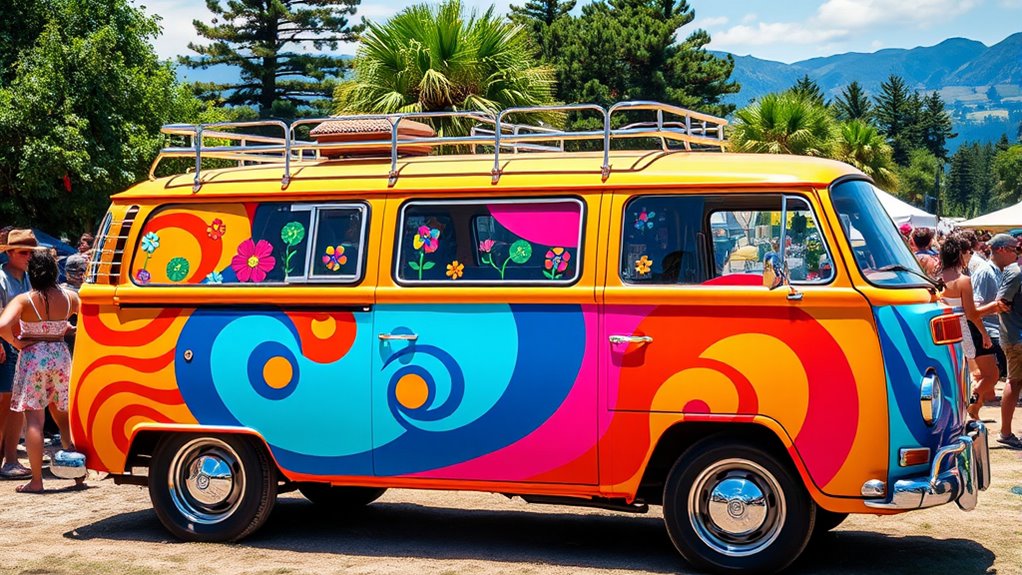
As festival transportation, these buses played a pivotal role in bringing people together for gatherings like Woodstock and other peace rallies. You could spot a convoy of brightly painted VW Buses rolling into a festival, each one decorated with vibrant murals, peace signs, and psychedelic art. They turned into mobile canvases, reflecting the creativity and individuality of their owners. This made the VW Bus a symbol not just of movement but of the artistic expression that thrived during the era. You’d often find groups of hippies customizing their buses, transforming them into colorful, living works of art. The bus became a personal statement, with painted designs, hanging beads, and banners that communicated messages of peace and love.
Beyond their role in festivals, VW Buses served as mobile hubs for activism. They were used to organize protests and spread messages of change. You might have seen one packed with flower children, handing out pamphlets or singing songs of peace. Their spacious interiors made them perfect for rallying friends, sharing ideas, and creating a sense of community on the move. The bus became a symbol of collective effort, embodying the spirit of the counterculture that challenged societal norms. It was more than transportation; it was a tool for activism, rebellion, and art, all rolled into one. Additionally, the simple yet versatile vehicle design contributed to its cultural prominence, allowing for extensive customization and personalization.
Throughout the movement, the VW Bus’s simple design and adaptability helped it stand out as a cultural icon. Its association with freedom and peace made it a rallying point for those seeking change. When you think of the hippie movement, the image of a brightly painted VW Bus, packed with people heading to a festival or protest, often comes to mind. It’s not just a vehicle but a symbol of the era’s ideals—an enduring icon of counterculture and a tribute to the power of art and activism on wheels.
Top picks for "hippie movement roll"
Open Amazon search results for this keyword.
As an affiliate, we earn on qualifying purchases.
Frequently Asked Questions
How Did the VW Bus Influence Environmental Activism?
You see, the VW Bus influenced environmental activism by inspiring sustainable modifications, making it a symbol for eco-friendly activism. Its adaptable design encouraged people to retrofit and reduce emissions, promoting sustainable transportation. This rallying point motivated activists to showcase eco-conscious choices, spreading awareness about environmental issues. The bus’s iconic status helped turn it into a mobile platform for eco-friendly activism, inspiring others to adopt greener lifestyles and advocate for change.
Were There Specific Artists Known for Customizing VW Buses?
Imagine the vibrant spirit of the era, where certain custom artists became icons by transforming VW buses into moving masterpieces. You’d recognize names renowned for bus art festivals and their creative collaborations, turning simple vans into powerful statements of freedom and unity. These artists, through their unique collaborations, inspired countless others to see the VW bus as a canvas for activism and self-expression, echoing the collective soul of their community.
Did the VW Bus Have Any Symbolic Meaning Beyond Transportation?
The VW bus symbolized much more than transportation; it embodied counterculture symbolism and spiritual representations. You see it as a mobile expression of freedom, peace, and rebellion against mainstream norms. Its colorful paint and unique designs often reflected ideals of unity and spiritual awakening, making it a rolling symbol of the hippie movement’s desire for love, harmony, and a deeper connection with life beyond materialism.
How Did the Design of VW Buses Evolve During the Movement?
You’ll find that during the movement, VW bus designs evolved considerably, with over 60% featuring custom paint jobs and bold colors. People modified their buses with creative design modifications, turning them into mobile art galleries and symbols of freedom. This evolution reflected the movement’s spirit, transforming the bus from a simple vehicle into a rolling symbol of individuality, activism, and community.
Are Vintage VW Buses Considered Valuable Collectibles Today?
Yes, vintage VW buses are highly valued collectibles today. You’ll find many enthusiasts investing in restoration projects to preserve their market value. Well-maintained models often fetch high prices at auctions and online sales, reflecting their cultural significance and nostalgic appeal. If you own a vintage VW bus, restoring it can boost its value, making it not just a nostalgic relic but also a smart investment in the thriving classic car market.
Conclusion
As you reflect on the VW bus’s journey through the hippie movement, it’s clear this vehicle was more than just transportation—it was a rolling canvas for dreams, activism, and free spirit. Like a vibrant mural on wheels, it carried the hopes of a generation seeking peace and love. So, next time you see a VW bus, remember it’s not just a van; it’s a symbol of a movement that painted the world with kindness and courage.