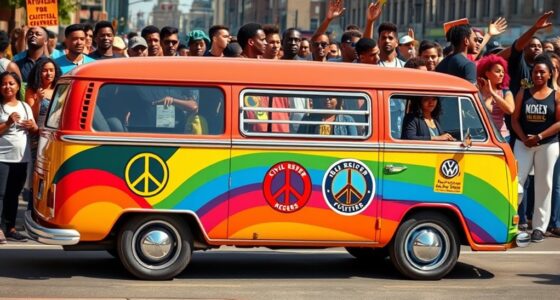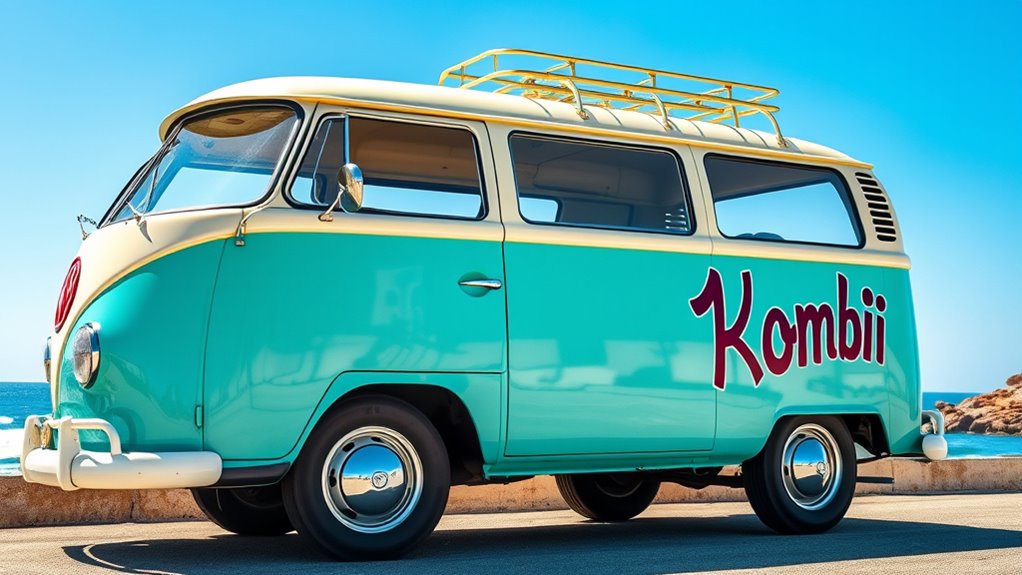

The VW Bus earned its nicknames like “Microbus” and “Kombi” from its versatile design and cultural impact. “Microbus” highlights its compact size early on, while “Kombi” reflects its multi-use roles as a family transporter or cargo van. During the 1960s and 70s, it became a symbol of freedom and counterculture, earning labels like “Hippie Van.” These names reveal its personality and history—explore further to uncover how it became an icon of individuality and adventure.
Key Takeaways
- The VW Bus was originally designed as an affordable, versatile vehicle in post-WWII Germany, sharing roots with the Beetle.
- Early nicknames like “Microbus” and “Kombi” emphasized its compact size and adaptable cargo-passenger configurations.
- Its cultural impact as a symbol of counterculture and freedom led to nicknames like “Hippie Van” and “Hippie Bus.”
- The vehicle’s flexible design allowed owners to personalize it as a camper, family car, or mobile workspace, reinforcing its iconic status.
- These nicknames reflect the VW Bus’s societal influence, versatility, and enduring popularity across decades.

Have you ever wondered why the Volkswagen Bus is known by so many nicknames? The story behind its nicknames is a fascinating mix of history origins and cultural influences that have shaped its identity over decades. When you look into its roots, you’ll find that the Volkswagen Bus was born in post-World War II Germany, where it was designed to be an affordable, practical vehicle for families and small businesses. Its origins are tied to the Volkswagen Beetle, sharing a simple, reliable engineering ethos. The name “Volkswagen,” meaning “people’s car,” reflects this purpose. The Bus, or Type 2, was introduced in 1950, initially as a cargo van before evolving into a versatile passenger vehicle. As it gained popularity, it didn’t take long before it became a cultural icon, especially during the 1960s and 70s.
During this period, the vehicle’s unique shape and easy customization made it a symbol of counterculture, freedom, and rebellion. Its influence stretched beyond Germany, heavily impacting American and global youth movements. These cultural influences led to the vehicle acquiring many nicknames, each reflecting different aspects of its personality and appeal. The “Microbus” emphasizes its compact, efficient size, especially in its early versions, making it perfect for urban environments. The term captures the essence of a small, adaptable vehicle that could serve multiple purposes — from transporting families to serving as a mobile workspace or camper. Meanwhile, “Kombi,” a shortened form of “Kombinationsfahrzeug” (combination vehicle), originated in Germany and refers to its dual role as a passenger and cargo carrier. This nickname highlights its practical design, which allowed owners to switch between various configurations easily.
Cultural influences played a big role in the nicknames’ evolution. In the United States, the VW Bus became a symbol of the “hippie” movement, with many adopting it as a symbol of peace and love. The nickname “Hippie Van” or simply “Hippie Bus” emerged from this cultural association. Across different regions, people also called it the “Camper,” especially as it was converted into a home-on-wheels for travelers and adventurers. These nicknames reflect not just the vehicle’s design but also the cultural stories and lifestyles it inspired. Additionally, the design versatility of the VW Bus contributed significantly to its enduring popularity, allowing owners to personalize and adapt their vehicles for various lifestyles and needs. Overall, the Volkswagen Bus’s many nicknames are a testament to its widespread influence, rooted in its history origins and shaped by the cultural influences it encountered throughout its journey.
Top picks for "groove story behind"
Open Amazon search results for this keyword.
As an affiliate, we earn on qualifying purchases.
Frequently Asked Questions
How Did the VW Bus Influence Popular Culture Globally?
You see, the VW Bus greatly influenced popular culture worldwide by symbolizing freedom and adventure. It sparked the van life movement, inspiring travelers to embrace a mobile, minimalist lifestyle. Its retro revival brought the classic design back into fashion, making it a cultural icon. You can spot it in movies, music, and festivals, where it epitomizes nostalgia and carefree spirit, shaping how generations view travel and community.
What Are the Most Common Modifications Made to VW Buses?
You often modify your VW bus with restoration techniques to bring back its vintage charm or enhance its performance. Common upgrades include installing aftermarket accessories like new wheels, upgraded sound systems, or custom interiors to personalize your ride. You might also add modern safety features or improve the engine for better reliability. These modifications help you keep your VW bus unique, functional, and true to its iconic spirit.
How Rare Are Vintage VW Buses Today?
You’ll find vintage VW buses are quite rare today, especially as many faced restoration challenges over the years. Their rarity value increases with well-preserved models, making them highly sought after by collectors. Because of their age and limited numbers, finding a fully restored original bus is tough. If you’re into classic vehicles, owning one means you have a rare piece of automotive history that’s cherished worldwide.
Which Countries Have the Largest VW Bus Enthusiast Communities?
You’ll find the largest VW bus enthusiast communities in countries like Brazil, Germany, and the USA. These nations host vibrant vintage restoration scenes and lively cultural festivals celebrating the bus’s history. Whether at classic car shows or dedicated events, enthusiasts share stories, swap parts, and keep the spirit alive. Your passion fits right in with these global hubs where the VW bus’s iconic status continues to thrive.
What Safety Features Were Originally Included in the VW Bus?
You might be surprised, but the original VW Bus had basic safety features like seatbelt innovations, although lap belts were optional early on. Airbag safety wasn’t included initially, as it wasn’t standard in vehicles of that era. The design focused more on practicality than modern safety tech, so if you’re looking for advanced safety features today, you’d need to retrofit or upgrade your vintage VW Bus.
Conclusion
Now that you know how the VW Bus earned its many nicknames, imagine yourself cruising in a classic Microbus on a sunny weekend. Its iconic reputation isn’t just about looks—it’s about freedom, adventure, and community. Like a family road trip I heard about, where strangers became friends, the VW Bus’s groove lives on in stories like yours. So next time you see one, you’ll understand the history and soul behind that legendary nickname.