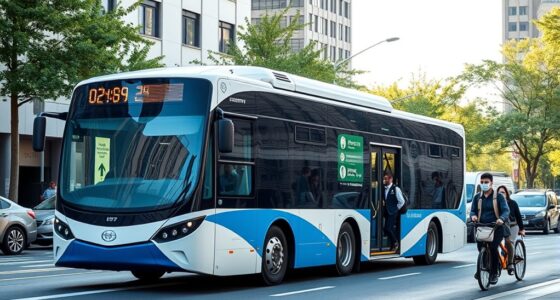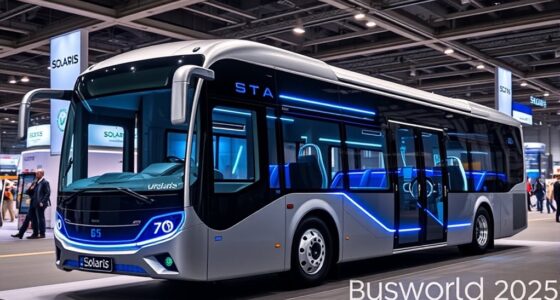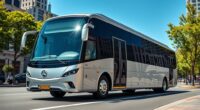
9–14 meter electric buses are crucial for urban transit because they’re flexible, efficient, and eco-friendly. They produce zero emissions, helping improve air quality and reduce noise pollution. Their size suits city routes, and they lower operating costs due to less maintenance and cheaper energy. Plus, with the right charging infrastructure, they stay reliable and on schedule. Keep exploring to discover how these buses are shaping more sustainable city transportation.
Key Takeaways
- 9–14 meter electric buses offer optimal size for urban routes, balancing capacity and maneuverability.
- They integrate seamlessly into existing fleet infrastructures, supporting scalable electrification efforts.
- Their proven reliability and operational efficiency make them the backbone of sustainable urban transit.
- These buses contribute significantly to reducing emissions and noise pollution in dense city environments.
- Strategic charging infrastructure ensures minimal downtime, maintaining their role as core fleet components.

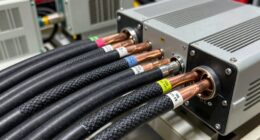
Have you ever wondered how urban transportation is becoming more sustainable? 9–14-meter electric buses are revolutionizing city transit by offering a cleaner, quieter, and more efficient alternative to traditional diesel-powered vehicles. These buses are increasingly seen as the backbone of urban fleets, thanks to their ability to reduce emissions and improve air quality. But to maximize their potential, cities need to develop robust charging infrastructure that supports rapid and reliable recharging. Without it, electric buses can face delays and operational challenges, which could hinder their widespread adoption. Building an extensive charging network involves installing fast chargers at depots and key transit points, ensuring buses can recharge quickly during scheduled breaks. This infrastructure not only keeps the fleet running smoothly but also minimizes downtime, making electric buses a practical choice for busy city routes.
From an environmental perspective, electric buses bring significant benefits. They produce zero tailpipe emissions, drastically cutting down pollutants like nitrogen oxides and particulate matter that contribute to smog and respiratory issues. Unlike diesel buses, they operate quietly, reducing noise pollution in densely populated areas. Over their lifespan, electric buses emit far fewer greenhouse gases, especially when charged using renewable energy sources. This shift toward cleaner transportation helps cities meet climate goals and promotes healthier urban environments. Additionally, electric buses tend to have lower operating costs since electricity is cheaper than diesel and maintenance requirements are reduced, thanks to fewer moving parts and less engine wear. This cost efficiency can free up public funds for other essential city services or transit improvements.
Adopting electric buses also aligns with the broader push toward sustainable urban development. Their quieter operation enhances the quality of life for residents, especially in neighborhoods near busy transit routes. Furthermore, as cities invest in renewable energy, the environmental benefits of electric buses grow even more pronounced. The transition requires coordinated planning, including upgrading electrical grids to handle increased demand and ensuring that charging stations are conveniently located along routes. This integrated approach not only supports operational needs but also maximizes environmental gains.
A crucial factor in supporting electric buses is understanding the importance of financial stability and reliable funding for infrastructure projects, which can significantly influence the success of electric vehicle adoption. In essence, the success of 9–14-meter electric buses hinges on establishing a solid charging infrastructure that enables efficient operation and underscores the environmental advantages they offer. As cities continue to prioritize sustainability, electric buses become more than just a transportation alternative—they evolve into a vital component of greener, healthier urban living. Their widespread adoption will shape the future of city transit, making public transportation more sustainable, accessible, and environmentally friendly for everyone.

78W 4 Port 12V USB Outlet Wall Mount, Dual 36W PD & Dual 18W QC3.0 Lightweight Surface Mount Charger Socket Panel with Button Switch for Bus RV Truck Marine Golf Cart
Ultra-fast 4-Port Version: Our 12V USB outlet has been upgraded to 4 USB ports, 2 PD 30W +…
As an affiliate, we earn on qualifying purchases.
As an affiliate, we earn on qualifying purchases.
Frequently Asked Questions
How Do Electric Buses Compare in Cost to Diesel Buses Long-Term?
Electric buses typically cost less long-term compared to diesel buses due to significant cost savings in fuel and maintenance. You’ll notice lower maintenance costs because electric motors have fewer moving parts and require less frequent repairs. Although the initial investment may be higher, the long-term savings on fuel and upkeep make electric buses more economical over their lifespan, helping your fleet reduce overall operating expenses.
What Are the Challenges of Integrating Electric Buses Into Existing Fleets?
You’ll find that integrating electric buses into your fleet presents challenges like higher upfront costs and limited charging infrastructure. You need to adapt your fleet maintenance routines for battery health and safety, and invest in driver training to handle new technologies. Notably, 70% of fleet managers report that infrastructure upgrades are their biggest obstacle, emphasizing the need for strategic planning to ensure smooth adoption and operational efficiency.
How Does Battery Recycling Impact the Environmental Benefits of Electric Buses?
Battery recycling boosts the environmental benefits of electric buses by reducing battery disposal issues and preventing harmful waste. When you prioritize recycling efficiency, you guarantee valuable materials like lithium and cobalt are recovered and reused, lowering the need for new resource extraction. This process minimizes ecological impact, making electric buses a greener transportation option overall. Focusing on effective recycling helps you maximize sustainability and lessen your fleet’s carbon footprint.
What Advancements Are Being Made in Fast-Charging Technology for Electric Buses?
Imagine a future where charging your electric bus feels almost effortless. Advancements include wireless charging, allowing buses to power up while waiting at stops, and quick battery swapping, making long journeys smoother. These innovations reduce downtime and enhance efficiency, helping your fleet operate seamlessly. By embracing these technologies, you’re not just keeping up — you’re leading the way toward a more sustainable, convenient urban transit system that benefits everyone.
How Do Electric Buses Perform in Extreme Weather Conditions?
You’ll find that electric buses perform reliably in extreme weather conditions, thanks to advancements in weather resilience and performance stability. Manufacturers equip them with insulated batteries and specialized heating or cooling systems to maintain ideal operation. This ensures that despite harsh conditions like extreme cold or heat, your electric bus remains dependable, reducing downtime and maintaining efficient service for urban fleets.
9-14 meter electric city bus
As an affiliate, we earn on qualifying purchases.
As an affiliate, we earn on qualifying purchases.
Conclusion
As you see, 9–14-meter electric buses continue to be the backbone of urban transit, powering cities efficiently and sustainably. They’re like the steady heartbeat of public transport, reliable and strong. While new technologies emerge, these buses remind us that sometimes, sticking with what works is the best path forward. After all, “a chain is only as strong as its weakest link,” and these buses keep cities moving forward, one mile at a time.

4 Pieces Electrical Motor Maintenance Marking Feet Repairing Tools Maintenance Tools Easy To Install
and
As an affiliate, we earn on qualifying purchases.
As an affiliate, we earn on qualifying purchases.
urban electric bus charging infrastructure
As an affiliate, we earn on qualifying purchases.
As an affiliate, we earn on qualifying purchases.