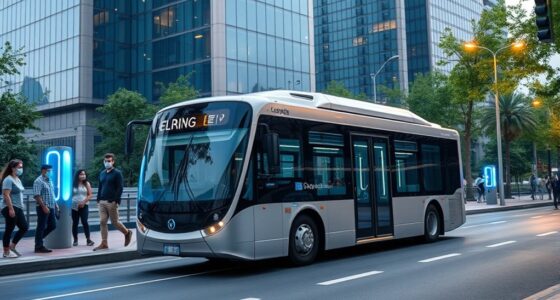
AutonomyNow’s ADAS Streamlined system advances bus safety and efficiency by integrating sensors like lidar, radar, and cameras for all-encompassing environment perception. It automatically detects obstacles, reads traffic signals, and monitors surroundings in real time, reducing driver workload. The system also employs robust AI security to protect data and prevent cyber threats. Its intuitive interface offers clear, real-time information and seamless manual control options. Keep exploring to discover how this technology is revolutionizing autonomous public transit.
Key Takeaways
- AutonomyNow’s ADAS Streamlined offers advanced sensor integration with lidar, radar, and cameras for comprehensive bus environment perception.
- The system enhances safety by real-time obstacle detection, traffic signal reading, and hazard monitoring, reducing driver workload.
- Incorporates AI-driven cybersecurity measures to protect data integrity and guard against cyber threats in autonomous operations.
- Features an intuitive user interface with clear visual and auditory alerts, supporting seamless manual and autonomous mode switching.
- Aims to improve passenger safety, comfort, and operational efficiency, marking a significant advancement in autonomous public transportation technology.
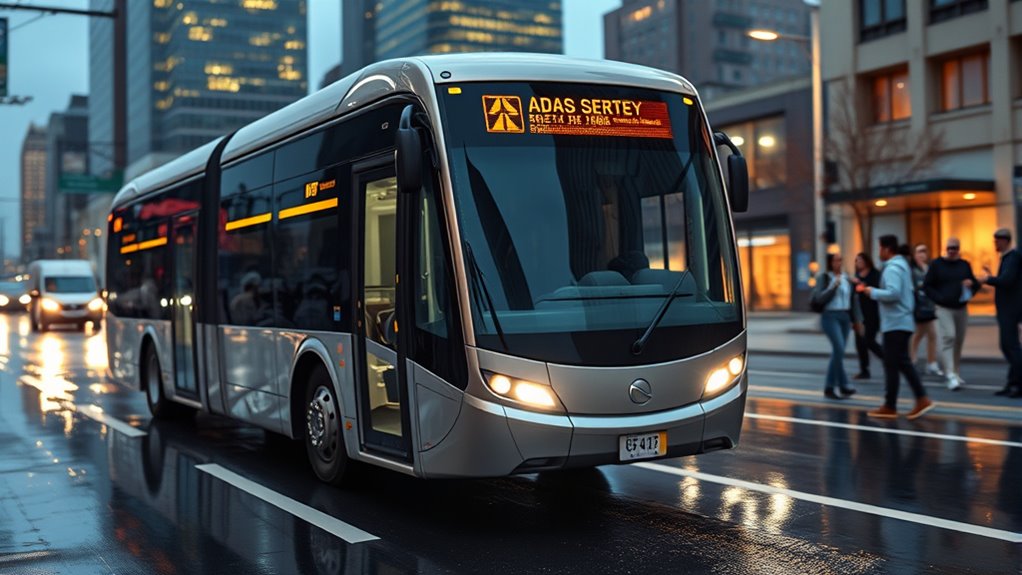
ADAS Streamlined has announced the launch of its latest autonomous driving systems tailored specifically for buses. This new system is designed to enhance safety, efficiency, and passenger comfort, marking a significant step forward in public transportation technology. As a user, you’ll find that the system’s sensor integration is at the core of its capabilities, seamlessly combining data from multiple sensors to create a thorough view of the bus’s environment. This integration includes lidar, radar, and cameras, working together to detect obstacles, read traffic signals, and monitor the surrounding environment in real-time. The system processes this data rapidly, enabling the bus to react instantly to changing conditions, which reduces driver workload and enhances safety margins. AI security technologies are increasingly being incorporated into autonomous systems to ensure data integrity and protect against cyber threats.
When it comes to the user interface, you’ll notice it’s intuitive and straightforward. The interface is designed to provide clear, real-time information without overwhelming you. Visual displays are crisp and easy to interpret, showing essential data like obstacle detection, route guidance, and system status at a glance. Alerts are delivered through both visual cues and auditory signals, ensuring you’re always aware of the system’s status and any potential hazards. The interface also allows for straightforward manual control when necessary, giving you confidence in switching between autonomous and manual modes seamlessly. This thoughtful design aims to minimize distractions and help you focus on the road, making your driving experience safer and more comfortable.

8-Pin Door Switch – PN: VLD1G66B – Heavy-Duty Electrical Door Position Sensor for Transit, Bus, and Commercial Vehicle Applications
8-Pin Door Position Switch: Detects and communicates door open/close status in buses, shuttles, and commercial vehicles with high…
As an affiliate, we earn on qualifying purchases.
As an affiliate, we earn on qualifying purchases.
Frequently Asked Questions
How Does ADAS Streamlined Ensure Safety During Bus Operations?
You’re guaranteed safety during bus operations with ADAS Streamlined because it actively enhances driver awareness and promotes accident prevention. The system provides real-time alerts for potential hazards, monitors driver behavior, and supports quick responses to obstacles or risky situations. By integrating these features, it helps you stay alert, reduces human error, and minimizes accidents, creating a safer environment for passengers, drivers, and everyone on the road.
What Are the Cost Implications for Bus Operators Adopting This System?
Adopting ADAS Streamlined can impact your budget planning through initial costs like installation and system integration. However, a thorough cost analysis shows potential savings from reduced accidents, insurance premiums, and maintenance. While upfront expenses may seem high, long-term benefits include enhanced safety and operational efficiency. You should weigh these factors carefully to determine how the system fits within your financial strategy and future growth plans.
How Compatible Is the System With Existing Bus Models?
Think of retrofit integration and model adaptability as your bus’s new best friends. This system is highly compatible with most existing bus models, making upgrades smoother and more straightforward. While some older models might need minor adjustments, the core technology adapts well, ensuring you don’t have to replace your entire fleet. This flexibility helps you stay current without the hassle of extensive overhauls, saving time and money.
What Training Is Required for Drivers to Utilize ADAS Features?
You’ll need driver training to effectively use ADAS features, focusing on understanding the system’s functions and limitations. AutonomyNow provides thorough training programs that guarantee drivers are confident and competent. Additionally, the system must achieve certification, confirming it meets safety standards before deployment. This combination of driver training and system certification ensures you can operate the ADAS features safely and efficiently, maximizing benefits while minimizing risks.
How Does the System Handle Adverse Weather Conditions?
Some might worry about sensor calibration issues in bad weather, but the system’s weather adaptability guarantees safety. It adjusts sensor performance during adverse conditions, maintaining reliable operation. The sensors are calibrated to handle various weather scenarios, so even rain, fog, or snow won’t compromise the system’s ability to assist you. This means you can trust the ADAS features to perform consistently, regardless of weather challenges.

Cybersecurity in Robotic Autonomous Vehicles
As an affiliate, we earn on qualifying purchases.
As an affiliate, we earn on qualifying purchases.
Conclusion
As these ADAS advancements unfold, you’re stepping into a future where safety and innovation dance hand in hand. Imagine a world where every bus becomes a guardian on wheels, guiding passengers safely through busy streets like a trusted sentinel. With AutonomyNow’s streamlined launches, you’re not just witnessing progress—you’re part of a movement that transforms every journey into a safer, smoother voyage. Embrace this revolution, and let technology be the steady heartbeat of tomorrow’s transportation.

Escort M2 Smart Dash Cam – 1080P Full HD Video Dash Cam, Incident Reports, Parking Mode, Drive Smarter App, Wi-Fi & GPS, 16GB Micro SD Card, Compatible with MAX 360c, MAX 360
Full hd video (1080P) – Capture your drive in Full HD 1080P video resolution so you'll see every…
As an affiliate, we earn on qualifying purchases.
As an affiliate, we earn on qualifying purchases.

Rosco Vision Backup Safety Sensor Display – PN: BSSKD200 – Visual Alert Display for Ultrasonic Obstacle Detection Systems – Compatible with Rosco Sensor Kits for Transit, Bus & Commercial Vehicles
🚨 Backup Safety Display Module – Provides clear visual alerts from Rosco ultrasonic obstacle detection systems, enhancing driver…
As an affiliate, we earn on qualifying purchases.
As an affiliate, we earn on qualifying purchases.