
TL;DR

Get business pricing on monitors, keyboards and dev gear
- Business-only prices and quantity discounts
- Tax-exempt purchasing
- Multiple users, one account, clear invoices
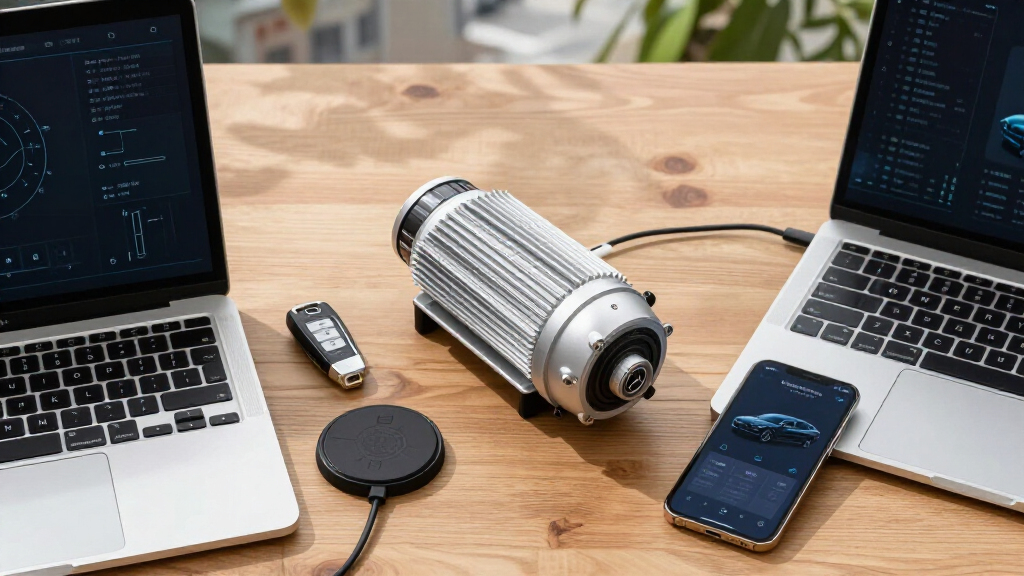
Mercedes-Benz has announced the start of large-scale manufacturing of its electric axial flux motors. This development signals a major advancement in EV propulsion technology and production capacity, with potential implications for the automotive industry.
Mercedes-Benz has begun large-scale production of its new electric axial flux motors, a move that could significantly enhance the performance and efficiency of its upcoming electric vehicle lineup. This development is confirmed by the company and marks a major milestone in its EV manufacturing capabilities, with potential impacts across the automotive industry.
Mercedes-Benz announced the commencement of large-scale production of its electric axial flux motors, designed to improve power density and efficiency for electric vehicles. The company stated that this move aligns with its broader strategy to expand EV offerings and improve vehicle performance. The new motors are expected to feature in upcoming models, with initial testing already underway.
According to Mercedes-Benz, the axial flux motor design offers advantages over traditional radial flux motors, including a more compact size, lighter weight, and higher torque output. The company has invested in new manufacturing facilities to support this production scale, aiming to meet increasing demand for EV components as global markets shift toward electric mobility.
While the company has confirmed the start of production, specific timelines for vehicle integration and commercial availability are still being finalized. Industry analysts view this as a strategic move to stay competitive in the rapidly evolving EV landscape, where motor technology is a key differentiator.
Impact of Large-Scale Axial Flux Motor Production
This development matters because it could enable Mercedes-Benz to produce more efficient, higher-performance electric vehicles at a larger scale, potentially lowering costs and improving range. The axial flux motor’s design offers a competitive edge in power density, which is critical for meeting consumer demand for longer-range EVs with faster acceleration.
Furthermore, this move signals a broader industry shift toward adopting axial flux motor technology, which is gaining traction among automakers seeking to optimize vehicle performance while reducing size and weight. Mercedes-Benz’s early adoption and scaling could influence industry standards and accelerate the adoption of this technology across the sector.
electric axial flux motor for cars
As an affiliate, we earn on qualifying purchases.
As an affiliate, we earn on qualifying purchases.
Background on Axial Flux Motor Development
Electric motor technology has been evolving rapidly, with axial flux designs emerging as promising alternatives to traditional radial flux motors. These motors are characterized by a compact, disc-like structure that can deliver higher torque in a smaller package. Mercedes-Benz has been investing in research and development of axial flux motors for several years, aiming to improve efficiency and performance in its EV lineup.
The company previously announced prototypes and small-scale testing phases, but the recent move to large-scale production marks a significant milestone. Industry competitors, including Tesla and other traditional automakers, are also exploring axial flux and similar advanced motor designs to enhance their EV offerings.
This shift comes amid increasing regulatory pressure, consumer demand for longer-range EVs, and a global push toward sustainable transportation. The timing aligns with broader industry trends toward electrification and innovation in powertrain technology.
“The start of large-scale production of our electric axial flux motors underscores our commitment to innovation and sustainable mobility.”
— Mercedes-Benz spokesperson
As an affiliate, we earn on qualifying purchases.
Details on Vehicle Integration and Market Timing
It is not yet clear when the axial flux motors will be integrated into Mercedes-Benz’s production vehicles or the specific models that will feature them. The timeline for commercial rollout remains to be announced, and details about production volume and pricing are still emerging.
Additionally, industry analysts are watching to see how quickly competitors adopt similar technologies and how this affects market dynamics.
compact high torque electric motor
As an affiliate, we earn on qualifying purchases.
As an affiliate, we earn on qualifying purchases.
Next Steps for Mercedes-Benz and Industry Adoption
Mercedes-Benz is expected to finalize testing and begin integrating the axial flux motors into upcoming EV models within the next 12-18 months. The company will likely announce specific vehicle models and launch timelines soon. Industry observers will monitor how this development influences other automakers’ motor technology strategies and whether axial flux designs become a standard in EV manufacturing.
As an affiliate, we earn on qualifying purchases.
Key Questions
What are axial flux motors and how do they differ from traditional motors?
Axial flux motors have a disc-like structure that allows for higher torque in a smaller, lighter package compared to radial flux motors, which are more cylindrical. This design offers advantages in efficiency and space utilization.
When will Mercedes-Benz vehicles feature these new motors?
The company has not yet announced specific models or timelines, but integration is expected within the next 12-18 months as testing progresses.
How might this development affect the EV market overall?
If successful at scale, axial flux motors could lead to more efficient, affordable, and higher-performance EVs, prompting industry-wide adoption and innovation.
Are other automakers developing similar motor technology?
Yes, several competitors, including Tesla and traditional automakers, are exploring advanced motor designs like axial flux to improve their EV offerings.
Source: IdeaNavigator AI
Fall Picks
fall essentials
As an affiliate, we earn on qualifying purchases.