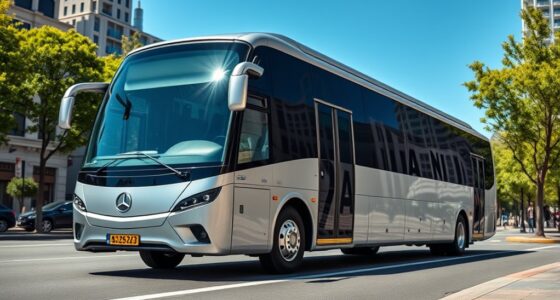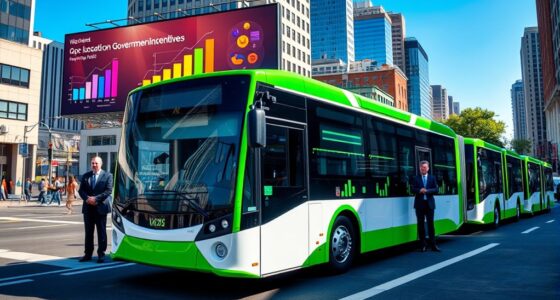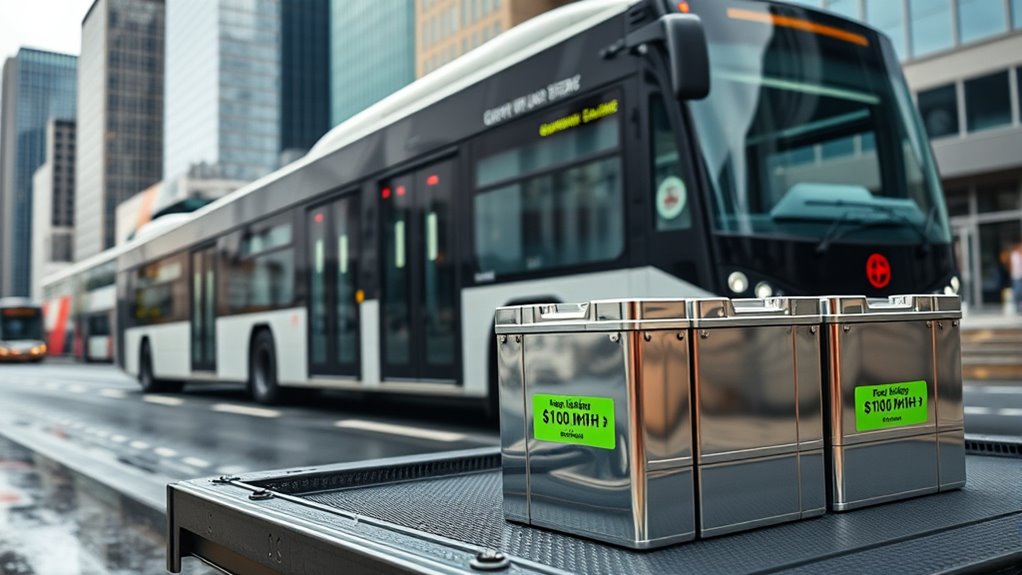

When battery prices drop below $100 per kWh, it means electric buses will become much more affordable for cities and transit agencies. Lower costs enable easier adoption of electric fleets, reduce operating expenses, and improve urban air quality. You’ll see more buses on the roads, longer routes, and lower ticket prices for passengers. To learn how this milestone will shape transportation’s future even further, keep exploring what’s next.
Key Takeaways
- Lower battery costs make electric buses more affordable, reducing total deployment expenses for transit agencies.
- Decreased prices encourage wider adoption of electric bus fleets, improving urban air quality and reducing emissions.
- Cost reductions simplify integrating renewable energy sources like solar and wind into transportation infrastructure.
- Cheaper batteries drive innovation, enhancing bus range, charging times, and battery lifespan.
- Overall, falling battery prices accelerate the shift from diesel to electric transit, supporting a sustainable transportation future.
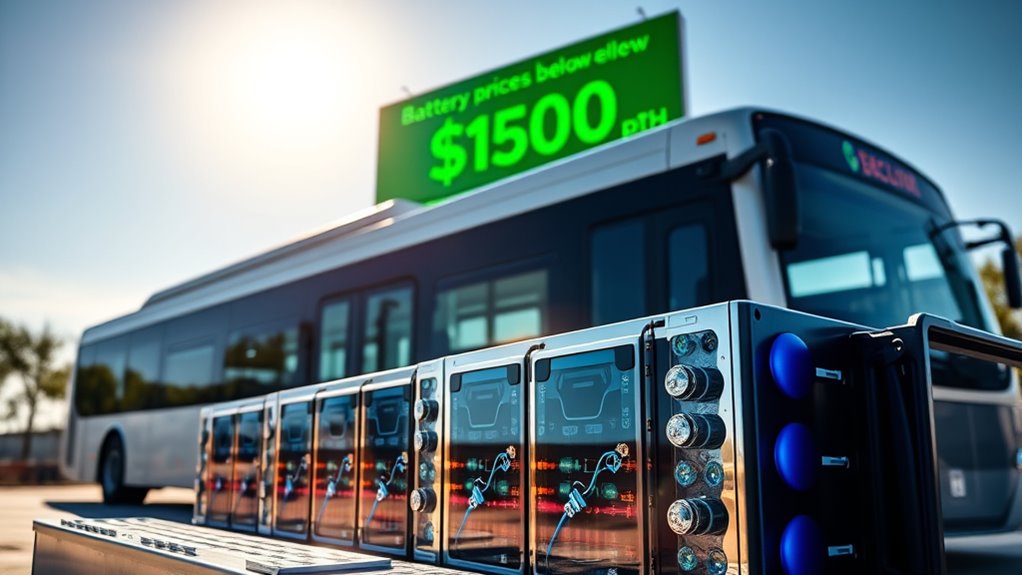
For the first time, battery prices have fallen below $100 per kilowatt-hour, marking a noteworthy milestone for the renewable energy industry. This breakthrough isn’t just a number; it signals a new era where clean energy solutions become more affordable and accessible. As someone interested in sustainable transportation, you’ll find that this price drop directly impacts the future of electric buses and other large-scale transit options. Lower battery costs mean operators can deploy electric buses at a fraction of the previous expense, making electric fleets more economically viable and appealing for cities aiming to reduce emissions.
Battery prices below $100/kWh boost affordable, sustainable transit solutions like electric buses for cities and communities.
You might already know that renewable energy sources like solar and wind are becoming increasingly common, but energy storage has often been a barrier due to high costs. Now, with batteries costing less, the integration of renewable energy into transportation infrastructure becomes more seamless. Electric vehicles—be they cars, trucks, or buses—rely heavily on efficient, cost-effective batteries to operate. When batteries get cheaper, the overall cost of electric vehicles drops, encouraging transit authorities and private companies to switch from diesel to electric options. This shift isn’t just about saving money; it’s about considerably reducing greenhouse gas emissions and improving air quality in urban environments.
The affordability of batteries also accelerates innovation. Manufacturers can now invest more in developing better battery technology, extending range, decreasing charging times, and improving lifespan—all vital factors for buses that need to operate all day without frequent charging. As a result, electric buses become more reliable and easier to maintain, which appeals to transit agencies looking to upgrade their fleets without breaking the bank. This price drop also opens the door for more widespread adoption of renewable energy-powered transportation, as the cost of storing renewable energy becomes comparable to traditional energy sources.
Additionally, the rapid decline in battery costs is partly driven by advancements in battery manufacturing and increased economies of scale, which will likely continue to push prices even lower in the coming years. For you, this means a future where cleaner, quieter, and more efficient public transportation is within reach. Cheaper batteries make electric buses more affordable, which can lead to lower ticket prices and increased access for passengers. Cities can now invest in large-scale electric bus fleets without the hefty price tag that once made such projects seem out of reach. Additionally, as the market for electric buses expands, economies of scale will continue to drive costs down further, creating a positive feedback loop that benefits everyone involved. Ultimately, this milestone not only advances renewable energy and electric vehicles but also helps you, your community, and the environment move toward a more sustainable and cleaner future.

Joinfworld Bus Bar 12V 250A Power Distribution Block Single 5/16" Stud Battery Post Junction Block for Marine Automotive Car Boat Solar System – Positive&Negative
Product: A pair of single stud terminal 12v junction block, includes a red positive power distribution block and…
As an affiliate, we earn on qualifying purchases.
As an affiliate, we earn on qualifying purchases.
Frequently Asked Questions
How Will Lower Battery Costs Affect Bus Manufacturing Timelines?
Lower battery costs will likely shorten your bus manufacturing timelines by improving the battery supply chain. As prices drop, suppliers can produce batteries more quickly and affordably, reducing manufacturing lead times. This means you’ll get your buses faster, with less delay caused by sourcing or cost issues. Overall, decreased battery prices help streamline the manufacturing process, allowing you to meet demand more efficiently and accelerate deployment of electric buses.
What Are the Environmental Impacts of Cheaper Battery Production?
By benefiting from cheaper batteries, you help cut down resource extraction and recycling challenges. Lower costs lead to increased adoption of electric buses, cutting emissions and pollution. However, it also means more batteries end up as waste if not properly recycled, posing environmental risks. You need to support sustainable practices, like improved recycling programs and responsible resource sourcing, to ensure the positive environmental impact outweighs potential drawbacks.
Will Reduced Battery Prices Lead to Increased Bus Adoption Worldwide?
Yes, reduced battery prices will likely boost bus adoption worldwide. As costs decrease, you’ll see more market expansion, making electric buses more affordable for transit agencies. Policy incentives will also play a vital role, encouraging investments and infrastructure development. Together, lower prices and supportive policies can accelerate shift to cleaner transportation, helping you and communities benefit from reduced emissions and improved air quality.
How Might This Price Drop Influence Electric Bus Maintenance Costs?
A penny saved is a penny earned, and with the battery price drop, your electric bus maintenance costs could decrease substantially. Lower costs mean you can afford better battery lifespan management and upgrade your charging infrastructure more easily. As batteries become cheaper, you’ll spend less on replacements and repairs, making your fleet more reliable and cost-efficient. This change helps you keep your buses running smoothly and reduces long-term expenses.
Are There New Battery Technologies Emerging With Further Cost Reductions?
You’ll see new battery tech like solid state batteries emerging, which promise even lower costs and higher safety. These advancements could further cut expenses and improve performance. Additionally, battery recycling techniques are advancing, making it easier and cheaper to reuse materials, reducing costs and environmental impacts. Staying updated on these technologies guarantees you’re prepared for more efficient, sustainable electric buses in the near future.

Battery Organizer Storage Box with Tester, Battery Vault Case Fireproof Waterproof Explosionproof Holder Box with Tester BT-168 Checker Carrying Case Container Bag Fit for 200+ Batteries AA AAA C D 9V
【Fireproof Explosion Proof Waterproof】Fireproof Battery Organizer Case is made of upgraded non-itchy silicone coated fiberglass that can withstand…
As an affiliate, we earn on qualifying purchases.
As an affiliate, we earn on qualifying purchases.
Conclusion
With battery prices falling below $100 per kWh, you can now imagine more affordable electric buses transforming cities. For example, a transit agency could replace diesel fleets with electric ones, saving money and reducing emissions. This shift means better air quality and quieter streets for everyone. As costs continue to drop, expect more innovative public transportation options, making eco-friendly travel accessible and practical for your community’s future.

ECO-WORTHY (Cubix 100) 48V 400Ah 20.48kWh LiFePO4 Solar Battery, UL1973 & UL9540A & CEC Listed, 4 Pack 48V 100AH Server Rack Battery with Bluetooth for Solar Energy Storage, Home Backup Power
Upgraded to Cubix 100 (Feb 5, 2026) – The ECO-WORTHY 48V 100Ah Server Rack LiFePO₄ Battery V3 is…
As an affiliate, we earn on qualifying purchases.
As an affiliate, we earn on qualifying purchases.
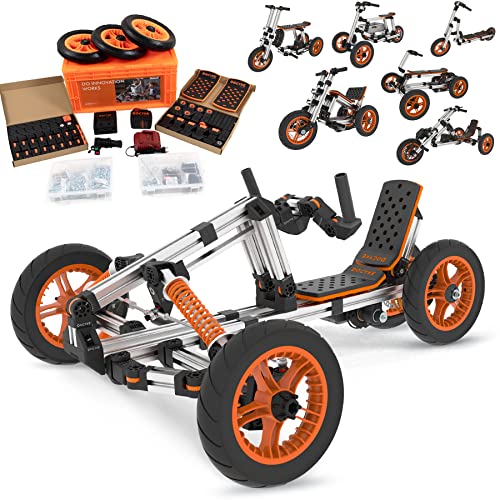
DOCYKE Electric Go Kart Constructibles Over 15 Electric Vehicles Battery Powered for Boys and Girls Kids Electric Ride on Cars Best Gifts for 5 to 18 Year Old Kids,800W brushless Motor.
Gokart has it all for early childhood from 3 to 15 years old. This is the ultimate sustainable…
As an affiliate, we earn on qualifying purchases.
As an affiliate, we earn on qualifying purchases.