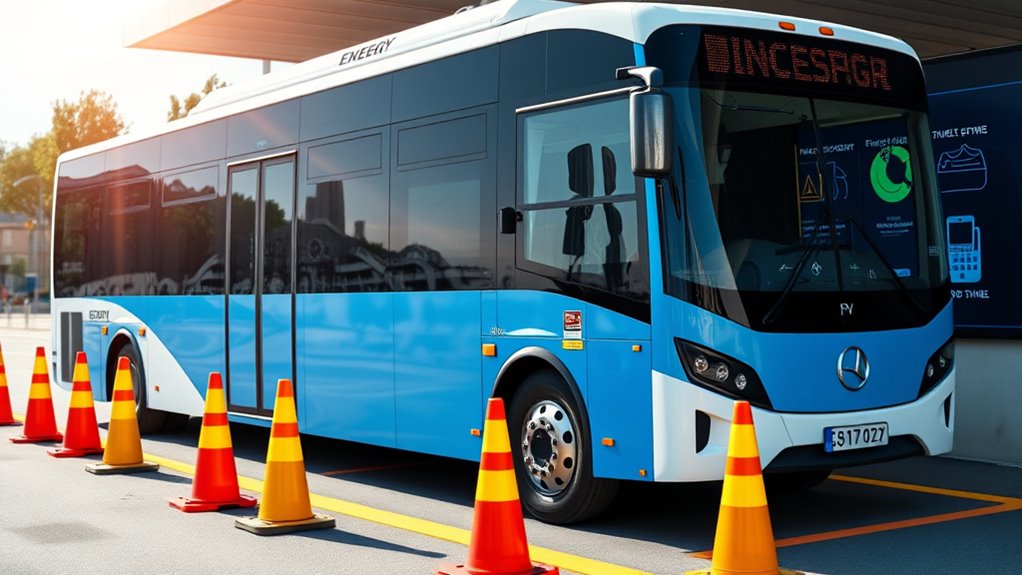

The latest electric bus safety standards focus on rigorous certification processes, which include safety testing, hazard assessments, and compliance with federal and international regulations. Manufacturers incorporate advanced safety features like impact-resistant structures, thermal barriers, automatic disconnect systems, and robust electrical protections. Ongoing maintenance protocols and driver training ensure continued safety performance. Staying up to date on these standards helps you understand the evolving measures that protect passengers and operators—exploring further reveals the thorough safety landscape shaping the future of electric buses.

Get business pricing on monitors, keyboards and dev gear
- Business-only prices and quantity discounts
- Tax-exempt purchasing
- Multiple users, one account, clear invoices
Key Takeaways
- Recent updates incorporate stricter FTA and international safety standards like R100 for electric bus certification.
- Enhanced battery safety features include sealed modules, thermal barriers, and automatic disconnection systems.
- New testing protocols emphasize rigorous safety performance under various operational and crash scenarios.
- Advanced fire suppression and electrical safety mechanisms are now mandatory for risk mitigation.
- Continuous safety management systems ensure ongoing compliance, incident response, and safety improvements.
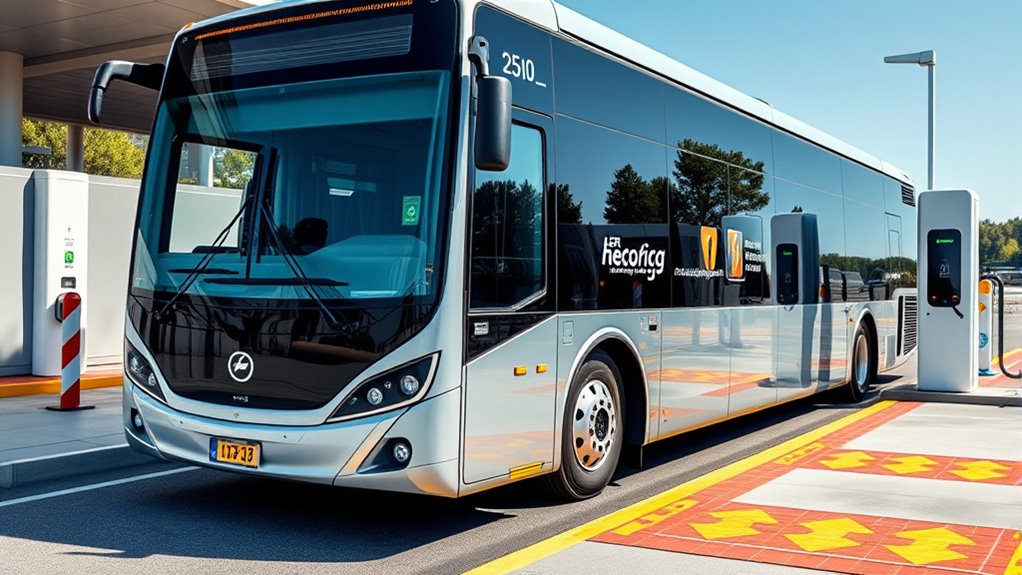
Electric bus safety standards play a vital role in guaranteeing the secure operation of electric transit vehicles. As someone involved in deploying or managing electric buses, understanding these standards helps you maintain safety and compliance across your fleet.
Regulatory frameworks, such as those established by the Federal Transit Administration (FTA), set the foundation for safety certifications. These guidelines require adherence to federal rules and local codes, ensuring that every electric bus meets strict safety benchmarks before entering service.
Industry best practices, like the “Safety and Security Certification of Electric Bus Fleets,” complement these regulations by offering practical approaches to mitigate risks and improve safety measures. They serve as a roadmap, helping you implement proven procedures for risk management and hazard prevention.
Safety assurance is achieved through a thorough process that verifies all safety measures are in place. You need to identify potential hazards early, evaluate their likelihood and impact, and then put in place appropriate risk mitigation strategies. This proactive approach minimizes the chances of mechanical failures, electrical issues, or thermal incidents.
Electric buses are designed with multiple safety features to address these risks. For example, batteries are housed within sealed modules and encased in robust enclosures that prevent mechanical damage. Thermal barriers prevent overheating and thermal runaway, which could lead to fires. Electrical safety mechanisms, such as automatic disconnection systems and pressure relief valves, protect against electrical faults and prevent dangerous situations.
Moreover, the chassis and structural elements are engineered to absorb impact energy, offering collision protection that safeguards both passengers and critical components. Implementing comprehensive safety testing ensures that these safety features perform reliably under various conditions. Additionally, maintaining proper documentation of safety procedures and certifications supports ongoing compliance and safety improvements.
Certification processes involve strict adherence to guidelines like those from the FTA, along with local and state codes. You must perform hazard identification and conduct thorough risk assessments to pinpoint vulnerabilities. Once hazards are recognized, your team needs to implement risk mitigation measures, such as enhanced structural protections or advanced electrical safety systems. Incorporating a comprehensive safety management system can further streamline safety oversight and incident response.
These steps are crucial in maintaining safety standards and ensuring the fleet’s reliability and safety. Ongoing safety management systems are vital in tracking safety performance and facilitating continuous improvements across the fleet.
Electric buses include numerous safety features designed to protect operators and passengers. Structural elements are built to withstand crashes, while electrical components like fuses and circuit breakers prevent overloads. Thermal safety mechanisms monitor temperature levels and activate cooling systems or shut off power to prevent fires.
Impact-resistant chassis designs help distribute crash forces, reducing damage and protecting batteries. Additionally, compliance with international standards like R100 guarantees that safety specifications meet global benchmarks, giving you confidence in the resilience of your fleet.
Operational safety standards emphasize proper training for drivers, routine maintenance, and emergency protocols. Operators need to understand how to handle battery fires or electrical malfunctions swiftly.
Maintenance routines should include regular checks of safety features to ensure they function correctly. Charging infrastructure and facilities must also meet safety requirements, with well-designed systems that prevent electrical hazards. Safety management systems are essential for ongoing monitoring and continuous safety performance improvements across your fleet.
Frequently Asked Questions
How Do Safety Standards Vary Across Different Countries?
You’ll notice safety standards differ worldwide, shaped by regional priorities. Europe emphasizes interoperability and strict battery regulations, while the U.S. focuses on fire safety and cybersecurity.
Australia sets national charging and disposal rules, and China’s cost-driven approach favors rapid scaling but may overlook some safety details. These variations impact procurement, operation, and maintenance, requiring you to stay aware of regional compliance to guarantee safety and efficiency.
What Training Is Required for Electric Bus Operators?
You need specialized training to operate electric buses effectively and safely. This includes learning about vehicle operation, high voltage safety, charging procedures, and emergency response.
You’ll also get hands-on experience with onboard technology and troubleshooting. The training emphasizes safety, maintenance, and understanding new systems, ensuring you’re prepared for diverse situations.
Continuous updates and scenario-based exercises help you stay confident and competent in managing electric buses confidently.
Are There Specific Maintenance Protocols for Electric Bus Batteries?
Think of your electric bus battery as a delicate garden that needs regular tending. You should follow specific maintenance protocols like routine inspections, avoiding deep discharges, and monitoring thermal conditions.
Keep an eye on charging habits, sticking to 20-80% levels, and plan recharge schedules to extend battery life.
Regularly check your charging infrastructure to guarantee smooth operation and prevent issues, much like watering and pruning keep a garden thriving.
How Are Emergency Response Procedures Adapted for Electric Buses?
You need to adapt emergency response procedures for electric buses by familiarizing yourself with manufacturer-specific guides, identifying high-voltage risks, and knowing how to safely isolate batteries and disconnect power.
You should also be aware of emergency exits, fire suppression systems, and ventilation needs.
Proper training guarantees you can effectively manage thermal runaway, evacuate passengers, and control traffic around the scene to minimize hazards and protect everyone involved.
What Future Safety Innovations Are Being Developed for Electric Buses?
You’re curious about future safety innovations for electric buses. Researchers are developing advanced battery designs with enhanced safety features, like better thermal management and safety mechanisms to prevent fires.
Autonomous driving systems with real-time monitoring, collision avoidance, and cybersecurity are also being integrated.
Additionally, smart charging, energy recuperation, and IoT-connected safety features will make electric buses safer, more efficient, and reliable, reducing risks and improving passenger safety in the future.
Conclusion
As you navigate the road ahead, remember that these safety standards are your shield in a world racing toward innovation, much like Icarus’s wings—delicate yet essential. Embrace these guidelines as your steady compass, guiding you safely through the skies of progress. With every precaution, you’re not just following rules—you’re forging a path where electric buses become the chariots of a brighter, safer tomorrow. Drive confidently, knowing you hold the key to a safer journey.
Halloween Picks
halloween
As an affiliate, we earn on qualifying purchases.