
Yutong and Castrosua have teamed up to develop innovative electric buses aimed at transforming urban transit across Europe. Their partnership focuses on advancing battery technology for longer ranges, faster charging, and durability. They are also creating reliable charging infrastructure to support high-utilization schedules. This collaboration aims to help cities adopt sustainable, eco-friendly transportation solutions more efficiently. Keep exploring to learn how these advancements will shape the future of clean city transit.
Key Takeaways
- Yutong and Castrosua collaborate to develop innovative electric buses tailored for European urban transportation needs.
- The partnership focuses on advancing battery technology for longer range, faster charging, and increased durability.
- They aim to deploy robust charging infrastructure supporting quick turnaround times and scalable future expansion.
- The joint effort enhances operational efficiency, reducing downtime and promoting sustainable city transit systems.
- This collaboration supports Europe’s goals for cleaner, eco-friendly public transportation solutions.
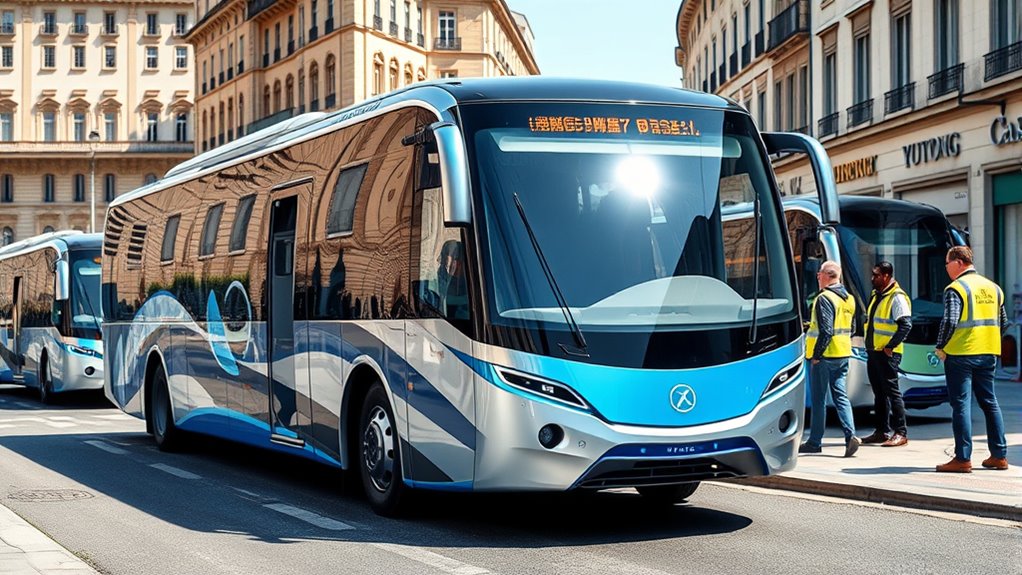
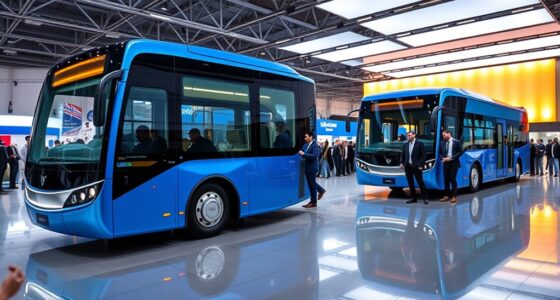
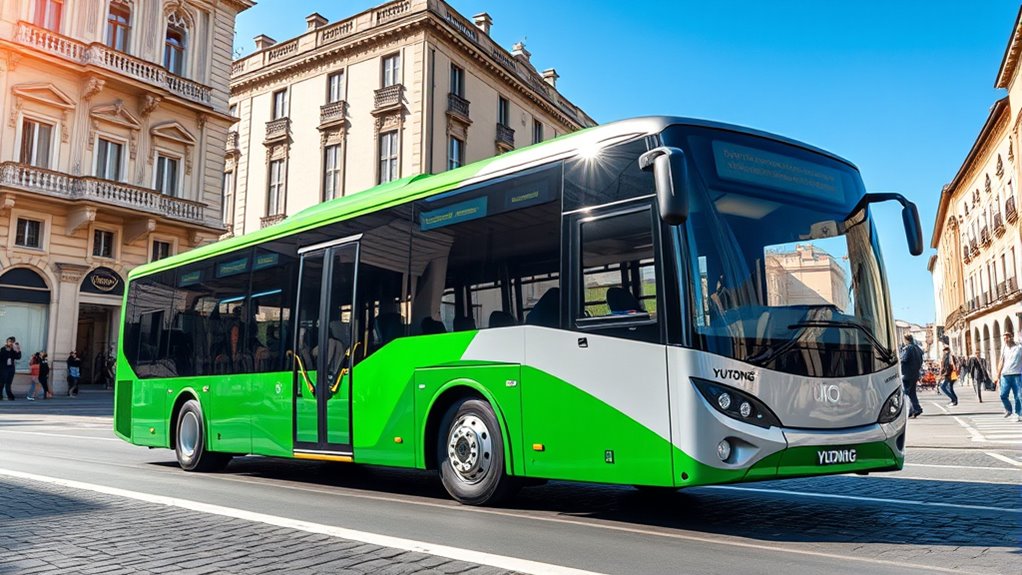
Yutong and Castrosua have teamed up to develop innovative electric buses that aim to transform urban transportation. This collaboration focuses on creating vehicles that are not only eco-friendly but also practical for city environments. As you look into these new buses, you’ll notice that advances in battery technology play a pivotal role. The batteries are designed to deliver longer ranges, faster charging times, and greater durability, ensuring that the buses can handle daily routes without frequent downtime. With improved energy density, you’ll find that these buses can operate throughout the day on a single charge, reducing the need for multiple charging stops and helping cities meet their sustainability goals more effectively. Additionally, the integration of smart energy management systems ensures optimal power distribution and operational efficiency across the fleet.
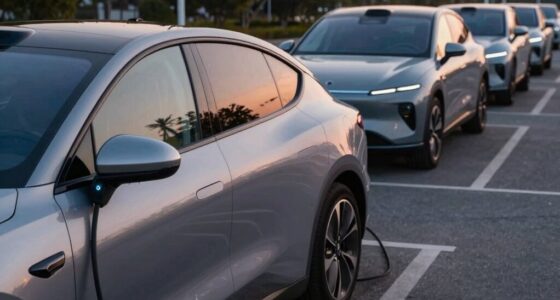
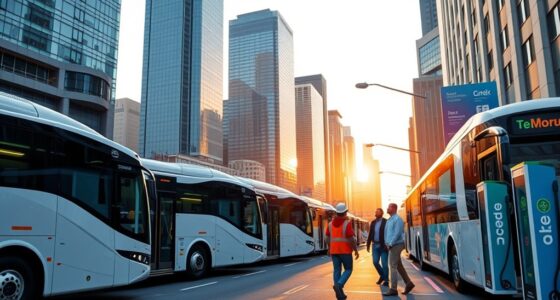
You’ll also find that a significant emphasis has been placed on developing robust charging infrastructure. The partnership recognizes that for electric buses to succeed widely, reliable and accessible charging stations are essential. Expect to see a network of fast chargers strategically placed at depots and key transit hubs, enabling quick turnaround times and minimizing delays. This infrastructure not only supports high-utilization schedules but also encourages wider adoption of electric buses across European cities. The design of these charging stations considers future scalability, so as city transit demands grow, the infrastructure can expand seamlessly.
Furthermore, the collaboration aims to streamline how these buses integrate into existing transportation systems. With advances in battery technology, you’re less likely to experience range anxiety, and with better charging infrastructure, charging becomes faster and more convenient. This means less downtime and more reliable service for passengers. The buses are also built with smart features that optimize energy consumption, contributing to lower operating costs and reduced environmental impact—both key benefits for city planners and operators.
Top picks for "yutong castrosua partner"
Open Amazon search results for this keyword.
As an affiliate, we earn on qualifying purchases.
Frequently Asked Questions
What Is the Projected Cost of the New Electric Buses?
You can expect the projected cost of the new electric buses to be around €300,000 to €400,000 each. This estimate considers manufacturing costs, which are influenced by battery technology and design, and ongoing maintenance expenses that are typically lower than traditional diesel buses. While initial investment might seem high, these buses will save you money over time through reduced fuel and maintenance costs, making them a smart choice for sustainable transit.
How Long Is the Expected Lifespan of These Electric Buses?
You can expect these electric buses to last around 12 to 15 years, thanks to their durable battery longevity. Proper maintenance, including regular checks and timely replacements of key components, helps extend their lifespan. Maintenance intervals are typically every 6 to 12 months, ensuring the buses stay in ideal condition. With good care, you’ll enjoy reliable performance and a longer service life from these eco-friendly transportation options.
Are There Plans for Charging Infrastructure Development Across Europe?
Yes, there are plans to develop charging infrastructure across Europe. You’ll see an expansion of charging stations to support electric buses, making it easier to recharge quickly. Authorities and companies are also working to enhance grid capacity, ensuring it can handle increased energy demands. This development aims to promote widespread adoption of electric buses, reducing emissions and improving urban transport sustainability for you and other commuters.
Will These Buses Be Compatible With Existing European Urban Transit Systems?
You’ll find these electric buses are designed for compatibility with existing European urban transit systems, so integrating them won’t be a problem. Some might worry about adapting to new technology, but these buses adhere to current standards and infrastructure, ensuring smooth operation. Their compatibility with your city’s urban transit network means you can enjoy cleaner, more efficient transportation without major overhauls or disruptions.
What Are the Environmental Benefits Compared to Traditional Diesel Buses?
Electric buses markedly improve air quality and reduce emissions compared to diesel buses. By cutting down on harmful pollutants, you help lower greenhouse gases and combat climate change. These buses produce zero tailpipe emissions, meaning cleaner air for urban environments. You’ll notice less smog and better health outcomes in your community. Overall, choosing electric buses supports a cleaner, greener future by prioritizing emission reduction and improving air quality.
Conclusion
With Yutong and Castrosua teaming up to create electric buses for Europe, you might wonder if this partnership will truly transform urban transit. As they innovate and prioritize sustainability, you’ll see cleaner, quieter streets on the horizon. Are you ready to embrace this new era of eco-friendly transportation? Their collaboration promises a brighter, greener future—one where your daily commute could help save the planet. The question is, are you prepared to be part of that change?