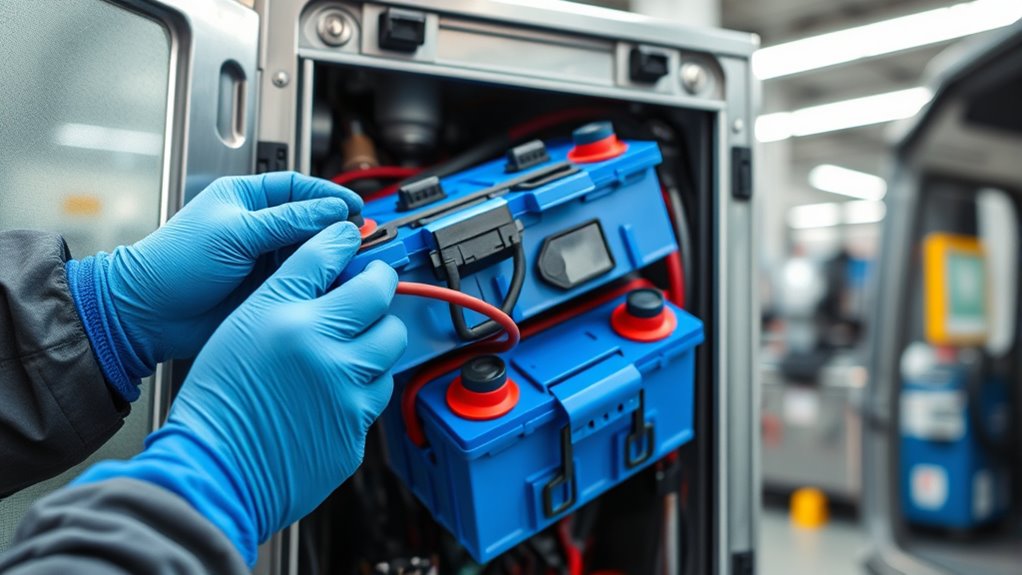

To know when to replace bus battery modules, look for signs like reduced range, erratic charging, warning lights, or visible decline. Before replacing, evaluate if the module truly needs it, and charge it to 50–70% first. Follow safety protocols: power down the bus, wear protective gear, and handle components carefully. Proper inspection, secure installation, and system testing are essential for peak performance. Keep exploring to discover detailed procedures and safety tips.
Key Takeaways
- Monitor battery performance indicators like reduced range and warning lights to determine if replacement is needed.
- Plan replacement after charging the battery to 50-70% and using smart monitoring to optimize timing.
- Follow safety protocols: wear insulated gear, power down the bus, and use insulated tools during removal.
- Disconnect electrical connectors systematically, support the module during removal, and inspect for damage or corrosion.
- After installing the new module, verify connections, perform system tests, and conduct controlled charging to ensure proper operation.

Ever wondered what it takes to replace a battery module? If you’re responsible for maintaining bus batteries, understanding the process is essential to guarantee safety and efficiency. The first step involves evaluating whether a replacement is necessary. Usually, signs like reduced range, erratic charging, or warning lights indicate a battery module’s decline. Once you’ve identified the need for replacement, it’s crucial to plan your approach carefully, starting with proper charging strategies. You want to guarantee the battery is at an ideal state of charge before removal, typically around 50-70%. This prevents potential hazards associated with overcharging or deep discharging during handling. Implementing effective charging strategies also helps maintain the battery’s lifespan and performance, which is essential for fleet reliability. Utilizing advanced technology such as smart monitoring systems can provide real-time data on battery health and optimize replacement timing.
Before diving into the replacement, always prioritize safety protocols. Handling high-voltage battery modules can be dangerous if not done correctly. Ensure you wear appropriate personal protective equipment, such as insulated gloves and safety glasses. Confirm that the bus is fully powered down and isolated from the electrical system to prevent accidental shocks. Use insulated tools and double-check all connections before touching anything. It’s also recommended to consult the manufacturer’s guidelines, as they often specify specific safety procedures and handling instructions. Keeping the workspace organized and free of clutter reduces the risk of accidents.
Prioritize safety: wear protective gear, power down the bus, and use insulated tools during battery module replacement.
When removing the faulty battery module, follow a systematic sequence to avoid damage to surrounding components. Carefully disconnect the electrical connectors, noting their positions or taking photos for easier reassembly. Support the module during removal to prevent dropping it, which could cause damage or leaks. Once the old module is out, inspect the compartment for any signs of corrosion, debris, or damage that could affect the new module’s performance. Before installing the replacement, ensure it’s fully charged according to the recommended charging strategies. Proper pre-conditioning helps it integrate smoothly into the existing system and reduces the risk of early failure.
During installation, adhere strictly to safety protocols, ensuring all connections are secure and correctly aligned. After mounting the new module, test the system thoroughly to verify proper operation. Revisit charging strategies by performing a controlled charge cycle, monitoring for any irregularities. This step confirms the module’s integrity and readiness for service. By combining diligent safety measures with proven charging strategies, you minimize risks and maximize the longevity of your bus batteries. Keeping these practices in mind will help you efficiently manage battery module replacements, ensuring your fleet runs smoothly and safely.
Top picks for "battery module replacement"
Open Amazon search results for this keyword.
As an affiliate, we earn on qualifying purchases.
Frequently Asked Questions
How Often Should Bus Batteries Be Inspected?
You should inspect your bus batteries at least every three to six months to guarantee optimal performance. During inspections, follow proper charging protocols to prevent damage and check for signs of wear or corrosion. Regular inspections help you identify issues early, reducing downtime. Also, remember to recycle old batteries properly, adhering to battery recycling guidelines. Consistent care keeps your bus batteries reliable, extending their lifespan and maintaining safety on the road.
What Are Early Signs of Battery Module Failure?
Think of your bus batteries like a marathon runner’s stamina—early signs of failure include reduced capacity and longer charging cycles. You might notice the bus struggles to start, or batteries drain faster than usual. Changes in battery chemistry can cause irregular performance, signaling it’s time to check. If you see these signs, address them promptly to prevent unexpected breakdowns and extend your battery’s lifespan.
Can I Replace Individual Cells Instead of the Whole Module?
Yes, you can substitute individual cells instead of the whole module if only certain cells are failing or showing issues. Cell replacement allows for targeted module repair, saving time and cost. However, it requires careful testing and matching of new cells to the existing ones to guarantee proper performance and safety. Always follow manufacturer guidelines and consider professional assistance for precise cell replacement to maintain your bus battery’s reliability.
What Safety Precautions Are Necessary During Replacement?
Oh, safety first—because playing with high-voltage bus batteries isn’t exactly a picnic! You should wear personal protective equipment like insulated gloves, eye protection, and flame-resistant clothing. Handle hazardous materials carefully, avoiding sparks or open flames. Make sure the power is disconnected and the area well-ventilated. Following these precautions keeps you safe from shocks, burns, or worse, so don’t skip them—your life’s worth the extra effort.
How Does Temperature Affect Battery Lifespan and Performance?
Temperature critically impacts your bus batteries’ lifespan and performance. Excessive heat can accelerate battery degradation, while cold temperatures reduce efficiency. That’s why effective thermal management and battery cooling are essential. By maintaining ideal temperatures, you prevent overheating and cold-related issues, ensuring your batteries last longer and operate reliably. Proper cooling systems help stabilize temperature fluctuations, maximizing battery health and reducing maintenance needs over time.
Conclusion
Knowing when and how to replace your bus batteries keeps your fleet running smoothly, like the heartbeat of your operation. Don’t wait until a failure strikes—regular checks and timely replacements are your best defense. Think of your batteries as the silent heroes powering every journey; neglect them, and your entire system risks grinding to a halt. Stay proactive, care for your batteries, and keep your fleet moving forward with confidence and reliability.