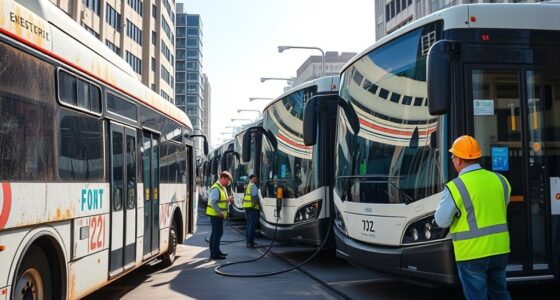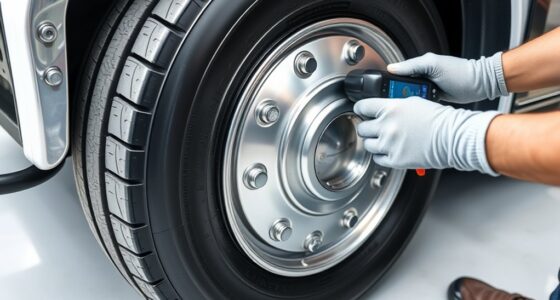
To prevent corrosion on electric bus frames, you should start with proper surface preparation by cleaning, sanding, and applying adhesion primers and durable paints suited for outdoor use. Protect battery compartments with sealed enclosures, sealant, and corrosion-resistant coatings. Regularly inspect for damage, rust, or chips, and promptly touch up any issues. Using corrosion inhibitors and maintaining insulation around electrical zones further extends the frame’s lifespan. Continue exploring to discover effective strategies for long-lasting protection.
Key Takeaways
- Use sealed, ventilated enclosures and sealants to protect battery compartments from moisture and debris.
- Prepare surfaces with cleaning, sanding, and primers to enhance paint adhesion and durability.
- Apply corrosion-resistant coatings and protective barriers, especially around electrical and battery zones.
- Conduct regular inspections for rust, chips, or cracks, and promptly repair damaged coatings.
- Implement multi-layer protection strategies combining surface prep, coatings, insulation, and routine maintenance.

Electric bus frames face unique challenges when it comes to bodywork and corrosion prevention, especially because the batteries and electrical components can make traditional methods less effective. Unlike conventional buses, these vehicles require specialized considerations to guarantee longevity and safety. One of the primary concerns is protecting the battery compartments from moisture and debris, which can lead to corrosion and electrical failures. You’ll want to use high-quality, sealed enclosures that prevent water ingress while allowing for adequate ventilation. Applying proper sealants around battery mounts and electrical connections further reduces the risk of corrosion, ensuring the system remains reliable over time.
Protect battery compartments with sealed enclosures and sealants to prevent moisture and corrosion.
When it comes to bodywork, you must also pay special attention to paint adhesion. The surfaces of electric bus frames often include various coatings and materials designed to withstand harsh environments, but these can sometimes hinder paint sticking effectively. To address this, surface preparation becomes essential. Properly cleaning, sanding, and applying adhesion-promoting primers help ensure that paint bonds securely to the frame. This not only enhances the appearance but also adds an extra layer of protection against corrosion. Use paints formulated specifically for metal and designed for high durability, especially in outdoor settings where exposure to moisture and road salts is common.
The presence of electrical components and batteries also means you need to avoid corrosion pathways that can develop from compromised coatings or damaged paint. Regular inspections are essential; look for chips, cracks, or signs of rust and address them promptly. Touching up damaged areas with compatible primers and paints can prevent corrosion from taking hold. Additionally, consider using corrosion inhibitors or protective coatings tailored for electric vehicle frames, which can penetrate crevices and provide long-lasting protection.
Another key step is guaranteeing that all electrical and battery-related areas are properly insulated and protected from moisture ingress. This might mean installing additional barriers or utilizing specialized coatings that resist corrosion. Proper grounding and electrical insulation also play roles in preventing moisture-related issues that could accelerate corrosion. Moreover, understanding the corrosion mechanisms that affect electric vehicle frames can help in selecting the most effective preventative measures.
In essence, protecting an electric bus frame involves a multi-layered approach: safeguarding batteries, ensuring paint adhesion, and maintaining the integrity of protective coatings. By staying vigilant with surface preparation, choosing the right products, and conducting routine inspections, you’ll extend the lifespan of the vehicle while maintaining safety and performance. These proactive measures are indispensable for overcoming the unique challenges electric bus frames present and ensuring they remain resilient against corrosion over their operational life.
Top picks for "bodywork corrosion prevention"
Open Amazon search results for this keyword.
As an affiliate, we earn on qualifying purchases.
Frequently Asked Questions
How Does Corrosion Impact the Overall Safety of Electric Bus Frames?
Corrosion jeopardizes the safety of your electric bus frames by weakening their structural integrity. As corrosion pathways develop, metal parts become brittle and prone to failure, risking accidents or breakdowns. You need to regularly inspect and treat corrosion to prevent these pathways from expanding. Maintaining the frame’s integrity ensures the bus remains safe for passengers and prolongs its lifespan, ultimately protecting everyone on board.
What Are the Latest Advancements in Corrosion-Resistant Materials for Electric Bus Frames?
You should explore the latest advancements like advanced coatings and composite materials, which substantially enhance corrosion resistance. These innovative coatings form durable barriers against moisture and salt, while composite materials, such as carbon fiber or fiberglass, offer lightweight yet resilient alternatives to traditional steel. Incorporating these technologies into your electric bus frames improves longevity, safety, and reduces maintenance costs, ensuring your fleet withstands harsh environments effectively.
How Often Should Bodywork Inspections Be Performed on Electric Bus Frames?
An ounce of prevention is worth a pound of cure. You should perform bodywork inspections on electric bus frames every 6 to 12 months, depending on usage and environment. Regular maintenance intervals help catch corrosion early, ensuring safety and longevity. Keep a close eye on signs of rust or damage, and don’t delay inspections—routine checks are your best defense against costly repairs down the road.
Are There Environmentally Friendly Options for Bodywork and Corrosion Prevention?
Yes, eco-friendly treatments like biodegradable coatings and environmentally friendly corrosion prevention options are available. You can choose biodegradable coatings that provide effective protection while minimizing environmental impact. These treatments are designed to withstand corrosion without relying on harmful chemicals, helping you maintain your electric bus frames sustainably. By opting for eco-friendly options, you support environmental preservation and ensure your vehicles stay protected efficiently and responsibly.
How Does Temperature Fluctuation Affect Corrosion Development in Electric Bus Frames?
Temperature fluctuations can accelerate corrosion in electric bus frames through thermal expansion and moisture infiltration. As metal expands and contracts, tiny cracks form, allowing moisture to seep in. This moisture fuels rust and corrosion over time. You might think the metal’s movement helps prevent corrosion, but it actually creates vulnerabilities, making it vital to select corrosion-resistant materials and proper sealing methods to protect your bus frames against these damaging effects.
Conclusion
By treating your electric bus frame like a knight’s armor, you protect it from the relentless assault of rust and corrosion. With the right bodywork and preventive measures, you turn your vehicle into a fortress on wheels, standing tall against time and elements. Keep your frame well-guarded, and it’ll serve you faithfully, gliding smoothly through countless miles. Remember, a well-maintained frame isn’t just metal—it’s the heartbeat of your electric journey.