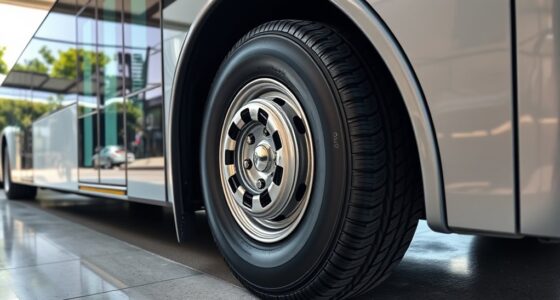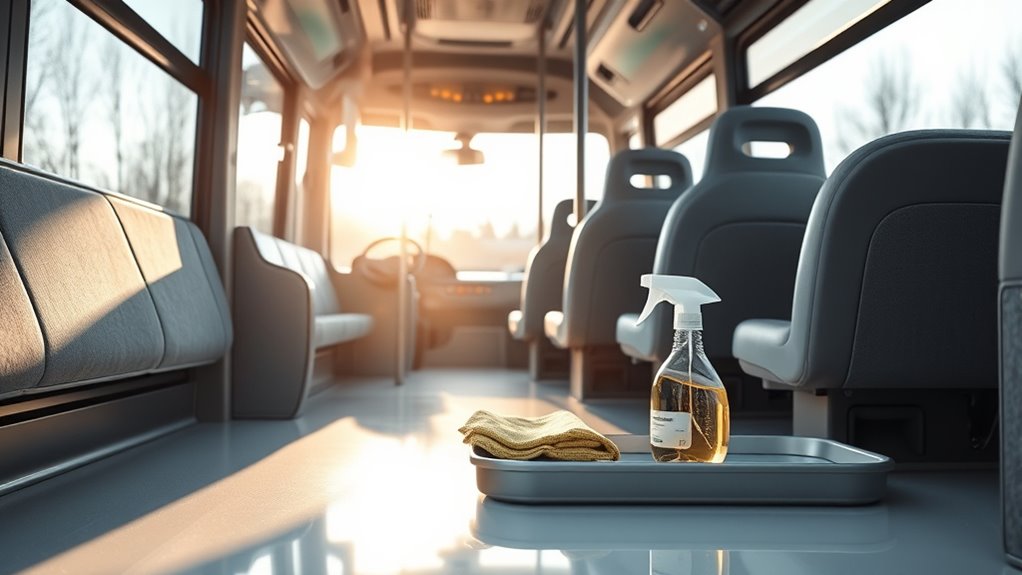
To properly clean and maintain electric bus interiors, start by removing loose debris and trash, then clean surfaces with EPA-registered disinfectants, paying special attention to high-touch areas like handrails and seats. Use microfiber cloths and avoid excess moisture to protect electrical components. Regularly inspect for stains, graffiti, or damage, and schedule deep cleans every few months. Following safety guidelines and using specialized products helps prolong interior life. Keep exploring for more tips on maintaining a safe and hygienic environment.
Key Takeaways
- Remove loose debris and trash, then pre-clean surfaces with appropriate tools to prevent dirt spread and protect electronic components.
- Use EPA-registered disinfectants on high-touch areas, ensuring proper dwell time and dry surfaces thoroughly afterward.
- Utilize microfiber cloths and specialized cleaning products designed for electronic parts to ensure effective, safe cleaning.
- Schedule routine light cleaning weekly and deep cleans periodically to maintain hygiene and prevent buildup in hard-to-reach areas.
- Regularly inspect interior components for damage or wear, and train staff on proper cleaning procedures to ensure consistent maintenance.
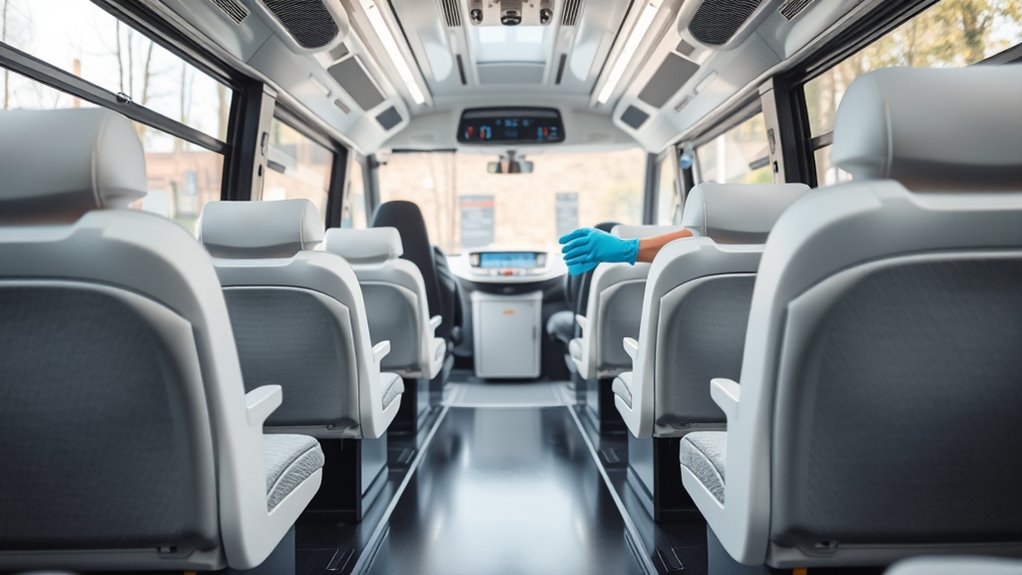
Maintaining clean and well-kept interiors is essential for ensuring passenger safety and comfort on electric buses. A thorough cleaning process begins with pre-cleaning steps that remove loose debris from the floors and aisles by sweeping or vacuuming. This initial step helps to prevent dirt from spreading during the more detailed cleaning phases. Additionally, using appropriate tools and techniques tailored for electric bus interiors can help prevent damage to sensitive components. Regular inspection of cleaning equipment ensures optimal performance and avoids cross-contamination.
Next, you should empty all trash receptacles to create a clean slate, making it easier to focus on surface cleaning and disinfecting without the interference of leftover waste. Carefully inspect surfaces for stubborn stains, gum, or graffiti that might require special treatment. Using the right cleaning products for different surfaces is crucial; select disinfectants and cleaners that are appropriate for the material, whether plastic, fabric, or metal, and ensure they’re EPA-registered for effectiveness against pathogens.
Safety precautions are vital during cleaning. Always work in well-ventilated areas when using chemical cleaners to prevent inhalation hazards. When cleaning the interior, focus on high-touch areas like handrails, seats, and control panels. Spot cleaning these areas with a spray disinfectant followed by wiping ensures you target places most likely to harbor germs.
Microfiber cloths are highly effective for cleaning because they trap dirt and reduce chemical residue, which is especially important for maintaining a healthy environment inside electric buses. Adhere to dwell times specified by product manufacturers to maximize disinfectant efficacy, and minimize chemical use by carefully measuring and applying only what’s necessary for effective cleaning.
For disinfection, pick EPA-registered disinfectants and apply them from top to bottom to avoid re-contamination of cleaned surfaces. Ensure surfaces stay wet for the recommended dwell time, then wipe dry or allow air drying as instructed. Prioritize sanitizing high-touch surfaces, such as door handles, seat belts, and control panels, to reduce the risk of transmission.
Electric buses often have sealed systems, which can simplify cleaning since there are fewer exposed electrical components. Still, use appropriate tools for hard-to-reach areas and avoid excessive moisture around electrical parts to prevent damage or safety hazards. Regular maintenance is key to preserving the interior environment, as routine cleaning helps prevent buildup and prolongs the lifespan of interior components.
Incorporating specialized cleaning products that are designed for electronic components can further enhance interior safety and effectiveness. Staying current with new cleaning technologies can lead to more efficient and eco-friendly practices that benefit both the environment and operational costs. Additionally, training staff on proper disinfection procedures ensures consistent application of cleaning protocols and safety measures. Performing light cleaning weekly to maintain hygiene and appearance, and scheduling deep cleaning every few months to reach harder areas and address buildup, will keep the bus in optimal condition.
Keeping the interior spotless helps with inspections and aligns with seasonal usage changes. Budget for cleaning supplies and staff training to ensure consistent, effective cleaning practices. Challenges like stubborn stains from gum or marker graffiti can be tackled with specialized products. Train staff in efficient techniques, emphasizing high-priority areas and eco-friendly practices, to streamline cleaning processes.
Staying updated on new cleaning technologies and methods will help you maintain a safe, clean, and reliable electric bus interior.

Theochem In-Cide Hospital Grade Disinfectant Spray – EPA Registered Cleaner Kills 99.9% MRSA, H1N1- Medical Grade for Home Office Clinic – Fresh Scent – 1 Gallon + 32oz Bundle
EPA-List N Registered Hospital-Grade Disinfectant: Kills 99.9% of viruses & bacteria, including MRSA and influenza – trusted by…
As an affiliate, we earn on qualifying purchases.
As an affiliate, we earn on qualifying purchases.
Frequently Asked Questions
How Often Should Electric Bus Interiors Be Deep Cleaned?
You should deep clean electric bus interiors twice a month, roughly every 15 days or after every 3,000 miles. This schedule guarantees thorough sanitation, including floor scrubbing, seat and window cleaning, and ventilation system sanitation.
Additionally, incorporate post-pandemic antimicrobial spraying for lasting protection. Regular deep cleaning keeps your bus safe, hygienic, and compliant with safety standards, preventing buildup of dirt and bacteria.
What Cleaning Products Are Safe for Electric Bus Interiors?
Wondering which cleaning products keep your electric bus interiors safe? You should use mild soap solutions diluted in warm water for general cleaning.
70% isopropyl alcohol is effective for disinfecting seats and surfaces.
Hydrogen peroxide-based cleaners are suitable for vinyl, fabric, or plastics.
Opt for biodegradable, non-toxic cleaners like Blue Gold, and ammonia-free glass cleaners.
Always test first, rinse thoroughly, and avoid harsh solvents to prevent damage.
Are you ready to keep your bus spotless and safe?
How to Prevent Interior Damage From Battery Leaks?
To prevent interior damage from battery leaks, you should guarantee batteries are properly sealed and regularly inspected for leaks. Install leak detection systems and choose interior materials resistant to battery acid.
Use durable, easy-to-clean floor coverings, and implement a spill response plan. Keep the bus floor well-drained, maintain effective ventilation, and train staff on leak handling.
This proactive approach minimizes damage and maintains a safe, clean interior environment.
Are There Eco-Friendly Cleaning Options for Electric Bus Interiors?
You want eco-friendly cleaning options for electric bus interiors. You can use vinegar solutions for windows and countertops, which are effective and chemical-free.
Baking soda works well for odors and stains on upholstery. Essential oils add a fresh scent without harsh chemicals.
Eco-friendly detergents from brands like Blue Gold are available, and steam cleaning offers a chemical-free way to disinfect surfaces.
These methods keep your bus clean and environmentally conscious.
How to Sanitize Electric Bus Seats Effectively?
Think of sanitizing electric bus seats as tending a delicate garden—you must be gentle yet thorough. First, remove dirt and debris with microfiber cloths. Then, spray an appropriate disinfectant, ensuring it dwells long enough to work. Focus on high-touch areas like armrests and seat belts.
Always wear protective gear, and avoid harsh chemicals. Regularly inspect and log your cleaning to keep the interior safe and spotless for every passenger.

MagicFiber Microfiber Cleaning Cloth, 6 Pack – Premium Cloth for Glasses, Lens, Screens & More
Glasses cleaner – Sourced from the highest quality microfiber that absorbs and removes dust, oil, smudges, fingerprints, dirt,…
As an affiliate, we earn on qualifying purchases.
As an affiliate, we earn on qualifying purchases.
Conclusion
By regularly cleaning and maintaining your electric bus interiors, you guarantee a safe, comfortable, and inviting environment for passengers. Keep up with routine checks and proper cleaning techniques, and you’ll prevent issues before they arise. Remember, a stitch in time saves nine—staying proactive now saves you from bigger headaches later. With consistent care, your electric bus will run smoothly and look sharp, proving that a little effort goes a long way in keeping everything in top shape.

17pcs Car Detailing Kit Interior Cleaner, Car Interior Cleaning Kit with Handheld Car Vacuum, Car Detailing Brushes, Windshield Cleaning Tool, Car Cleaning Supplies, Car Accessories for Men, Women
【Professional 17PCS-in-1 Car Interior Detailing Kit】 The car detailing kit interior cleaner includes 1 portable car vacuum, 2…
As an affiliate, we earn on qualifying purchases.
As an affiliate, we earn on qualifying purchases.

Professional Disposables Surface Disinfectant Super Sani-Cloth Wipes, 160Count
Highly Effective Formula: Our Super Sani-Cloth wipe boasts an impressive 55.5% of active germicidal agents, including quat and…
As an affiliate, we earn on qualifying purchases.
As an affiliate, we earn on qualifying purchases.