To safely de-energize HV3, first disconnect the power supply using the emergency shutdown procedure, following your facility’s protocols precisely. Next, make certain all residual energy is dissipated by attaching grounding conductors at multiple points and verifying all connections are secure. Confirm the system is de-energized with proper testing equipment—not just indicators. Final safety checks and clear communication are essential. Continue to explore detailed steps to ensure your process remains safe and effective.
Key Takeaways
- Initiate emergency shutdown procedures to quickly disconnect power and prevent hazards.
- Verify de-energization using proper testing equipment before proceeding.
- Connect grounding conductors securely to dissipate residual energy safely.
- Ensure all grounding points are stable and properly attached at multiple locations if needed.
- Communicate clearly with team members and document each step following safety protocols.
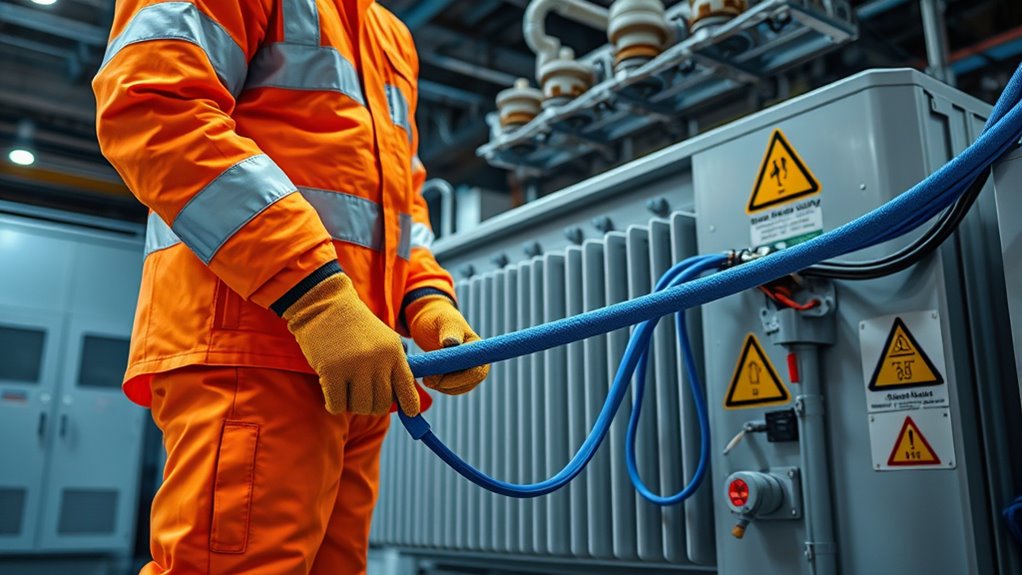
De-energizing HV3 is a crucial step in maintaining safety and guaranteeing proper equipment handling. Before beginning the process, you need to follow established grounding protocols to prevent accidental energization and protect personnel. Proper grounding involves connecting a grounding conductor to the system, which safely dissipates residual or stored energy, reducing the risk of electrical shock. This step is essential, especially when performing maintenance or repairs, as it guarantees that no voltage remains on the high-voltage system. Always verify that grounding connections are secure and intact before proceeding.
Follow proper grounding protocols to ensure safety during high-voltage system maintenance.
The first action you should take is to initiate the emergency shutdown procedure if the situation demands immediate de-energization. An emergency shutdown is designed to rapidly disconnect power, minimizing potential hazards caused by faults, equipment failure, or other unsafe conditions. When activating the emergency shutdown, ensure you follow your facility’s protocols precisely, which typically involve pressing designated buttons or switches that disconnect HV3 from the power source. This action should be performed swiftly but safely, keeping clear of energized parts and following lockout/tagout procedures to prevent accidental re-energization during maintenance.
Once the emergency shutdown is successful, you must confirm that HV3 is fully de-energized before proceeding with grounding and further work. Use proper testing equipment, such as a voltage tester or meter, to verify the absence of voltage. Do not rely solely on control panel indicators, as they may not always reflect the true status of the system. Confirming de-energization is critical because working on energized equipment can lead to severe injury or fatality. If voltage is detected, do not attempt to bypass safety measures; instead, investigate the cause and resolve it before continuing. Additionally, understanding the importance of voltage verification ensures that safety is maintained throughout the process.
After confirming that HV3 is de-energized, you should establish a thorough grounding protocol. Attach grounding devices at multiple points if necessary, ensuring they are properly connected and stable. This step provides a safe path for any residual or stored electrical energy to dissipate, making the system safe for maintenance personnel. Throughout this process, maintain clear communication with your team and document each step according to your safety procedures.
Following these steps—initiating emergency shutdown, verifying de-energization, and applying proper grounding protocols—ensures that HV3 is safely isolated. This process minimizes risks and prepares the system for maintenance, inspection, or repairs, maintaining safety and operational integrity. Always remember, meticulous adherence to these procedures is crucial for your safety and the safety of everyone involved.
Top picks for "energization procedur safely"
Open Amazon search results for this keyword.
As an affiliate, we earn on qualifying purchases.
Frequently Asked Questions
What Are the Common Mistakes During HV3 De-Energization?
You often make mistakes during HV3 de-energization by neglecting proper communication, leading to confusion and potential hazards. Equipment failure can occur if you skip inspections or ignore warning signs. Rushing the process increases risks, and improper grounding or disconnecting tools without confirmation can cause accidents. Always double-check procedures, communicate clearly with your team, and make certain equipment is functioning correctly to prevent these common errors.
How to Troubleshoot Unexpected Energization During Shutdown?
Think of unexpected energization as a stubborn ghost lingering in your system; you must exorcise it. To troubleshoot, double-check grounding techniques to guarantee all sources are neutralized, and verify that communication protocols were followed precisely. You’ll want to re-examine control switches and safety interlocks, ensuring they’re fully deactivated. Clear, concise communication with team members also helps prevent misunderstandings, keeping everyone aligned and preventing surprises during shutdown.
Are There Specific PPE Requirements for HV3 De-Energization?
You need to wear appropriate Personal Protective Equipment (PPE) for HV3 de-energization, including insulated gloves, face shields, and arc-rated clothing. Make certain you’re properly trained and certified before performing any de-energization tasks. Your PPE must meet industry standards to protect against electrical hazards. Always verify your PPE is in good condition, and follow company protocols to maintain safety during high-voltage system shutdowns.
How Often Should De-Energization Procedures Be Reviewed?
You should review your de-energization procedures at least annually to guarantee safety and compliance. Regular inspection frequency helps identify outdated protocols or potential hazards. When updating protocols, involve experienced personnel and incorporate the latest safety standards. Frequent reviews ensure you’re prepared for unexpected situations and maintain a safe working environment. Keep documentation current, and don’t wait too long between reviews to minimize risks during high-voltage system shutdowns.
What Are the Environmental Considerations During De-Energization?
During de-energization, you should consider the environmental impact by minimizing hazardous waste and preventing contamination. Proper waste management involves safely disposing of or recycling components like batteries, oils, and electronic parts. You need to guarantee spill containment and avoid releasing harmful substances into the environment. Taking these steps helps protect ecosystems, complies with regulations, and promotes responsible handling of high-voltage system materials during de-energization.
Conclusion
By following these HV3 de-energization procedures, you guarantee the system’s gentle rest, safeguarding both personnel and equipment. Think of it as giving the high-voltage systems a peaceful pause, allowing them to rejuvenate safely. Your careful actions help maintain a harmonious environment where safety and efficiency work hand in hand. Remember, a calm approach today keeps surprises at bay tomorrow, so always handle de-energization with the utmost care and respect.