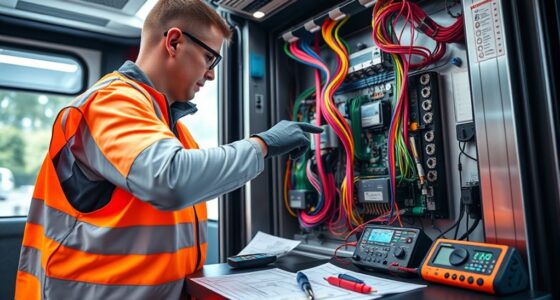
To handle software bugs and glitches in electric buses, you should follow established protocols, including diagnosing error codes with diagnostic tools and applying software patches or resets promptly. Regular software updates and proactive diagnostics help prevent issues before they affect operations. Well-trained drivers can also spot early warning signs and respond confidently. By maintaining these routines, you guarantee the bus runs smoothly and safely, and you’ll uncover even more effective strategies as you explore further.
Key Takeaways
- Follow established protocols for diagnosing and isolating software issues promptly during operations.
- Use diagnostic tools to interpret error codes and determine the root cause of glitches.
- Apply software patches and updates as recommended by manufacturers to fix bugs and improve system stability.
- Perform system reinitialization or resets for minor glitches to restore normal functioning quickly.
- Maintain regular communication with technical support and ensure timely software updates for ongoing reliability.

Have you ever wondered how reliable electric buses really are? While they promise cleaner emissions and quieter operation, their dependability often hinges on how well their software runs. Software bugs and glitches are common challenges, but the key to managing them lies in solid driver training and strict maintenance protocols. When issues arise, well-trained drivers know how to respond swiftly, avoiding unnecessary breakdowns or safety hazards. They learn to recognize early warning signs of software malfunction and can follow specific procedures to keep the bus operating safely until repairs are made.
Proper driver training isn’t just about handling the vehicle physically; it also involves understanding the bus’s digital systems. Drivers need to know how to interpret error messages and alerts, which often pop up on the dashboard or infotainment screens. This familiarity helps prevent minor glitches from escalating into major problems. When drivers are confident in their ability to troubleshoot basic issues, they reduce downtime and improve overall reliability. Additionally, training programs often include guidance on how to perform simple resets or checks, empowering drivers to resolve minor software hiccups on the spot without needing immediate technical support.
Complementing driver training are rigorous maintenance protocols. Electric buses rely heavily on sophisticated software that manages everything from battery health to regenerative braking. Regular software updates, much like smartphone app upgrades, are essential to patch bugs and enhance system stability. Maintenance teams follow strict schedules for checking hardware and software integrations, ensuring that all components communicate correctly and function as intended. They also perform routine diagnostics, which can identify software anomalies before they cause operational disruptions. This proactive approach minimizes unexpected breakdowns and keeps the bus running smoothly.
When a software bug does slip through, having a clear set of maintenance protocols makes a difference. These protocols outline steps for diagnosing the problem, applying patches, and reinitializing systems if needed. Technicians are trained to interpret error codes and utilize diagnostic tools to pinpoint issues quickly. By adhering to these protocols, they can address glitches efficiently, reducing the impact on service schedules. Furthermore, fleet managers often coordinate with manufacturers to receive timely updates, ensuring the buses stay current with the latest software improvements.
Top picks for "deal software bugs"
Open Amazon search results for this keyword.
As an affiliate, we earn on qualifying purchases.
Frequently Asked Questions
How Do Manufacturers Prevent Software Bugs Before Deployment?
You prevent software bugs before deployment by conducting thorough automotive cybersecurity measures and extensive user experience testing. You implement rigorous coding standards, perform frequent code reviews, and utilize automated testing tools to identify vulnerabilities early. Additionally, you simulate real-world scenarios to guarantee stability, while integrating cybersecurity protocols to safeguard against potential threats. This proactive approach helps you deliver reliable, secure software that enhances user experience and minimizes post-deployment issues.
What Is the Role of AI in Bug Detection?
You’ll find AI plays a vital role in bug detection, with studies showing AI-driven diagnostics catching up to 90% of software issues early. By leveraging automated bug detection, you can identify glitches faster and more accurately than manual methods. This proactive approach helps guarantee your electric bus’s software runs smoothly, reducing downtime and improving passenger safety, all thanks to AI’s ability to analyze vast data quickly and efficiently.
How Are Software Updates Scheduled for Electric Buses?
You typically receive software updates on a planned schedule designed to minimize disruptions. The software update schedule is coordinated with maintenance planning, ensuring updates occur during routine maintenance or low-traffic periods. This proactive approach helps you stay current with bug fixes and improvements, maintaining ideal bus performance. Regular updates enhance safety, efficiency, and reliability, so you can confidently rely on your electric bus’s software running smoothly and securely.
Can Bugs Cause Safety Hazards During Operation?
They say, “Forewarned is forearmed,” and that’s true for electric buses. Software bugs can indeed cause safety hazards during operation if they affect critical systems. Prioritizing software reliability helps detect and fix issues quickly, minimizing risks. Effective hazard mitigation strategies include regular updates, thorough testing, and real-time monitoring. Staying vigilant guarantees passenger safety and keeps your fleet running smoothly, even when glitches occur.
What Training Do Technicians Receive for Software Troubleshooting?
You receive thorough training that covers diagnostic protocols and hands-on troubleshooting techniques. You also obtain technician certifications to guarantee you meet industry standards. This training equips you to identify software issues quickly, use diagnostic tools effectively, and follow established procedures for resolving glitches. By staying current with updates and best practices, you can efficiently troubleshoot software problems, minimizing downtime and maintaining safety in electric bus operations.
Conclusion
Dealing with software bugs in electric buses is like taming a wild stallion—you need patience and quick thinking. While glitches can be frustrating, they’re just bumps on the road to smoother operation. By staying vigilant and working closely with developers, you turn challenges into opportunities for improvement. Remember, every bug fixed is a step closer to a reliable, eco-friendly transit system. Keep riding forward—every journey has its rough patches, but the destination’s worth it.