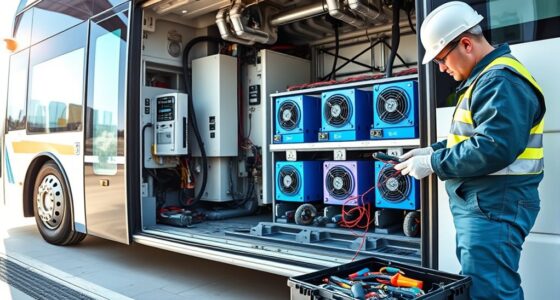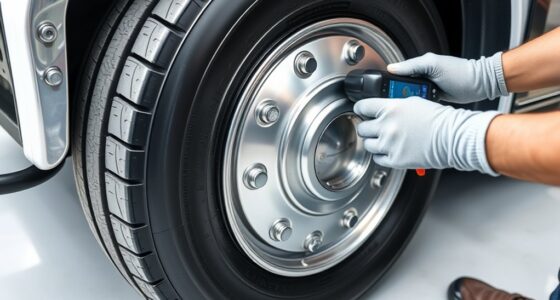

Using OBD tools on electric buses allows you to quickly identify and troubleshoot system issues, ensuring peak performance and safety. These tools help monitor battery health, detect irregularities, and verify firmware updates, reducing downtime and repair costs. They also enable proactive maintenance, extending the vehicle’s lifespan. By utilizing software diagnostics, you can keep electronic systems running smoothly. Continuing will reveal how this technology enhances fleet reliability and overall efficiency.
Key Takeaways
- OBD tools enable real-time monitoring of electric bus systems, including battery health and electronic component status.
- They facilitate firmware updates to improve vehicle performance, safety, and energy efficiency.
- Diagnostic trouble codes help identify and troubleshoot issues quickly, minimizing downtime.
- OBD tools verify the status of the Battery Management System (BMS) and detect electrolyte or casing irregularities.
- Regular software diagnostics support proactive maintenance, extending the lifespan and reliability of electric buses.
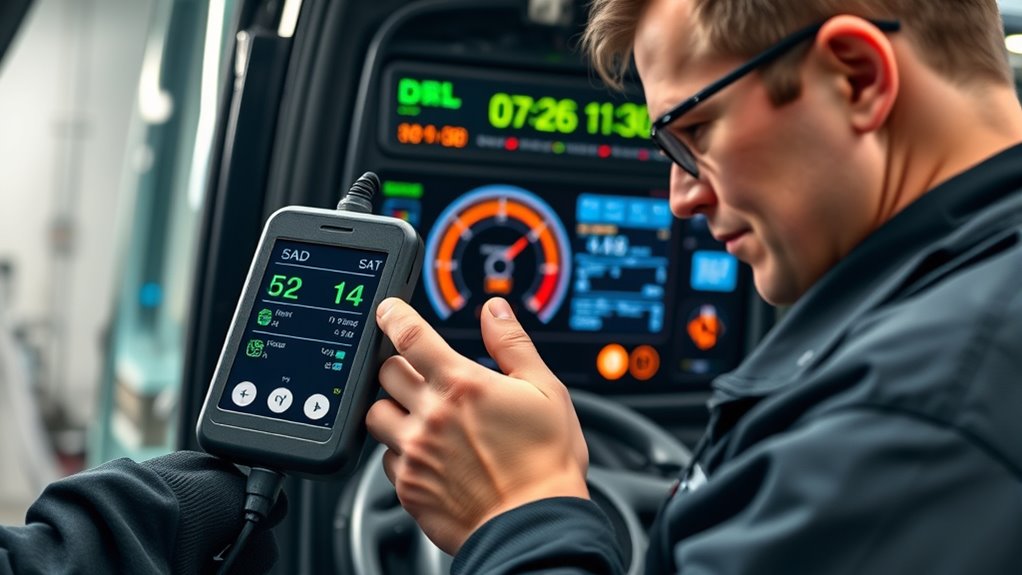
Software diagnostics is a essential process that helps identify and resolve issues within computer programs and systems. When it comes to electric buses, this process becomes especially important because their performance heavily relies on sophisticated electronic components. Using On-Board Diagnostics (OBD) tools allows you to quickly pinpoint problems affecting various systems, including battery management and firmware updates. These tools give you real-time data, making it easier to maintain ideal operation and avoid costly breakdowns.
Battery management is a key factor for the efficiency and longevity of electric buses. With software diagnostics, you can monitor the health of the battery pack continuously. OBD tools provide insights into battery voltage, temperature, charge cycles, and overall capacity. If you notice irregularities, such as rapid capacity loss or abnormal temperature spikes, you can act swiftly to investigate further. Proper diagnostics help prevent battery failures, extend service life, and improve safety for passengers and operators. You can also use these tools to verify if the battery management system (BMS) is functioning correctly, ensuring it balances cells properly and provides accurate state-of-charge readings. Awareness of discoloration or separation in the electrolyte or casing can indicate potential issues with the battery’s health.
Monitoring battery health with diagnostics prevents failures and ensures safety in electric buses.
Firmware updates are another essential aspect of maintaining electric bus systems. Manufacturers regularly release updates to improve performance, fix bugs, and enhance safety features. Using OBD tools, you can easily identify whether your bus’s firmware is up-to-date. Updating firmware ensures that the electronic control units (ECUs) operate with the latest improvements and security patches. It’s critical to perform these updates correctly to prevent bricking the system or causing compatibility issues. Many diagnostic tools facilitate the firmware update process by providing a straightforward interface and step-by-step instructions. Staying current with firmware updates can also help you improve energy consumption, enhance regenerative braking, and enhance overall vehicle reliability.
When you utilize software diagnostics, you’re empowered to conduct proactive maintenance rather than reactive fixes. Regularly checking the system for potential issues related to battery management and firmware versions keeps your electric buses running smoothly. It saves downtime, reduces repair costs, and ensures compliance with safety standards. Also, diagnostic tools can help you interpret complex error codes and sensor readings, giving you clearer insights into the health of your vehicle’s electronic systems. This way, you’re better equipped to make informed decisions about maintenance schedules and necessary interventions, ultimately extending the lifespan of your electric fleet.

CrysGuard Professional OBD2 V519 Scanner – 2026 Upgraded OBDII + CAN Code Reader, Live Data, Battery Test, 40000+ DTC Library, I/M Readiness, Check Engine Light & Smog Test – All Vehicles After 1996
✅ 𝟐𝟎𝟐𝟔 𝐄𝐧𝐡𝐚𝐧𝐜𝐞𝐝 𝐎𝐁𝐃𝟐 + 𝐂𝐀𝐍 𝐃𝐢𝐚𝐠𝐧𝐨𝐬𝐭𝐢𝐜 𝐒𝐜𝐚𝐧 𝐓𝐨𝐨𝐥 】: The V519 is a powerful 2026-upgraded scanner supporting…
As an affiliate, we earn on qualifying purchases.
As an affiliate, we earn on qualifying purchases.
Frequently Asked Questions
Can OBD Tools Diagnose Battery Health on Electric Buses?
Yes, OBD tools can help you diagnose battery health on electric buses, but with some limitations. They primarily access data related to battery management systems, providing insights into voltage, temperature, and overall performance. However, diagnostic limitations mean you might not get a complete picture of internal cell conditions or aging. For thorough assessments, specialized tools or professional diagnostics are recommended, especially for detailed battery health analysis.
Are There Specific OBD Protocols for Electric Bus Systems?
Yes, there are specific OBD protocols for electric bus systems. You’ll find that communication protocols like CAN bus are commonly used to connect diagnostic tools. These protocols follow charging standards and guarantee accurate data transfer between your OBD device and the bus’s electronic control units. Using the right protocols allows you to effectively diagnose issues, monitor battery health, and optimize performance, making maintenance smoother and more reliable.
How Accurate Are OBD Diagnostics for Electric Motor Issues?
OBD diagnostics for electric motor issues can be fairly accurate, but they do have limitations. You might find sensor calibration affects the readings, leading to potential misdiagnoses. While OBD tools identify common faults, diagnostic limitations mean some problems, like subtle sensor malfunctions or software glitches, may go unnoticed. To improve accuracy, regularly calibrate sensors and use advanced diagnostic software to complement standard OBD scans.
Can OBD Tools Predict Battery Failure in Electric Buses?
You might be surprised to learn that OBD tools can sometimes predict battery failure, but they have limitations. About 70% of battery issues show clear signs through diagnostics, yet early warning signs may be overlooked due to diagnostic limitations. By monitoring battery management systems, you can catch potential problems early, but relying solely on OBD tools isn’t enough. Regular maintenance and advanced diagnostics ensure better battery health and longevity.
Do Electric Buses Require Different OBD Tools Than Conventional Vehicles?
Yes, electric buses need different OBD tools than conventional vehicles because of their unique charging infrastructure and software integration. These specialized tools can access battery management systems and electric drive components, which standard OBD scanners can’t. You’ll find that using the right tools guarantees accurate diagnostics and helps maintain ideal performance, especially with the complex software systems in electric buses. Keep in mind, investing in proper equipment makes troubleshooting much more effective.

BluSon YM319 OBD2 Scanner Diagnostic Tool with Battery Tester, Check Engine Fault Code Reader with Live Data, Cloud Printing, DTC Lookup, Freeze Frame, Scan Tool for All OBDII Protocol Cars Since 1996
Your Car's Personal Doctor: Say Goodbye to Check Engine Light Troubles! The YM319 OBD2 scanner swiftly reads and…
As an affiliate, we earn on qualifying purchases.
As an affiliate, we earn on qualifying purchases.
Conclusion
In summary, using OBD tools on electric buses can boost efficiency and reduce downtime. Did you know that electric buses have a 30% lower maintenance cost compared to traditional diesel buses? By leveraging software diagnostics, you can quickly identify issues before they become costly repairs. Staying proactive with these tools not only saves money but also keeps your fleet running smoothly. Adopt these technologies to guarantee reliable, eco-friendly transportation for the future.
electric bus firmware update device
As an affiliate, we earn on qualifying purchases.
As an affiliate, we earn on qualifying purchases.

Launch X431 CRP919 EV 2026 Bidirectional Scan Tool, for Electric Vehicles New Energy Cars, All-in-One Full System Diagnostic Scanner, 43+ Reset, ECU Coding, CANFD&DOIP, FCA AutoAuth, 2Yrs Free Update
[2026 NEW CRP919EV] Introducing ALL-NEW CRP919 EV bi-directional OBD2 scanner. Full level-up features: 1) truly global scan tool:…
As an affiliate, we earn on qualifying purchases.
As an affiliate, we earn on qualifying purchases.