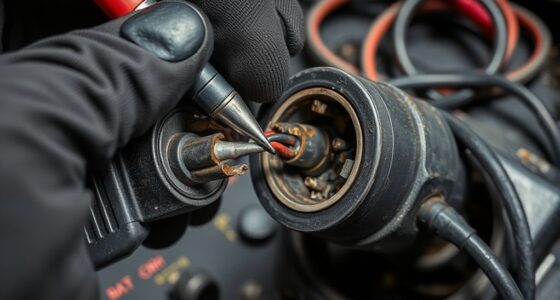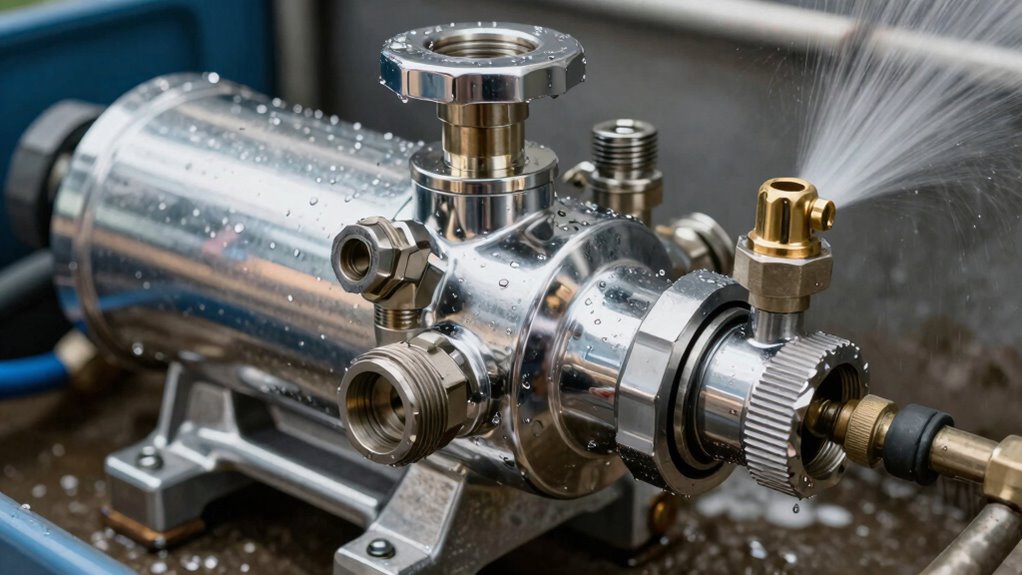
If your faucet makes a machine-gun noise, it’s usually caused by water hammer or faulty valves affecting water pressure. First, identify whether the noise comes from your pump, accumulator, or pipes. Tighten loose fittings, adjust pressure switches, or install vibration dampers to fix the issue. Regular maintenance helps prevent future problems. Keep exploring to find out more effective ways to quiet your plumbing without costly repairs.

Get monitors, keyboards and dev gear delivered free — and shop member deals
- Fast, free delivery on millions of items
- Access to Prime Big Deal Days deals on October 6–7
- Prime Video, Amazon Music and more included
Key Takeaways
- Check for water hammer caused by faulty valves or rapid shut-off, and install shock arrestors if needed.
- Inspect and tighten loose fittings or pipes to reduce vibrations that create the machine-gun noise.
- Adjust pressure switch settings and ensure the pressure tank and valves are functioning properly.
- Use vibration pads or pipe insulation to dampen noise and prevent vibrations from transmitting.
- Seek professional help for persistent issues, leaks, or when replacing faulty pumps or accumulators.
As an affiliate, we earn on qualifying purchases.
Why Is My Faucet Making a Machine-Gun Noise?
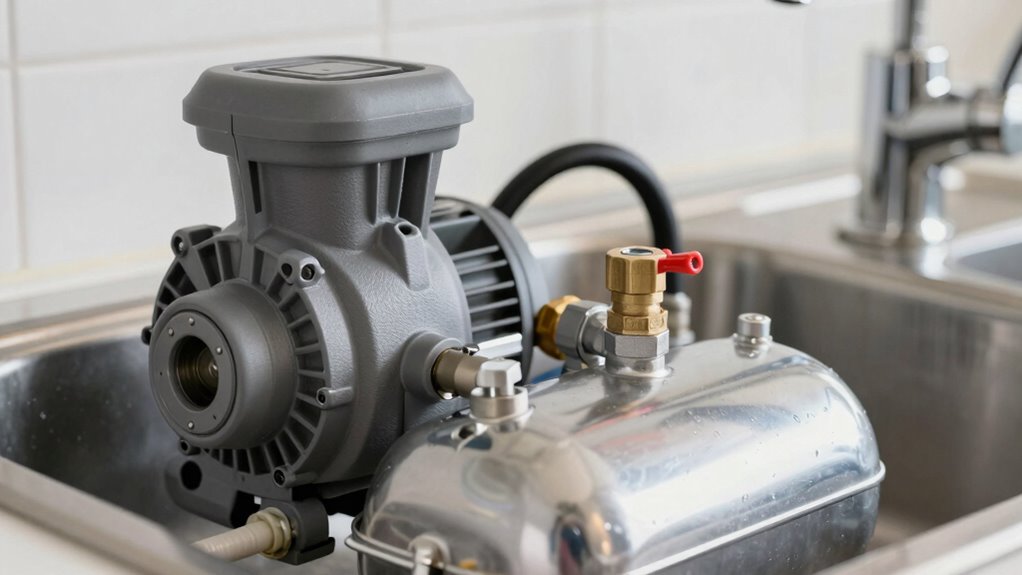
If your faucet suddenly starts making a rapid, clicking noise like a machine gun, it’s usually caused by a water hammer. This noise happens when faulty valves don’t close properly, allowing air to become trapped in the pipes. When water flow stops suddenly, the trapped air creates a shockwave that results in the clicking sound. Faulty valves can also fail to regulate pressure, exacerbating the issue. To fix this, you might need to inspect and replace the faulty valves or bleed the trapped air from your plumbing system. Ensuring your valves are functioning correctly helps prevent air from getting trapped and reduces the likelihood of a water hammer. Addressing these issues promptly can restore quiet, smooth operation to your faucets. Proper valve maintenance is essential for preventing recurring problems and maintaining a quiet plumbing system.
As an affiliate, we earn on qualifying purchases.
How to Diagnose if the Noise Comes From the Pump, Accumulator, or Plumbing?
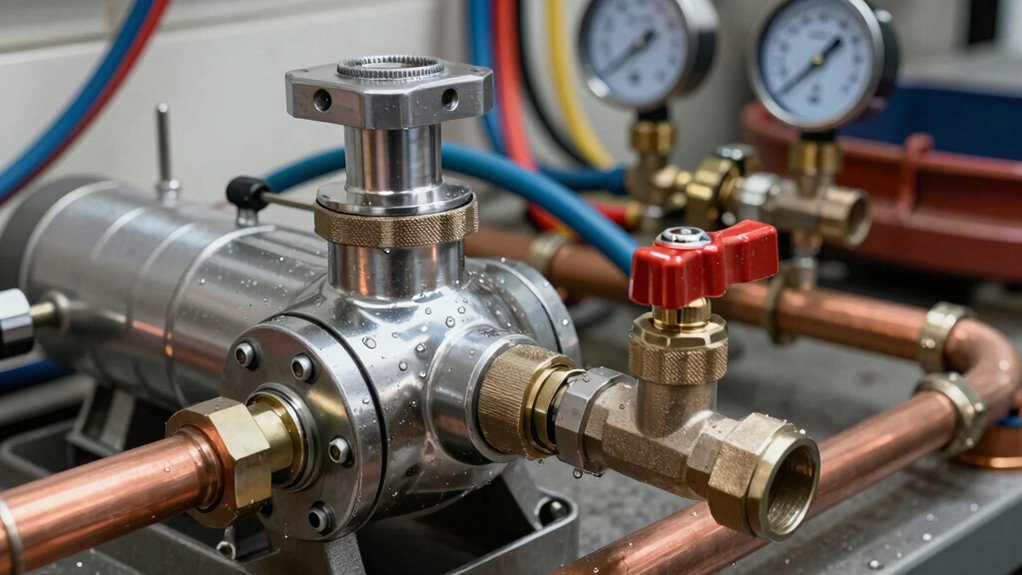
To determine whether the noise originates from the pump, accumulator, or plumbing, start by listening carefully to the sound’s location and timing. Pay attention to whether the noise occurs when you turn on or off fixtures, or constantly. Conduct a pump inspection by listening near the pump itself; if the noise persists during operation, it’s likely the pump or pressure issues. Pressure testing your system can help identify if pressure fluctuations or drops are causing the noise. If the sound seems to come from the pipes rather than the pump, it’s probably plumbing-related. Additionally, understanding the pressure stability concept can help you recognize how pressure fluctuations impact system performance, similar to how pressure stability impacts pump performance. By pinpointing where the noise is loudest and correlating it with system activity, you’ll better diagnose whether the pump, accumulator, or plumbing needs attention.
As an affiliate, we earn on qualifying purchases.
Easy Steps to Fix Water Pump and Accumulator Noises
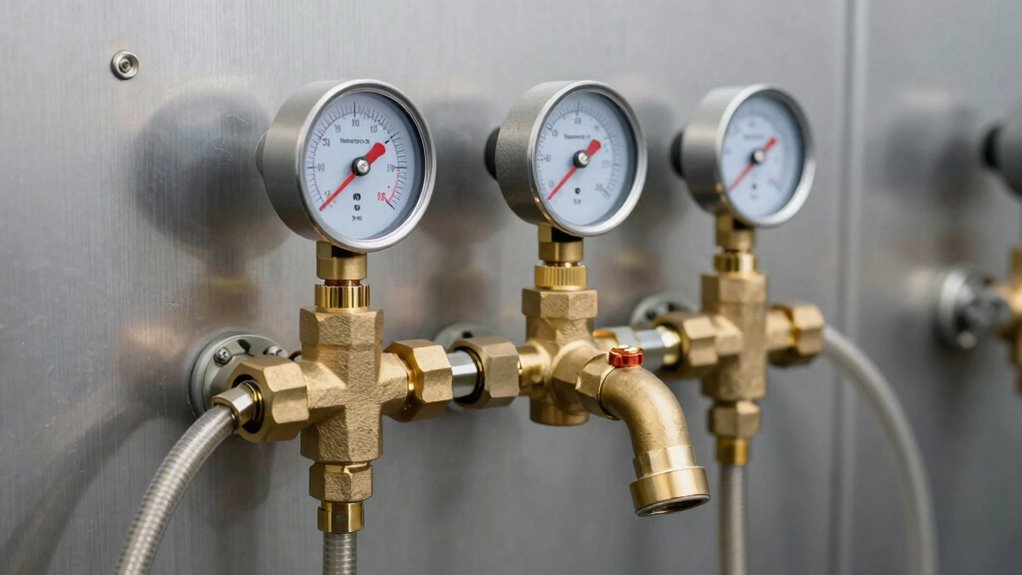
Once you’ve identified that the noise is coming from your water pump or accumulator, you can often fix the issue yourself with a few simple steps. Start by turning off the system and inspecting for loose fittings or pipes. Tighten any fittings that may be causing vibrations, as loose connections can amplify noise. Next, check the pressure settings and adjust the pressure switch if necessary, since incorrect settings can lead to noisy operation. You can also install noise reduction techniques such as vibration pads or isolators to dampen vibrations. Additionally, ensure the pump’s internal components, like the pressure tank or valves, are in good condition. Regular plumbing system maintenance and component inspection help prevent many common noise issues and improve overall performance. Proper system upkeep can prevent many common noise issues and improve overall performance. Being aware of vibration dampening methods can also significantly reduce operational noise and prolong the lifespan of your water system. Incorporating proper installation techniques can further minimize excessive noise and ensure long-term quiet operation.
As an affiliate, we earn on qualifying purchases.
When Should You Replace Parts or Call a Professional?
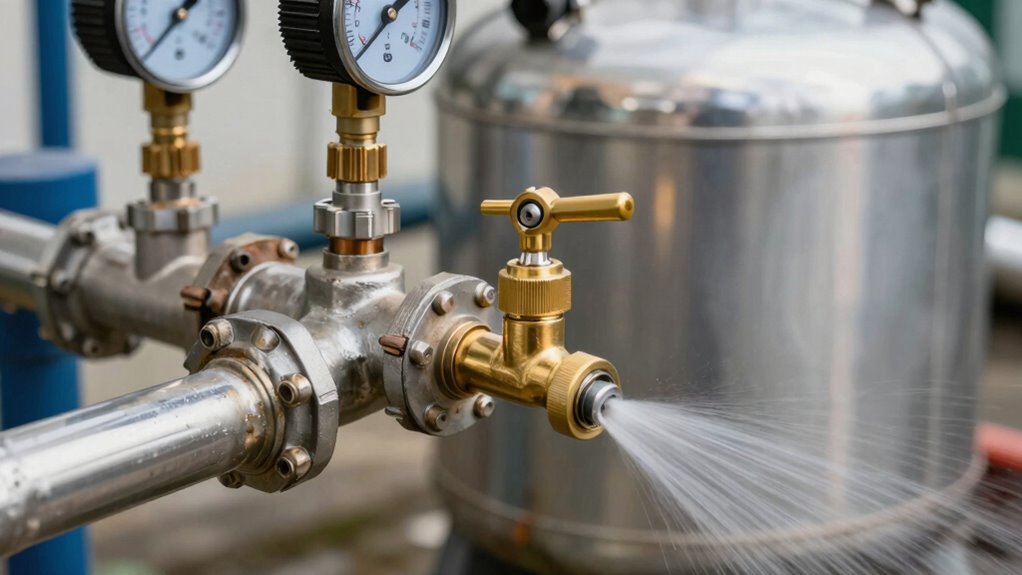
Knowing when to replace parts or call a professional is essential to preventing further damage and ensuring your water system runs smoothly. Stick to a regular maintenance schedule to catch issues early. If you notice persistent leaks, strange noises, or decreased water pressure, it’s time to consider replacing worn-out components. Don’t attempt complex repairs without proper DIY safety measures, as mishandling parts can lead to injuries or damage. If you’re unsure about the cause of noisy faucets or suspect a faulty pump or accumulator, consulting a professional is the safest option. They can accurately diagnose problems, replace damaged parts, and ensure everything is functioning correctly. Regular system inspections can help identify potential issues before they become costly repairs. Recognizing signs of component failure early can save you time and money in the long run. Paying attention to equipment lifespan and staying proactive with maintenance can prevent sudden breakdowns. Addressing early warning signs promptly can help maintain the efficiency and quiet operation of your water system. Understanding the importance of preventative maintenance can extend the lifespan of your equipment and improve overall system reliability. Prioritizing timely repairs helps avoid costly repairs later and keeps your water system operating quietly and efficiently.
Tips to Keep Your Plumbing Quiet and Prevent Future Faucet Noise
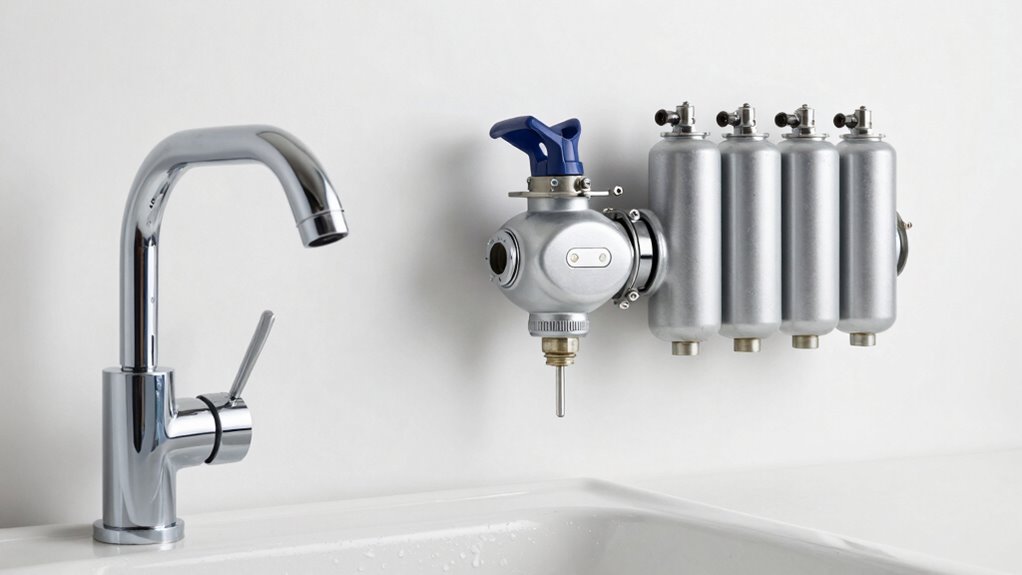
Regular maintenance not only helps identify worn parts before they fail but also keeps your plumbing running smoothly and quietly. To prevent faucet noise, consider improving pressure regulation to avoid pressure fluctuations that cause banging sounds. Installing pipe insulation around noisy pipes can dampen vibrations and reduce noise transmission. Regularly check and adjust your pressure regulator to maintain consistent water pressure. Insulating hot and cold water pipes minimizes expansion and contraction, which can create noise. Ensure your faucet washers and cartridges are in good shape to prevent leaks and noise. Additionally, avoid abrupt shut-offs and use slow-turn valves to lessen water hammer effects. Proper pressure regulation also plays a crucial role in reducing noise caused by pressure surges within the system. Incorporating advanced pressure control devices can further enhance noise reduction and system stability. Properly maintaining and upgrading your pressure management systems can significantly improve overall plumbing performance and silence unwanted noises. Monitoring water pressure levels regularly helps detect early signs of pressure issues that could lead to noise problems. Regular inspection of pipes for signs of wear and microplastics in dust can also help identify hidden sources of plumbing disturbances that contribute to noise.
Frequently Asked Questions
Can Water Pressure Fluctuations Cause Faucet Noise?
Yes, pressure fluctuations can cause faucet noise. When water pressure varies, it creates noise causes like banging or hammering sounds, often called water hammer. You might notice a “machine-gun” noise when pressure spikes or drops suddenly. These fluctuations disturb the steady flow, leading to the noise. To fix this, you can install pressure regulators or water hammer arrestors, which help stabilize pressure and reduce noise causes.
Are There Specific Brands More Prone to Faucet Noise Issues?
You might notice some brands seem more prone to faucet noise, like unreliable players in a game. Brands with shaky manufacturer reputations often produce fixtures that rattle like a machine gun. To avoid this cacophony, stick to brands known for reliability and solid reputation. These trusted names tend to craft faucets that sing smoothly, saving you the headache of constant noise and repairs. Choose wisely, and enjoy peaceful taps.
How Long Do Water Pumps and Accumulators Typically Last?
Water pumps usually last around 8 to 15 years, depending on usage and maintenance, while accumulators tend to be durable for about 10 to 20 years. To maximize pump lifespan, guarantee regular servicing and keep an eye on performance. Proper maintenance can extend accumulator durability, preventing issues like the “machine-gun” faucet noise. By caring for these components, you help ensure reliable operation and avoid costly replacements.
What Tools Are Needed for DIY Faucet Noise Repairs?
Ever wondered what tools you need for DIY faucet noise repairs? You’ll want a tools checklist that includes an adjustable wrench, screwdriver (Phillips and flathead), pliers, and possibly a socket set. Don’t forget plumber’s tape and a bucket for catching water. With these DIY repair tips, you can tackle that “machine-gun” faucet noise yourself. Are you ready to silence that annoying sound and save money?
Is It Safe to Attempt Fixing Water Pump Noises Myself?
Yes, you can attempt fixing water pump noises yourself, but prioritize DIY safety. Make sure you turn off the power and water supply before working on the pump. If you’re unsure about any step, it’s better to seek professional repair to avoid injury or damage. Following proper safety procedures helps you handle minor issues confidently, but don’t hesitate to call a pro for complex problems to keep everything safe and functioning properly.
Conclusion
If your faucet’s noise sounds like a machine gun, don’t ignore it. For example, Jane noticed her kitchen faucet was relentlessly loud, but a quick inspection revealed a loose valve. By tightening it herself, she restored peace. With simple diagnostics and maintenance, you can prevent noisy faucets and avoid costly repairs. Keep an eye on your plumbing, and when in doubt, don’t hesitate to call a professional. Quiet, smooth water flow can be just a fix away.
Fall Picks
fall essentials
As an affiliate, we earn on qualifying purchases.