
To keep your classic VW Bus on the road, focus on sourcing authentic parts through a mix of restoration techniques, community networks, and reputable suppliers. Join online forums and VW meetups to gain tips, access rare parts, and connect with trusted vendors. Salvage yards and DIY refurbishment also offer genuine options, while high-quality reproduction parts can fill gaps. With patience and attention to detail, you’ll find the right components—exploring further will help you keep your bus running smoothly.
Key Takeaways
- Join online VW forums and communities for advice, tips, and sourcing rare or discontinued parts.
- Attend vintage VW shows and meetups to connect with specialized vendors and access authentic accessories.
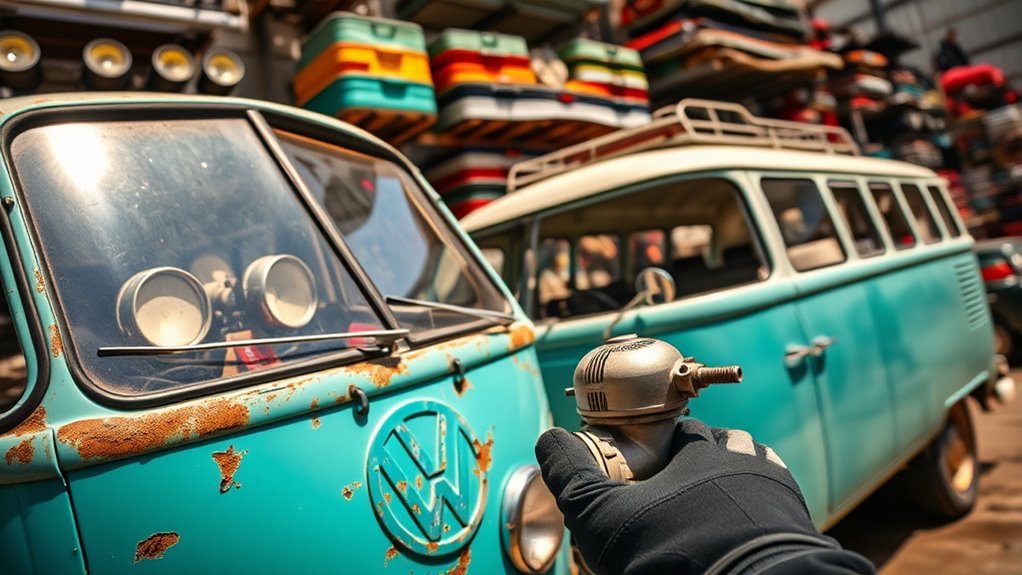
- Use reputable salvage yards that focus on vintage vehicles, ensuring parts are original and well-preserved.
- Consider high-quality reproduction parts from trusted suppliers to maintain authenticity and ease sourcing challenges.
- Carefully verify the condition and authenticity of parts through detailed photos or documentation before purchasing.
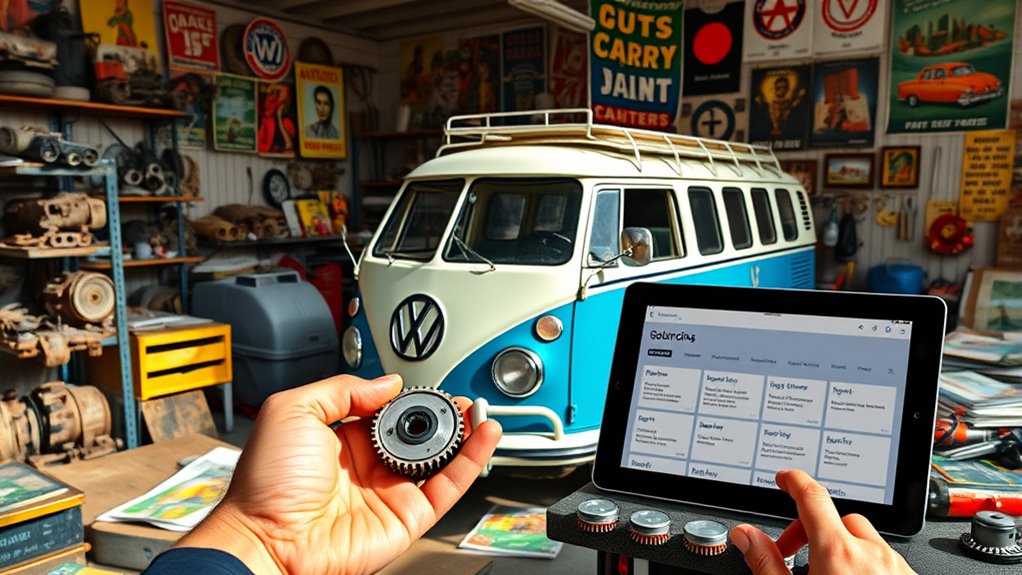
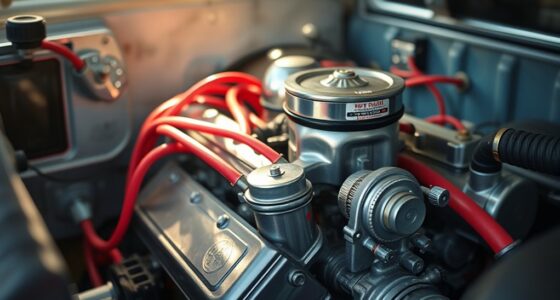
Finding and sourcing parts for your classic VW Bus can feel intimidating, especially as original components become harder to find. But don’t let that discourage you. With the right approach, you can keep your vintage vehicle on the road and looking authentic. Start by exploring specialized restoration techniques that focus on preserving as much of the original design as possible. These techniques often involve careful repair and refurbishment of existing parts, which can save you money and maintain the bus’s historical integrity. For example, restoring the original metalwork or reconditioning factory parts can be more rewarding than replacing everything with aftermarket alternatives.
Preserve your VW Bus’s authenticity with careful restoration of original parts and factory components.
When sourcing parts, it’s *essential* to tap into a variety of resources. Many vintage VW enthusiasts turn to dedicated online forums and communities where members share tips, sell parts, and offer advice on restorations. These groups can be invaluable for locating rare or discontinued components and connecting with trusted suppliers. Additionally, attending vintage car shows or VW meetups can lead you to vendors specializing in vintage accessories and hard-to-find parts. These accessories—like period-correct badges, interior trim, or original-style lighting—help keep your VW Bus authentic and enhance its classic appeal.
Another effective method is to seek out reputable salvage yards that focus specifically on vintage vehicles. These yards often carry original parts that have been carefully preserved or refurbished. When purchasing, always verify the condition and authenticity of the parts, and don’t hesitate to ask for detailed photos or documentation. If you’re handy with repairs, consider refurbishing parts yourself. Many restoration techniques can be learned through online tutorials, and refurbishing your own vintage accessories can be both satisfying and cost-effective. Moreover, understanding the importance of authentic parts ensures your restoration maintains its true vintage character.
For those who want a more straightforward approach, there are numerous specialty suppliers that produce high-quality reproduction parts. While they may not be 100% original, many of these parts closely mimic the vintage look and feel, ensuring your bus stays true to its roots. Just be mindful to choose suppliers with good reputations to avoid subpar components that might compromise safety or authenticity.
Ultimately, sourcing parts for your VW Bus is about balancing preservation, functionality, and authenticity. By combining restoration techniques, tapping into enthusiast communities, and carefully selecting vintage accessories, you can keep your classic on the road without sacrificing its charm. Patience and a keen eye for quality are your best tools—before long, you’ll see your vintage VW Bus restored to its former glory, ready for many more adventures.
Top picks for "find sourc part"
Open Amazon search results for this keyword.
As an affiliate, we earn on qualifying purchases.
Frequently Asked Questions
Are Reproduction Parts Reliable for Long-Term Use?
Reproduction parts can be a good option, but their long-term reliability fluctuates. Some reproduction parts are well-made and last for years, while others may wear out quickly or not fit perfectly. You should research brands and read reviews before buying. While they’re often more affordable and easier to find, keep in mind that their durability for long-term use isn’t always guaranteed. Always weigh quality against cost to ensure your VW bus stays reliable.
How Do I Verify the Authenticity of Vintage Parts?
You might worry about vintage parts authenticity, but it’s easier than you think. Start by researching the manufacturer’s markings, serial numbers, and original packaging. Authenticity verification often involves comparing these details with trusted sources or expert forums. Don’t rely solely on visual inspection—consult vintage parts guides or collectors’ networks. By doing so, you guarantee your parts are genuine, helping your VW Bus stay true to its classic roots.
What Are Common Issues Sourcing Parts Internationally?
When sourcing parts internationally, you might encounter issues like delays with global shipping and limited availability of vintage catalogs. Shipping times can be unpredictable, and customs processes may add unexpected delays. Vintage catalogs are essential for verifying part authenticity and finding rare items, but they’re not always accessible online or abroad. To minimize problems, plan ahead, communicate clearly with sellers, and use reputable sources familiar with vintage VW parts.
Can I Modify Parts to Fit My Specific Model?
You can definitely modify parts to fit your specific VW Bus model, especially with aftermarket modifications and customization options available. Just verify you double-check compatibility and quality before making changes. Customization allows you to tailor your bus’s performance and appearance, but always consider how modifications might affect safety and originality. With careful planning and expert advice, you can create a unique, personalized ride that stays true to your vision.
How Do I Find Specialized Mechanics for Vintage VW Buses?
To find specialized mechanics for your vintage VW bus, start by tapping into mechanic networks and online forums dedicated to classic VWs. These communities connect you with experts who understand rare parts and unique repairs. Attend VW meetups or classic car events to meet mechanics firsthand. You can also ask for recommendations from local vintage car clubs or search for shops with experience in restoring and maintaining vintage VW buses.
Conclusion
Now, armed with these tips, you’re not just sourcing parts—you’re building a legend. Every nut, bolt, and vintage piece you find keeps your VW bus roaring through decades of adventure. Think of it: with a little effort, you’re transforming your classic into an unstoppable time machine, defying age itself. So keep hunting, keep restoring, and remember—your bus isn’t just a vehicle; it’s a rolling masterpiece destined for endless journeys.