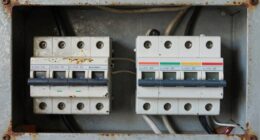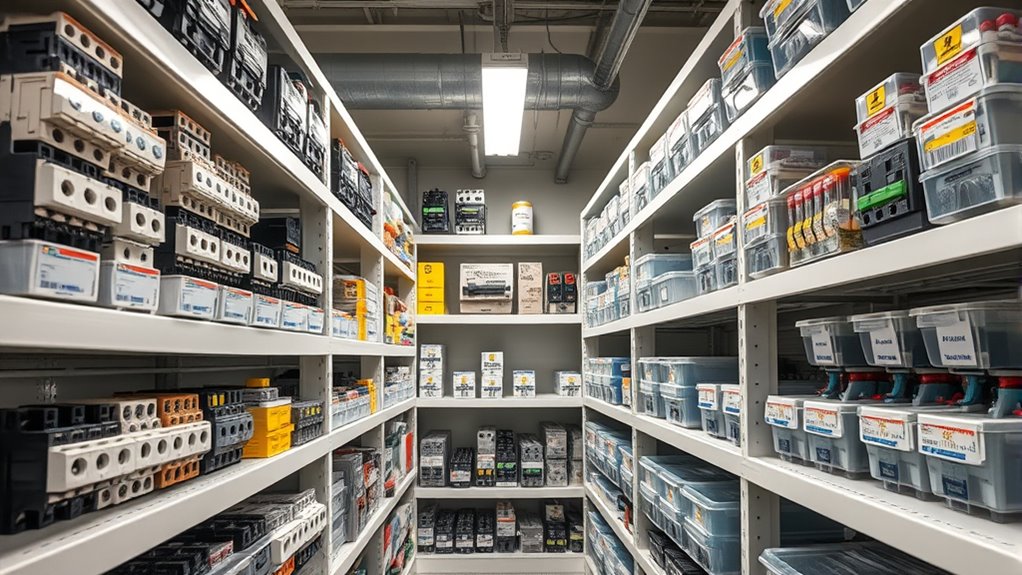

To plan for spare parts like contactors, fuses, and modules, focus on maintaining ideal stock levels by analyzing usage patterns and demand forecasts. Build strong supplier relationships for flexible orders and fast deliveries. Use inventory management systems to automate tracking and set reorder alerts, preventing stockouts or excess. Regularly review your inventory to adjust supplies based on operational needs. Keep these strategies in mind to improve availability and reduce downtime, and you’ll discover more tips for effective planning ahead.
Key Takeaways
- Analyze historical usage data to forecast future demand for contactors, fuses, and modules.
- Maintain optimal inventory levels through regular reviews and adjust based on demand and lead times.
- Establish strong supplier relationships to ensure quick replenishment and favorable terms.
- Utilize inventory management systems for real-time tracking, alerts, and reorder recommendations.
- Develop flexible procurement strategies to balance stock availability with minimizing obsolete inventory.

Effective spare parts planning is essential for ensuring your operations run smoothly and downtime is minimized. When it comes to stocking contactors, fuses, and modules, having a strategic approach can considerably impact your equipment’s reliability and your overall costs. One of the key aspects to focus on is optimizing inventory turnover. You want to maintain enough stock to handle routine repairs and unexpected failures without overstocking, which ties up capital and increases storage costs. Achieving a healthy inventory turnover means regularly reviewing your stock levels and usage patterns, ensuring you’re not holding onto obsolete or slow-moving parts. By analyzing historical data, you can predict demand more accurately, reducing excess inventory and ensuring parts are available when needed.
Another critical element is supplier negotiation. Building strong relationships with your suppliers can give you better terms, faster delivery times, and priority access during shortages. When negotiating, aim for flexible purchase agreements that allow for adjustments based on your consumption rates. This flexibility helps keep your inventory lean while still ensuring availability of essential items like contactors, fuses, and modules. Don’t hesitate to negotiate for improved lead times or bulk discounts, especially if you anticipate high consumption of certain parts. Establishing clear communication channels with suppliers also enables you to stay informed about product updates, recalls, and new alternatives, which can be essential for maintaining a reliable spare parts inventory.
To enhance your spare parts planning, consider implementing a computerized inventory management system. Such systems can automate tracking, alert you when stock levels fall below predefined thresholds, and generate reorder suggestions based on real-time data. This technology helps you maintain ideal inventory turnover and reduces the risk of stockouts. Additionally, it provides valuable insights into usage trends, allowing you to fine-tune your procurement strategies and negotiate more effectively with suppliers.

ZL95 ZL110 Main Contact Kit for A95-30 A110-30 AF95-30 AF110-30,3 Moving and 6 Fixed Contacts AC Contactor Spare Parts Contact Set(A110-30(A Plus))
The higher the silver content, the longer the service life of the product
As an affiliate, we earn on qualifying purchases.
As an affiliate, we earn on qualifying purchases.
Frequently Asked Questions
How Often Should Spare Contactors Be Rotated to Prevent Failure?
You should rotate spare contactors every 6 to 12 months to prevent failure. Regular contactor testing helps identify wear and tear early. By maintaining a consistent rotation frequency, you guarantee that the spare contactors remain in good condition and ready for use when needed. This proactive approach minimizes downtime and extends the lifespan of your contactors, keeping your system running smoothly and efficiently.
What Is the Optimal Stock Level for Fuse Replacements?
Think of your fuse stock like a well-tuned engine—regular fuse testing ensures you catch issues early. The ideal stock level depends on your equipment’s replacement intervals, typically maintaining 10-15% above your expected demand. For example, if you replace fuses every three months, keep enough spares for about a month’s worth of operations. This way, you avoid downtime, and your fuse replacements stay timely and efficient.
How Do Environmental Conditions Affect Module Shelf Life?
Environmental conditions profoundly impact your module shelf life. High humidity effects can cause corrosion and degrade components, while temperature fluctuations accelerate aging and material breakdown. You should store modules in controlled environments, maintaining stable temperatures and low humidity levels. Proper packaging and climate control help extend shelf life, ensuring modules remain functional when needed. Regular inspections and environmental monitoring are essential to prevent premature deterioration and ensure reliable spare parts availability.
Should Spare Parts Be Stored Onsite or Offsite for Quick Access?
Storing spare parts is like keeping a toolbox within arm’s reach; onsite storage guarantees quick access when emergencies strike. You should prioritize accessibility planning by placing critical contactors, fuses, and modules nearby, reducing downtime. Offsite storage works for less urgent parts, but for fast repairs, keeping essentials onsite minimizes delays. Balance your storage location to meet both immediate needs and long-term inventory management efficiently.
What Record-Keeping Practices Improve Spare Parts Management?
You should implement robust record-keeping practices, focusing on inventory tracking and data accuracy. Use digital systems to monitor spare parts levels in real-time, guaranteeing you update records immediately after each transaction. Regular audits help catch discrepancies, while clear documentation of part specifications and usage history prevents errors. This approach keeps your spare parts organized, minimizes downtime, and ensures you always have the right components when needed.

Bussman TL-30PK4 30 Amp TL Edison Plug Time Delay Fuse 4 Count
Medium duty time-delay plug fuse
As an affiliate, we earn on qualifying purchases.
As an affiliate, we earn on qualifying purchases.
Conclusion
By thoughtfully planning your spare parts inventory, you guarantee your operations run smoothly, like a well-oiled machine. Stocking contactors, fuses, and modules isn’t just about readiness; it’s about safeguarding your future against unexpected downtime. Remember, neglecting this can turn a small hiccup into a costly disaster—like a house of cards waiting to topple. Stay proactive, stay prepared, and let your foresight be the steady hand that keeps everything upright.

Otcboimo 30A Hight Power WiFi Wireless Smart Switch, DIY Module for Smart Home Automation, ewelink APP Remote Control, Timer, Compatible with Alexa & Google Home
【 High-Powered 】Works with most AC-powered devices up to 30A, such as air compressor,water pump motor,hot water heater…
As an affiliate, we earn on qualifying purchases.
As an affiliate, we earn on qualifying purchases.

Spare Parts Inventory Management: A Complete Guide to Sparesology (Volume 1)
As an affiliate, we earn on qualifying purchases.
As an affiliate, we earn on qualifying purchases.