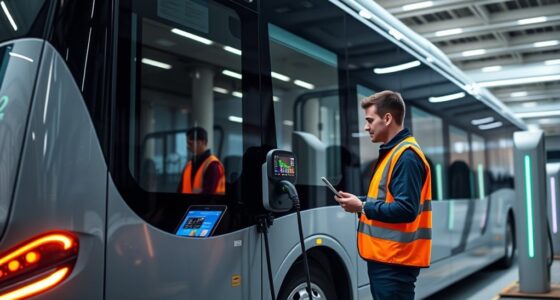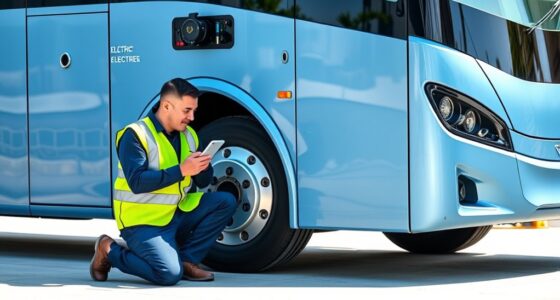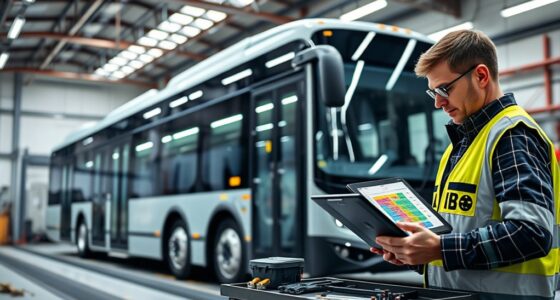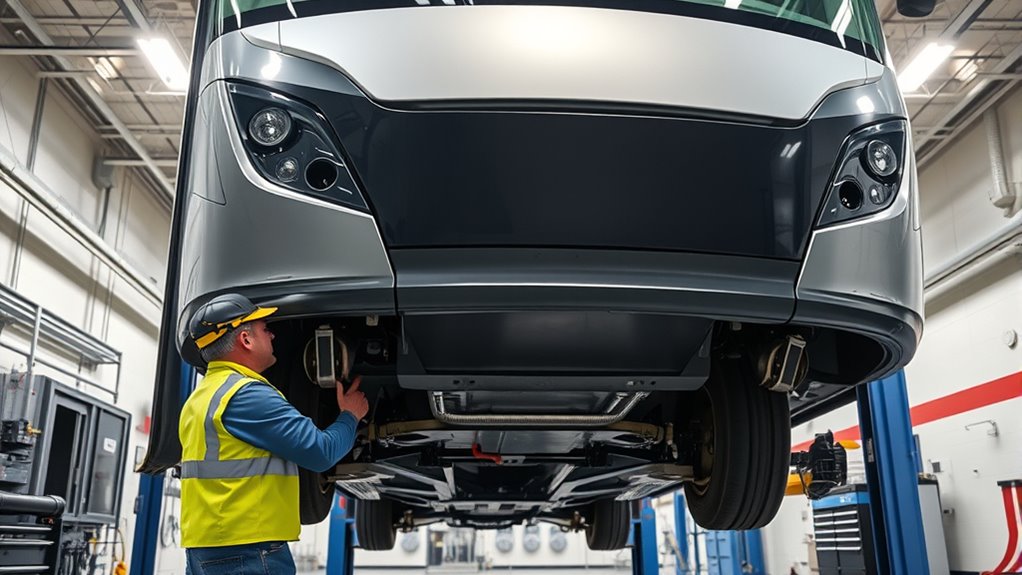

To safely lift and support electric buses during service, locate reinforced lifting points specified by the manufacturer, typically found on the chassis or frame. Use appropriate heavy-duty equipment like hydraulic lifts or jacks rated for the bus’s weight, guaranteeing a level surface for stability. Always inspect your tools before use, secure the bus with wheel chocks, and lift slowly to avoid stress on components. Supporting the vehicle properly is essential; continue exploring these steps to guarantee a safe and effective servicing process.
Key Takeaways
- Identify reinforced lifting points and battery locations to prevent damage during lifting.
- Use suitable hydraulic lifts or heavy-duty jacks with adequate capacity and stability.
- Inspect lifting equipment thoroughly for wear, leaks, and proper functioning before use.
- Secure the bus with wheel chocks and lift slowly, coordinating with team members for safety.
- Support the bus with appropriate stands after lifting, then carefully lower it onto wheels for service.
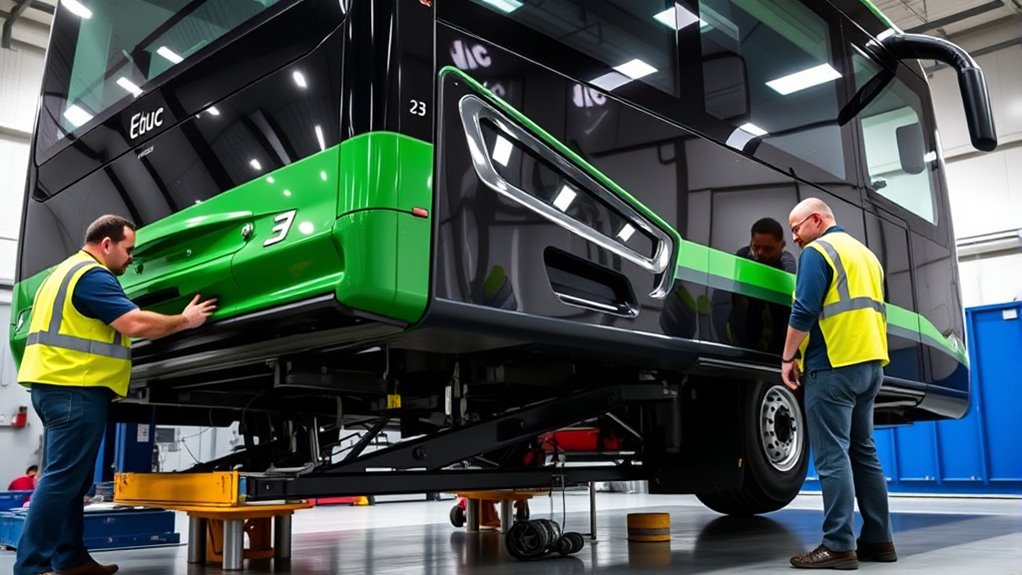
Lifting electric buses safely is crucial to prevent accidents and guarantee maintenance efficiency. When working with these large vehicles, proper procedures help protect both personnel and equipment, particularly during tasks like battery maintenance and routine inspections. One of the first considerations is understanding the bus’s weight distribution and the location of the battery, which often sits in the chassis or under the floor. This knowledge guides you in choosing the right lifting equipment, ensuring stability and safety during the process. Selecting appropriate lifting equipment isn’t just about capacity; it’s about compatibility with the bus’s structure and the maintenance task at hand. You need lifts that can handle the vehicle’s weight, with features like adjustable arms or specialized supports to prevent damage during hoisting. Hydraulic lifts, gantry systems, or heavy-duty jacks are common options, but each must be evaluated for stability, reach, and ease of use. The selection process involves reviewing manufacturer specifications and considering the bus’s dimensions, weight, and the location of key components like the battery. Proper lifting equipment selection reduces the risk of accidental drops or structural damage, especially important when accessing the battery compartment for maintenance or replacement.
Before lifting, you should perform a thorough inspection of all equipment, ensuring there are no signs of wear, leaks, or defects. Confirm that safety features like locks, stabilizers, and emergency release mechanisms are functional. When positioning the lift, make sure the vehicle is on a flat, level surface to maintain stability. Secure the bus with wheel chocks and use appropriate lifting points specified by the manufacturer—these are typically reinforced areas designed to bear the vehicle’s weight safely. If you’re lifting for battery maintenance, take extra care to avoid stressing the battery mounts or connectors, which could cause damage or leaks. During the lift, communicate clearly with your team, using signals or radios to coordinate movements and prevent mishaps. Always lift slowly and steadily, monitoring the stability of the bus and adjusting as needed. Once elevated, support the vehicle with appropriate stands or supports, ensuring it remains secure while you work on the battery or other components. After completing maintenance, carefully lower the bus back onto its wheels, double-checking that all supports are removed and that the vehicle is stable before removing the lifting equipment. Safety isn’t just about the lifting process itself; it’s about thorough planning, proper equipment selection, and adherence to best practices that protect everyone involved. Properly lifting and supporting electric buses, especially during battery maintenance, requires diligence and precision, but following these steps ensures safe, efficient service every time. Additionally, understanding proper equipment maintenance can help prolong the lifespan of your lifting devices and ensure ongoing safety during future operations.
Top picks for "safely lift support"
Open Amazon search results for this keyword.
As an affiliate, we earn on qualifying purchases.
Frequently Asked Questions
What Are the Environmental Impacts of Lifting Electric Buses?
Lifting electric buses helps reduce environmental impacts by preventing damage to batteries, which supports battery recycling efforts. Proper lifting guarantees risks of accidents that could release harmful substances. Electric buses contribute to emission reduction, and by maintaining them properly, you ensure they operate efficiently and sustainably. This proactive approach supports a cleaner environment, promotes recycling, and helps maximize the benefits of electric transportation while reducing overall emissions.
How Often Should Lifting Equipment Be Inspected for Electric Buses?
Did you know that regular inspections can reduce equipment failure by up to 70%? You should inspect lifting equipment for electric buses at least every three months, according to industry standards. Incorporate this into your maintenance schedule to guarantee safety and reliability. Frequent inspection helps catch potential issues early, preventing accidents and costly repairs. Stay proactive by following your specific manufacturer’s guidelines for inspection frequency to keep everyone safe during bus servicing.
Can Electric Buses Be Lifted in Adverse Weather Conditions?
Yes, you can lift electric buses in adverse weather conditions, but you need to take weather considerations carefully. Make certain your lifting equipment is rated for outdoor use and has sufficient durability to withstand the elements. Always inspect the equipment thoroughly before lifting, especially in wet or icy conditions, to prevent slips or failures. Adjust your procedures if needed, and prioritize safety to avoid accidents during challenging weather.
What Are the Emergency Procedures if a Bus Falls During Lifting?
If an electric bus falls during lifting, follow emergency protocols immediately. According to industry data, proper training reduces lifting accidents by 70%. You should activate fall prevention measures, secure the area, and contact emergency services. Confirm all personnel stay clear of the fall zone and use appropriate safety gear. Your quick, organized response minimizes risk and helps protect everyone involved, making sure safety remains your top priority during such critical incidents.
How Does Lifting Electric Buses Differ From Traditional Diesel Buses?
Lifting electric buses differs from traditional diesel buses mainly because of battery safety concerns. You must use specialized lift technology designed to handle heavy, high-voltage batteries safely. Always guarantee the batteries are properly secured and disconnected before lifting. This prevents electrical hazards and damage. Regularly inspect lift equipment for any issues, and follow manufacturer guidelines to protect yourself and the vehicle during maintenance.
Conclusion
Remember, safely lifting and supporting electric buses is about preparation, precision, and precaution. Prepare your tools, inspect your equipment, and plan your steps. Be precise in your actions, follow protocols, and double-check every move. Prioritize safety, protect your team, and prevent damage. By staying vigilant, following procedures, and embracing responsibility, you guarantee a smooth service. Safety isn’t just a task—it’s a commitment, a mindset, a way to keep everyone secure during every lift and support.