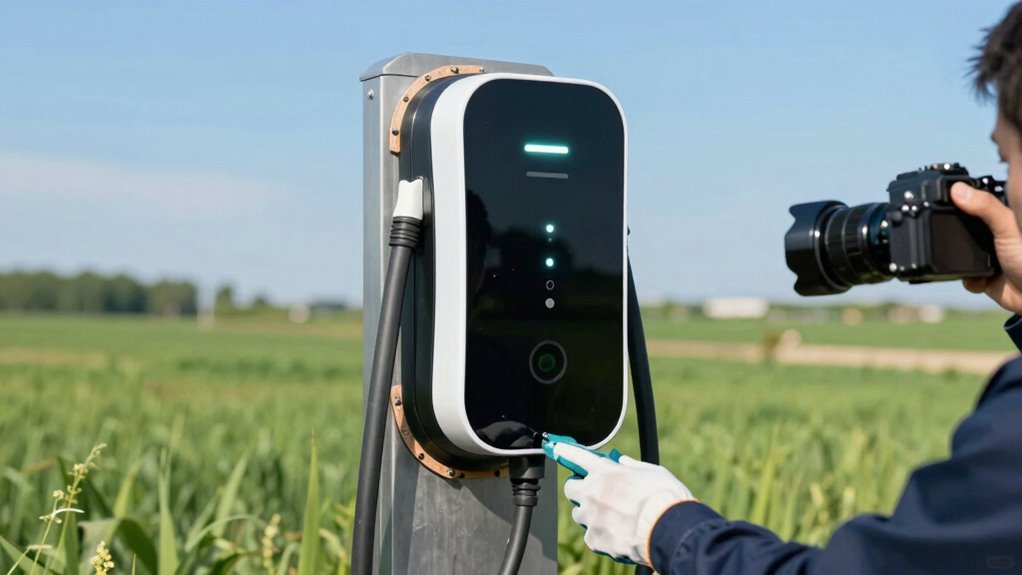
To guarantee your outdoor EV charger withstands the elements, start with a thorough environment assessment to identify weather risks like rain, snow, and wind. Use durable, weatherproof materials, such as corrosion-proof enclosures with proper IP ratings, and seal all electrical joints with high-quality weatherproof sealants. Incorporate safety features like GFCIs and surge protectors, and commit to regular inspections and maintenance. Keep your setup resilient by following these essential steps—you’ll find more tips to protect your charger effectively.
Key Takeaways
- Conduct an environmental assessment to identify exposure risks like rain, snow, wind, and debris.
- Select durable, weatherproof enclosures with high IP ratings and corrosion-resistant materials.
- Seal all electrical connections and joints with outdoor-rated sealants for water resistance.
- Install GFCIs and surge protectors to ensure electrical safety in wet conditions.
- Implement regular maintenance and inspections to detect wear, corrosion, or water intrusion early.
Assess Your Outdoor Environment and Weather Risks
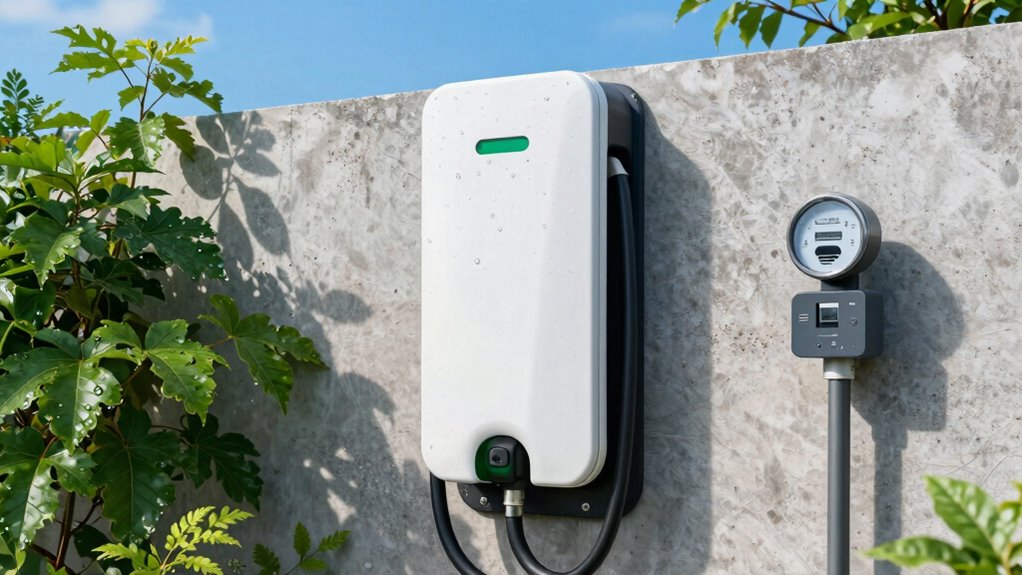
Before installing an outdoor EV charger, it’s important to evaluate your environment and understand the weather risks in your area. Check if strong winds are common, as high wind resistance is essential to prevent damage during storms. Consider how exposed the location is to elements like rain, snow, or humidity, which can accelerate corrosion if proper prevention measures aren’t in place. Assess the surrounding landscape for potential debris or falling branches that could impact the charger. Understanding these factors allows you to select a suitable site and take necessary precautions. Proper weatherproofing measures are crucial to ensure your charger withstands environmental challenges. Being aware of weather patterns helps you to anticipate and prepare for adverse conditions. Conducting a thorough assessment of environmental challenges early on enables you to select the right materials and protective features. Recognizing climate variability is essential for choosing appropriate protective solutions tailored to your area. Additionally, understanding local weather extremes can guide you in selecting the most durable and resilient equipment. By identifying environmental challenges early, you can guarantee your charger is built to withstand local conditions, reducing maintenance needs and extending its lifespan. Proper assessment helps you make informed decisions for a durable outdoor installation.
Choose Weatherproof Materials and Enclosures for Your EV Charger
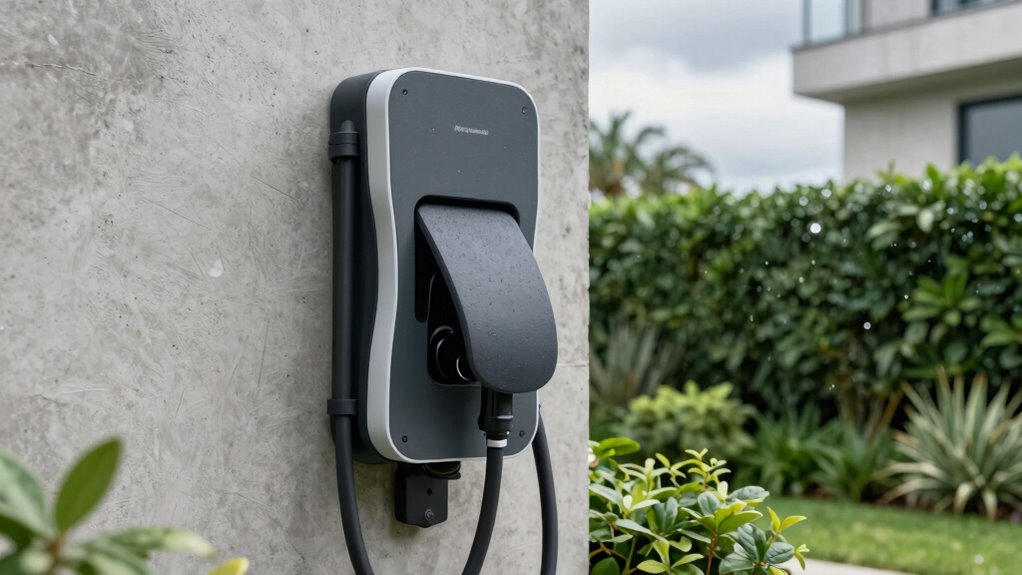
Selecting the right weatherproof materials and enclosures is essential to guarantee your outdoor EV charger withstands harsh conditions. You need durable, high-quality options that resist UV damage and corrosion. Consider these key choices:
- UV-resistant plastics or composites that prevent sun degradation. Using UV-resistant plastics helps maintain enclosure integrity over time and reduces the need for frequent replacements.
- Corrosion-proof metal enclosures, like stainless steel or aluminum.
- Weatherproof seals and gaskets to keep moisture out.
- Enclosures with an IP rating suitable for outdoor exposure. Additionally, choosing materials with proven outdoor durability can further ensure your charger’s longevity. Selecting enclosures with a high IP rating provides added protection against dust and water ingress. These materials ensure your charger remains protected from sun, rain, and snow. By choosing UV-resistant and corrosion-proof components, you extend the lifespan and reliability of your setup. Proper weatherproof enclosures prevent damage and reduce maintenance, keeping your EV charger operational year-round.
Install and Seal Electrical Connections Properly
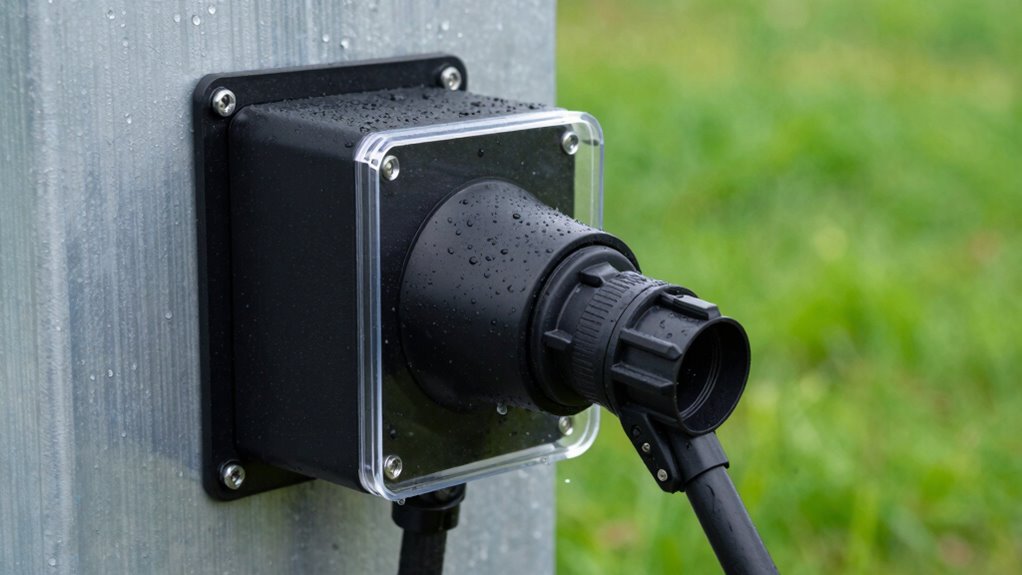
When installing your outdoor EV charger, it’s vital to use waterproof connectors to prevent moisture from causing damage. Make certain to apply the right sealant to all electrical connections to keep out water and debris. Proper sealing ensures your system stays safe and reliable over time.
Use Waterproof Connectors
Using waterproof connectors is vital for guaranteeing your outdoor EV charger remains safe and reliable. They protect electrical connections from moisture, dirt, and corrosion, which could compromise safety. When installing, focus on these key steps:
- Choose connectors rated for outdoor use with proper IP ratings.
- Keep cable management neat to prevent stress on connections.
- Seal every connection thoroughly to prevent water ingress.
- Ensure signage visibility so maintenance crews can easily identify connection points.
- Regularly inspect weatherproofing measures to maintain optimal protection against harsh conditions.
- Proper sealing techniques help prevent the formation of moisture accumulation that can lead to electrical failures.
- Incorporate waterproof connector testing procedures periodically to verify ongoing protection and performance.
- Using high-quality connectors and following manufacturer instructions enhances the long-term durability of your outdoor electrical setup.
Proper use of waterproof connectors not only protects your equipment but also makes future inspections and repairs easier. Remember, well-managed cables and clear signage help maintain safety and functionality in harsh weather conditions. This simple step is vital for long-lasting, weatherproof outdoor EV charging.
Apply Proper Sealant
Applying proper sealant is vital to guarantee your outdoor EV charger’s electrical connections stay protected from water and environmental damage. Sealant application creates effective weatherproof barriers that prevent moisture infiltration and corrosion. Carefully apply a high-quality, outdoor-rated sealant around all electrical connections, ensuring no gaps or exposed areas are left vulnerable. Be thorough and precise, covering every joint and entry point where water could seep in. Proper sealing not only prolongs the lifespan of your charger but also reduces safety risks. Once you’ve applied the sealant, allow it to cure fully as per the manufacturer’s instructions. Remember, well-executed weatherproof barriers are essential for maintaining reliable, safe operation in any outdoor environment. Additionally, understanding the different sealant types and their suitable applications can further enhance your installation’s durability. Selecting the right sealant materials suited for outdoor use can significantly improve long-term weather resistance and performance. Using weatherproofing techniques is also recommended to further shield your charger from harsh conditions, ensuring consistent operation over time. Incorporating proper application methods can help achieve optimal sealing and weatherproofing results.
Add Safety Features Like GFCIs and Surge Protectors
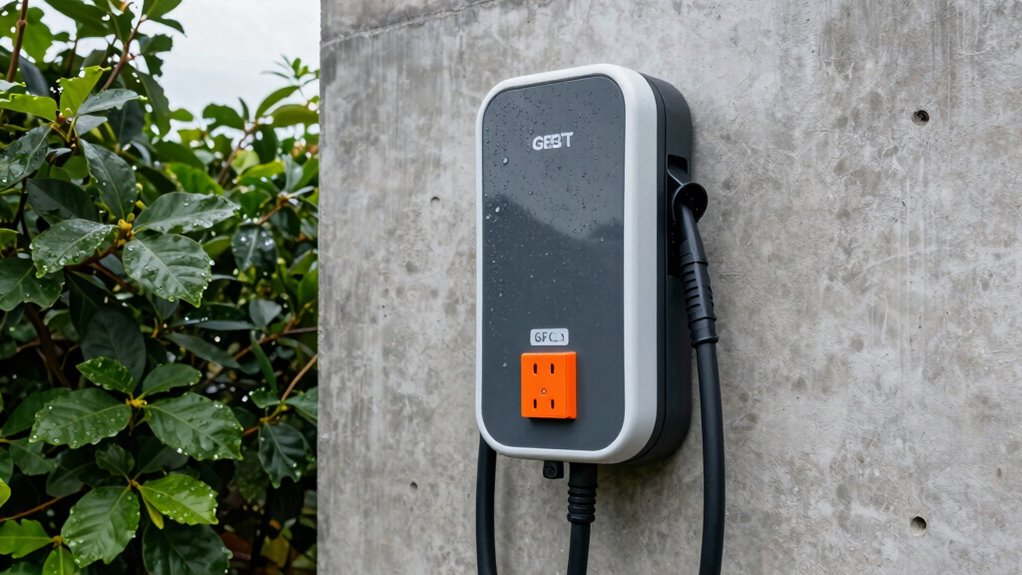
Adding safety features like GFCIs and surge protectors is vital to guarantee your outdoor EV charger operates safely and reliably. GFCI safety helps prevent electrical shocks by shutting off power when it detects ground faults, essential in wet environments. Surge protection shields your charger from voltage spikes caused by lightning or power surges, reducing damage risk. To maximize safety, consider these steps:
Prioritize GFCIs and surge protectors to ensure safe, reliable outdoor EV charging in all weather conditions.
- Install a dedicated GFCI outlet for your charger
- Use surge protectors rated for outdoor use
- Ensure GFCIs are tested regularly for proper function
- Connect surge protectors directly to the circuit or outlet
- Be aware that conduit protection can further enhance the durability and safety of electrical installations in harsh weather conditions. Incorporating weatherproof enclosures and proper sealing can also help safeguard the components from environmental damage. Additionally, understanding ground fault detection principles can improve your safety measures. Regularly inspecting your outdoor electrical setup and maintaining proper grounding methods further enhance overall safety. Implementing proper circuit design can help prevent overloads and electrical faults, adding an extra layer of protection.
Perform Regular Maintenance and Inspections
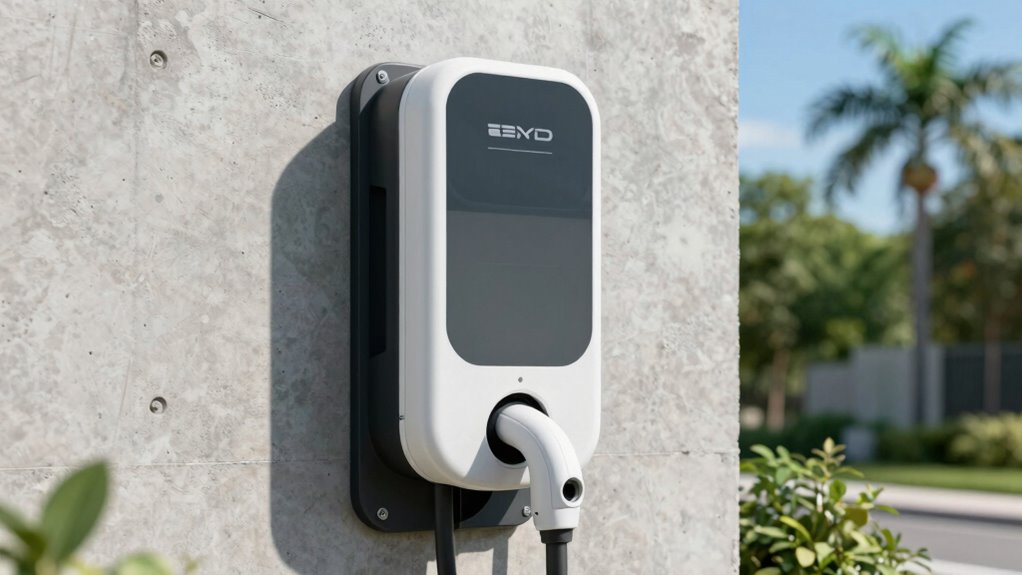
Regular maintenance and inspections are crucial to guarantee your outdoor EV charger remains safe and functions properly over time. Following consistent maintenance tips helps prevent weather-related damage and ensures reliable performance. Set up inspection schedules to routinely check for signs of corrosion, loose connections, or water infiltration. Keep the area around the charger clear of debris, snow, or standing water that could compromise its safety. Use a flashlight to examine the electrical components and connectors for rust or corrosion, and tighten any loose fittings. Regularly inspecting the charger also helps identify early issues before they escalate, extending its lifespan. By sticking to proper maintenance tips and adhering to a regular inspection schedule, you protect your investment and maintain a safe, weatherproof charging setup.
Troubleshoot Common Weather-Related Problems
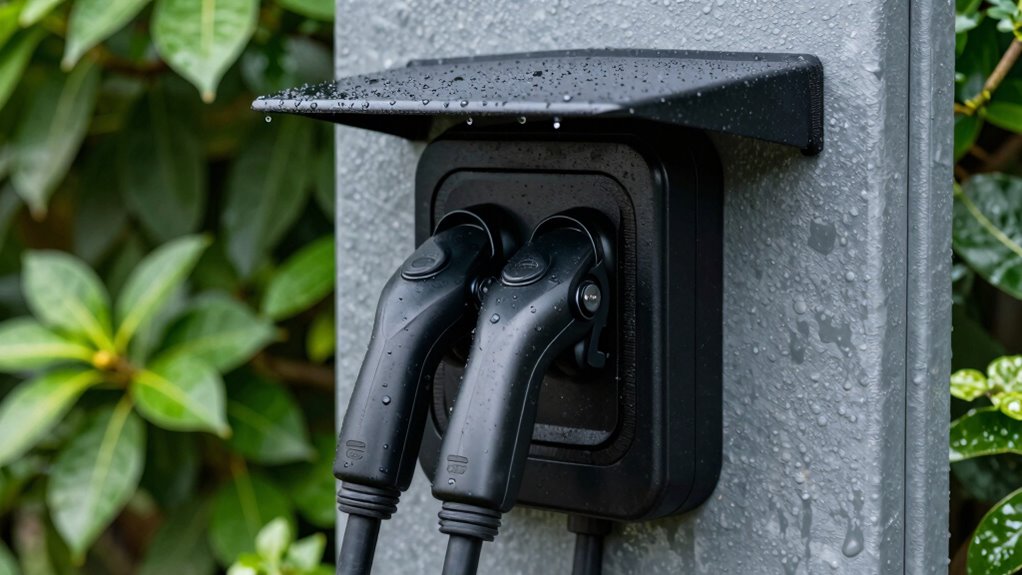
Weather-related issues can quickly disrupt your outdoor EV charger’s performance, especially during storms, snow, or heavy rain. Ground moisture can lead to corrosion or short circuits if the enclosure isn’t properly sealed. Wind damage may loosen or break connections, exposing wiring to the elements. To troubleshoot common weather-related problems:
- Check for water intrusion or corrosion around the charger’s seal and wiring connections.
- Inspect the enclosure for signs of wind damage, such as dents or loose fittings.
- Ensure the grounding system is intact to prevent electrical faults caused by ground moisture.
- Test the charger’s functionality after storms to identify any issues caused by weather exposure.
- Review the weatherproofing features of your charger’s design, inspired by mythology-inspired names with powerful meanings, to ensure optimal protection against the elements.
- Regularly inspect water-resistant enclosures and sealing materials to maintain their protective qualities.
- Consider adding additional weatherproofing measures such as sealants or protective covers to enhance durability in harsh conditions. Proper maintenance of weatherproofing features extends the lifespan of your outdoor charger and ensures consistent performance in challenging weather.
Frequently Asked Questions
How Long Does a Weatherproof Outdoor EV Charger Typically Last?
A weatherproof outdoor EV charger typically lasts 10 to 15 years, depending on durability factors like material quality and installation. To extend its lifespan, you should follow maintenance tips such as regularly inspecting seals, cleaning dirt buildup, and ensuring proper grounding. Weather conditions also play a role, so choosing a high-quality, weather-resistant model and keeping it well-maintained helps maximize its longevity and performance over time.
Are There Specific Permits Required for Outdoor EV Charger Installations?
Did you know that over 60% of outdoor EV charger installations require permits? Yes, you need to check permit requirements and zoning regulations before starting. Local authorities often have specific codes for outdoor electrical work, so it’s essential to confirm with your city or county. Failing to obtain necessary permits can lead to fines or delays, so always ensure you’re compliant with the local regulations for a smooth installation process.
Can I Install an Outdoor EV Charger Myself or Should I Hire a Professional?
You can install an outdoor EV charger yourself, but DIY challenges like electrical safety and weatherproofing make hiring a professional a wiser choice. Professionals ensure code compliance, proper weatherproofing, and reliable connections, saving you time and potential costs. If you’re comfortable with electrical work and follow safety guidelines, a DIY approach could work. Otherwise, investing in a professional guarantees a safe, compliant, and durable installation that lasts.
What Are the Most Common Weather-Related Damages to Outdoor EV Chargers?
You should be aware that outdoor EV chargers often face weather-related damages like corrosion and ice damage. Corrosion prevention is key, so make certain your charger is properly sealed and protected from moisture to avoid rust and electrical issues. Ice buildup can also cause physical damage or hinder access, so consider installing a weatherproof cover or heater. Regular maintenance helps prevent these issues, extending your charger’s lifespan and ensuring reliable performance in all conditions.
How Do I Choose the Best Location for My Outdoor EV Charger?
You should choose a location that considers parking convenience and electrical safety. Pick a spot near your driveway or garage for easy access, avoiding areas prone to flooding or excessive moisture. Guarantee the surface is level and sturdy, preventing potential damage. Keep the charger away from trees or debris, and verify it complies with local codes. Proper placement helps protect your investment and ensures safe, reliable charging in all weather conditions.
Conclusion
By weatherproofing your outdoor EV charger, you’re creating a fortress against rain, snow, and harsh winds. Picture your charger standing tall and secure, with sealed connections and protective enclosures shielding it from the elements. Regular maintenance keeps it shining bright and functioning flawlessly, even when storms rage around it. With these steps, you’re not just installing a charger—you’re safeguarding your investment and ensuring reliable charging, rain or shine.