
Adapting building codes for depot chargers ensures your installation meets strict safety and permitting standards. You need to follow updated regulations on fire safety, electrical infrastructure, and clear documentation to gain approvals smoothly. Proper adherence minimizes safety risks, prevents costly delays, and protects your investment. Focusing on these key areas helps create a safe, compliant environment for your EV fleet. If you’re interested, you’ll learn more about the essential steps to ensure your depot’s infrastructure is fully compliant and safe.
Key Takeaways
- Ensure building codes incorporate fire safety measures specific to high-power EV chargers and electrical systems.
- Update electrical standards to accommodate increased load requirements and proper wiring for depot charging stations.
- Develop clear permitting guidelines that require detailed documentation of safety features and compliance measures.
- Promote early collaboration with fire safety and electrical professionals to streamline approval processes.
- Regularly review and adapt codes to align with evolving charging technologies and safety best practices.
As electric vehicle adoption accelerates, adapting building codes for depot chargers becomes essential to support efficient and safe infrastructure development. You need to ensure that the installation of these chargers meets current safety regulations, particularly concerning fire safety and electrical standards. Properly updated codes help prevent potential hazards and streamline the permitting process, giving you confidence that your depot’s charging infrastructure is both reliable and compliant.
Adapting building codes for depot chargers ensures safety, compliance, and efficient infrastructure development for electric vehicle fleets.
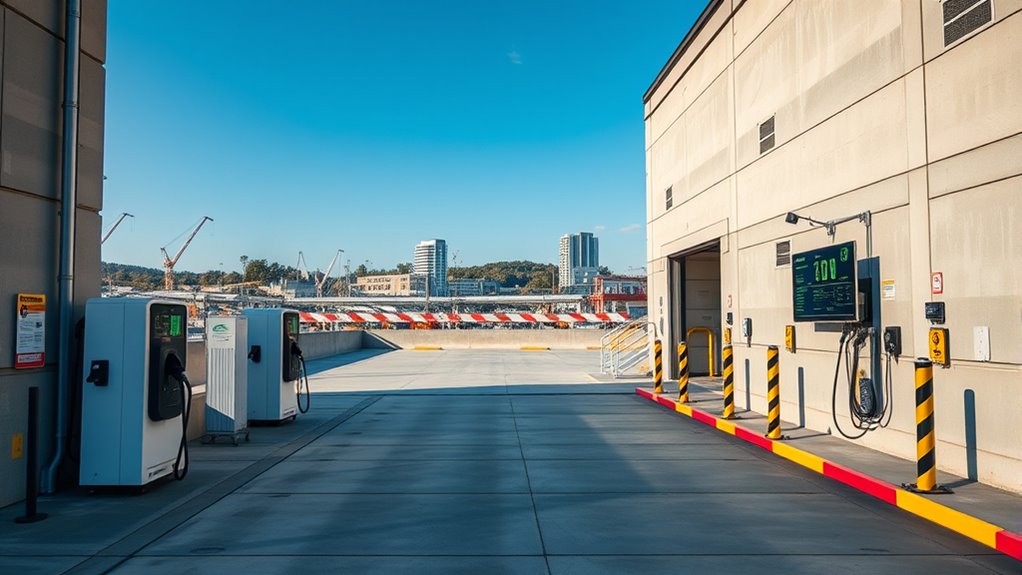
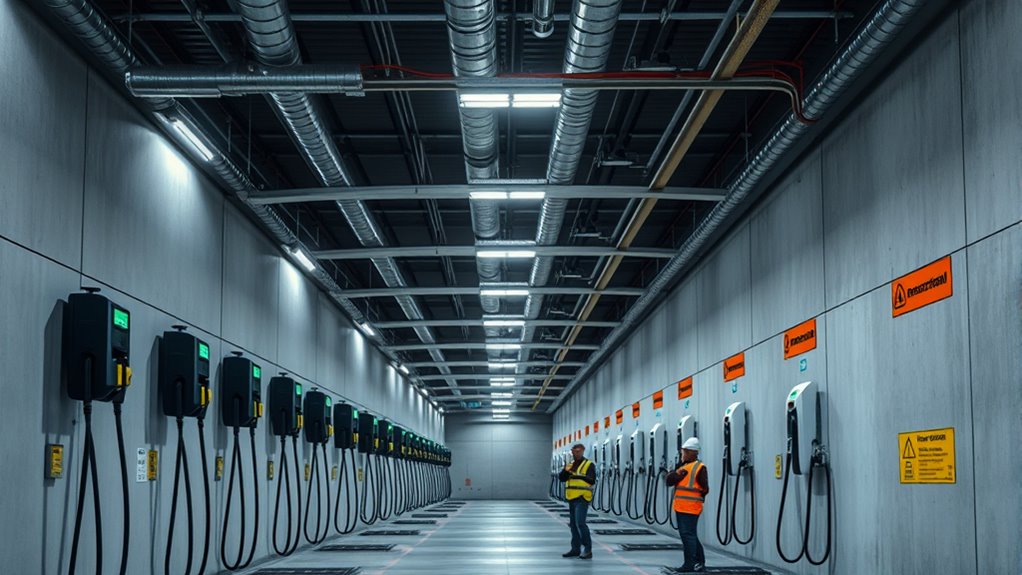
When planning to install depot chargers, you’ll want to pay close attention to fire safety requirements. Chargers and their associated electrical systems generate heat and can pose fire risks if not properly installed or maintained. Building codes now emphasize fire-resistant materials, clear separation of electrical equipment from combustible materials, and accessible fire suppression systems. These measures help contain any electrical faults or fires that might occur, minimizing damage and protecting personnel. Incorporating fire safety into your design isn’t just about compliance; it’s about safeguarding your assets and ensuring the safety of everyone on-site.
Electrical standards are equally critical. They dictate the specifications for wiring, circuit protection, grounding, and load calculations. You need to ensure that your depot’s electrical infrastructure can handle the high power demands of multiple chargers operating simultaneously. This often involves upgrading existing electrical panels or installing dedicated circuits that conform to local electrical codes. By adhering to these standards, you reduce the risk of overloads, short circuits, and power outages, which can cause costly downtime and safety hazards.
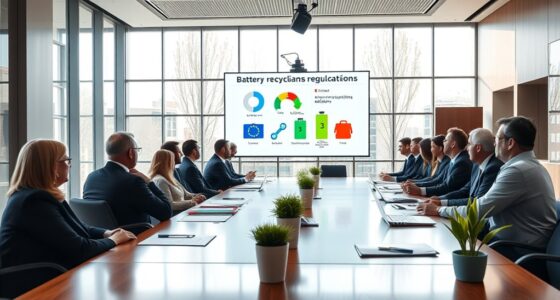
Permitting processes have become more rigorous as codes evolve to incorporate these safety standards. You’ll typically need to submit detailed plans showing how your installation meets fire safety and electrical requirements. This includes documentation of equipment ratings, clearances, fire-resistant materials, and safety features like emergency shut-offs. Working closely with local authorities during the permitting process helps prevent delays and ensures your project aligns with all regulatory expectations. It’s also wise to engage licensed electricians and fire safety consultants early on to verify that your plans meet all relevant codes, making inspections smoother and faster.
Ultimately, adapting building codes for depot chargers isn’t just a bureaucratic hurdle; it’s a crucial step toward creating a safe, reliable charging environment. By prioritizing fire safety and electrical standards from the start, you help protect your investment, ensure compliance, and contribute to a safer overall charging infrastructure. As regulations continue to evolve, staying informed and proactive will be your best strategy for efficient deployment and operation of depot charging stations.
Top picks for "adapt build depot"
Open Amazon search results for this keyword.
As an affiliate, we earn on qualifying purchases.
Frequently Asked Questions
How Do Building Codes Vary Between States for Depot Chargers?
You’ll find that state regulations differ considerably when it comes to depot chargers, affecting your installation process. Some states have strict permit processes and specific safety standards, requiring detailed inspections and compliance checks. Others may have more streamlined rules, making permits easier to obtain. To make sure you’re compliant, check your state’s building codes and permit requirements early, so you can navigate the process smoothly and avoid delays.
What Are the Cost Implications of Code Compliance for Depot Chargers?
You might think compliance costs are overwhelming, but they’re manageable. Expect installation costs to vary based on local codes and safety standards, possibly increasing upfront expenses. Maintenance expenses can also rise if the codes demand specialized equipment or regular inspections. However, investing in code-compliant depot chargers guarantees safety, reduces future repair costs, and avoids fines. Proper planning helps you balance initial investment with long-term savings and reliability.
How Can Small Businesses Efficiently Meet Safety Standards for Depot Chargers?
To efficiently meet safety standards for depot chargers, you should focus on fire safety and electrical compliance. Regularly inspect and maintain equipment, ensure proper grounding, and use approved components. Keep clear documentation of safety procedures and upgrades, and stay current with local codes. Training staff on fire safety protocols and electrical hazards also boosts safety. By proactively managing these aspects, your small business minimizes risks and maintains compliance with ease.
Are There Specific Certifications Required for Depot Charger Installation?
You need to know that installing depot chargers requires specific certifications. The certification process guarantees your installer has the necessary qualifications, which often include electrical licensing and manufacturer training. These credentials verify safety standards and code compliance, making sure your installation is reliable. By choosing certified professionals, you avoid costly errors and delays, and you demonstrate your commitment to safety and quality in your electric vehicle infrastructure.
How Do Future Technological Advancements Impact Current Building Code Requirements?
Future technological advancements, like renewable energy and smart grid integration, will likely influence your current building code requirements by emphasizing energy efficiency and grid compatibility. You’ll need to stay updated on evolving standards to ensure your depot chargers meet new safety and permitting regulations. As technology advances, codes might require features like adaptive safety systems or enhanced electrical infrastructure, so proactively planning for these changes helps you stay compliant and maximize benefits.
Conclusion
As you navigate adapting building codes for depot chargers, picture the steady hum of charging stations fueling a cleaner future. With every permit secured and safety standard met, you’re weaving a resilient network that sparks to life like a well-oiled machine. Embrace the process, knowing that each careful step builds a safer, brighter horizon—where electric vehicles glide smoothly, and your efforts ignite a sustainable tomorrow. Together, you’re powering progress, one connection at a time.