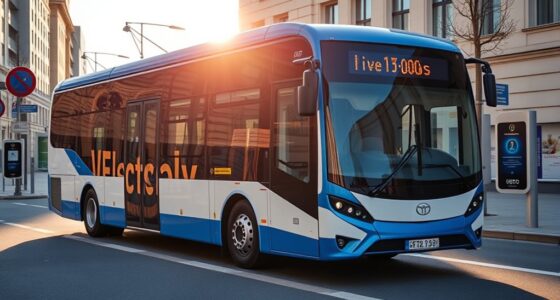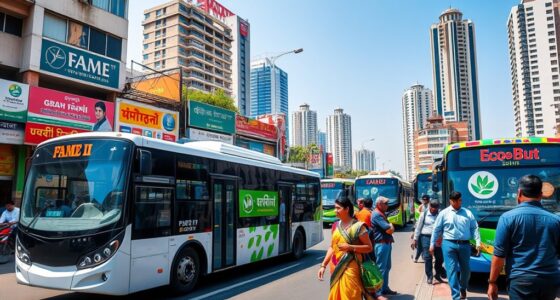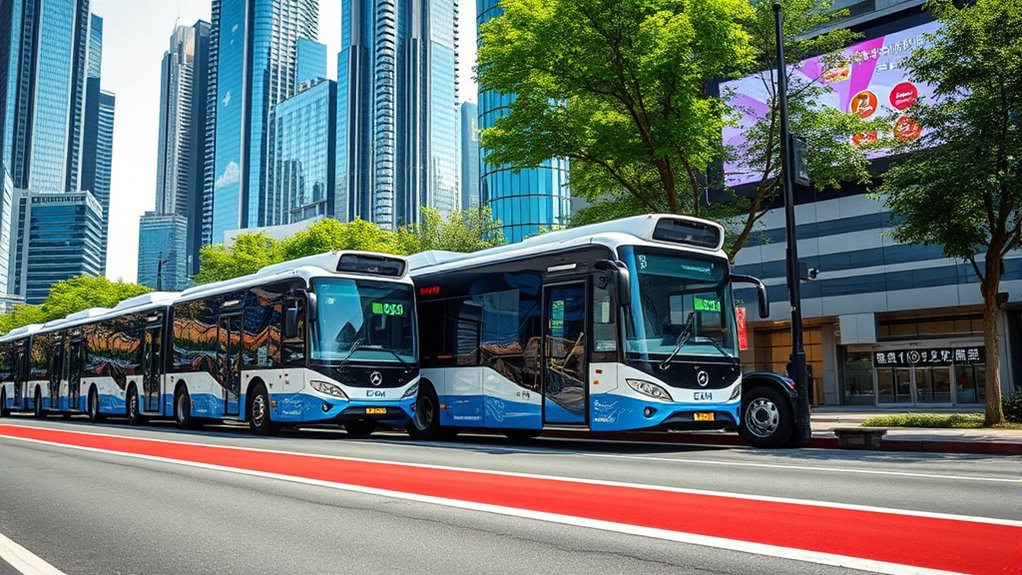

China’s local governments actively promote bus electrification through financial incentives like grants, subsidies, and tax breaks that help offset higher upfront costs. They also establish regulations requiring a certain percentage of new buses to be electric, ensuring proper enforcement to meet targets efficiently. Additionally, investments in charging infrastructure support fleet transitions, making electric buses more practical for operators. If you want to understand how these policies are shaping cleaner transit, there’s more to discover below.
Key Takeaways
- Chinese municipal policies offer financial incentives, such as grants and subsidies, to offset electric bus procurement costs.
- Local regulations mandate specific electrification targets, ensuring cities prioritize bus fleet upgrades.
- Enforcement mechanisms monitor compliance, guaranteeing incentives lead to tangible electric bus deployments.
- Policies support infrastructure development, like charging stations, essential for expanding electric bus networks.
- The synergy of incentives and enforcement accelerates China’s urban bus electrification, improving air quality and reducing emissions.
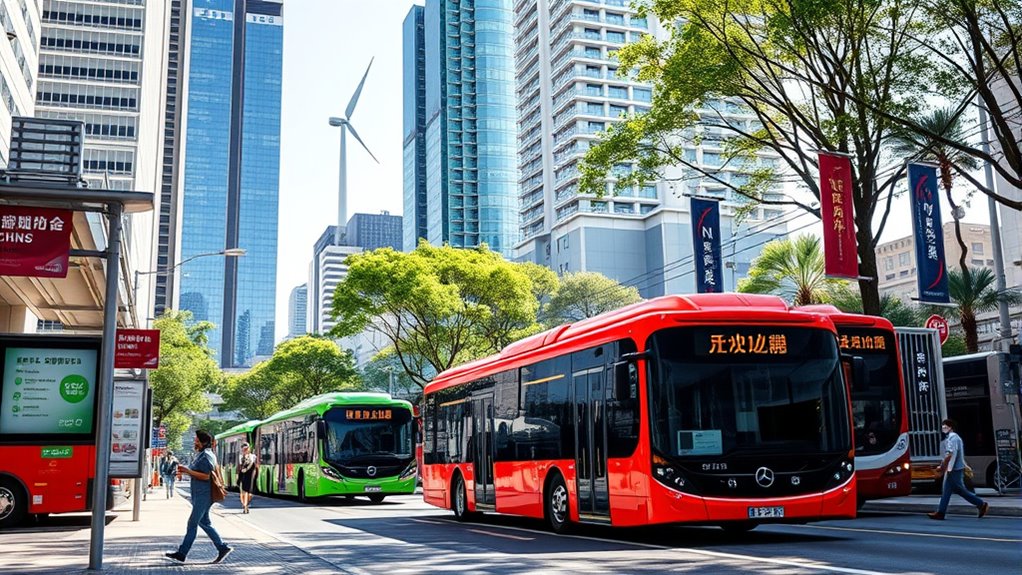
Many local governments are offering incentives to encourage bus electrification, recognizing its potential to reduce emissions and improve air quality. If you’re involved in public transit planning or managing a bus fleet, these incentives can be powerful tools to accelerate fleet modernization. By switching to electric buses, you not only meet environmental goals but also benefit from lower operating costs and quieter, more sustainable service. However, to fully realize these advantages, effective policy enforcement plays a pivotal role. Governments that properly implement and monitor their policies ensure that bus operators adhere to electrification mandates, making sure incentives translate into tangible fleet upgrades.
In your efforts to modernize your bus fleet, local policies often include financial incentives like grants, subsidies, or tax breaks aimed at offsetting the higher upfront costs of electric buses. These incentives are designed to make electric vehicles more accessible for public transit agencies, encouraging a swift transition away from traditional diesel-powered buses. When policies are well enforced, they create a level playing field, preventing delays or misallocation of funds. Enforcement also ensures that transit agencies meet specific targets within set timelines, which accelerates the overall pace of fleet modernization. As a result, you can expect more electric buses to hit the streets sooner, directly contributing to cleaner air and lower greenhouse gas emissions.
Furthermore, local policies may include mandates or regulations that require a certain percentage of new bus purchases to be electric within a specific timeframe. These policies often come with clear compliance standards and regular oversight, ensuring transit agencies follow through. Strong policy enforcement minimizes loopholes and guarantees that incentives are used effectively, leading to a more rapid and widespread adoption of electric buses. When enforcement is lax, there’s a risk that some agencies might delay electrification efforts or utilize incentives inefficiently, hampering overall progress.
You also need to stay informed about local regulations that support infrastructure development, such as charging stations, which are essential for fleet modernization. Policy enforcement ensures that these infrastructure projects are completed on time and meet safety and technical standards. This integration of charging infrastructure with bus deployment helps smooth the transition to electric fleets, reducing operational hiccups. Without proper oversight, infrastructure projects can face delays or substandard installations, which may hinder your plans for fleet electrification.
Ultimately, successful bus electrification depends on a combination of attractive incentives and rigorous policy enforcement. When these elements work together, you’re better positioned to modernize your fleet efficiently, comply with regulations, and realize the environmental and economic benefits of cleaner transportation. By actively engaging with local policies and advocating for strict enforcement, you contribute to a more sustainable transit system that aligns with broader climate and air quality goals.

The 2027-2032 World Outlook for Electric Bus Charging Stations
As an affiliate, we earn on qualifying purchases.
As an affiliate, we earn on qualifying purchases.
Frequently Asked Questions
How Do Local Incentives Vary Between Chinese Cities?
You’ll notice local incentives vary widely between Chinese cities, driven by regional funding and infrastructure development priorities. Some cities offer substantial subsidies and tax breaks to encourage bus electrification, while others focus on building charging infrastructure and expanding fleet sizes. These differences reflect local economic conditions and policy focus, meaning your experience with incentives can differ markedly depending on the city you’re in, affecting how quickly and easily you can shift to electric buses.
Are There Federal Policies Supporting Bus Electrification Nationwide?
You might think the federal government’s got your back with strong policies, but surprisingly, nationwide regulations for bus electrification are pretty limited. They do offer some federal funding, yet often leave it to local governments to take the lead. So, while national support exists, it’s still the local policies that really push buses toward electrification, making you wonder if the federal level is just along for the ride.
What Challenges Do Municipalities Face Implementing These Incentives?
You face funding hurdles and implementation delays when trying to roll out incentives for bus electrification. Securing sufficient funds can be tough, especially with competing priorities, leading to project stalls. Additionally, bureaucratic processes slow down deployment, making it harder to meet targets. These challenges require strategic planning, efficient resource allocation, and strong coordination to guarantee successful adoption of electric buses and maximize the benefits of local policies.
How Is the Success of Bus Electrification Measured Locally?
You measure the success of bus electrification locally by monitoring improvements in public perception and evaluating infrastructure development. Positive public perception indicates acceptance and support, while expanded charging stations and upgraded electrical grids show tangible infrastructure progress. You also track the number of electric buses in operation, reductions in emissions, and overall operational efficiency. These metrics together reveal how effectively your municipal policies are advancing bus electrification efforts.
Do Incentives Differ for Private vs. Public Bus Operators?
Imagine a world where clean air is just a policy away. You’ll find that private operator subsidies often lag behind those for public buses, creating incentive disparities. These differences aim to encourage private operators to adopt electric buses, but the gap can slow progress. If you’re involved, you’ll see that tailored incentives help balance the scales, making it easier for both sectors to accelerate their shift to cleaner transportation.

Zeasdacu Bus Zone Sign, Rust-Free Aluminum & UV-Printed – Fit School Bus Stop, Public Transit Zone, Bus Station, Hospital Bus Drop-Off, Durable & Weatherproof 8"" x12
Crafted from high-quality metal, this 8"x12" (20×30 cm) tin sign is built to last. It resists bending, rust,…
As an affiliate, we earn on qualifying purchases.
As an affiliate, we earn on qualifying purchases.
Conclusion
You can see how local incentives act like a spark that ignites bus electrification across Chinese cities. They’re the wind propelling innovation forward, turning the transportation landscape into a cleaner, more sustainable horizon. When municipalities prioritize these policies, they create a ripple effect, encouraging broader adoption. Just as a single drop causes ripples across a pond, these incentives ripple through the industry, transforming urban transit into a greener, more efficient future you can count on.

Guidebook for Transitioning to an Electric Fleet
As an affiliate, we earn on qualifying purchases.
As an affiliate, we earn on qualifying purchases.
bus electrification infrastructure kit
As an affiliate, we earn on qualifying purchases.
As an affiliate, we earn on qualifying purchases.