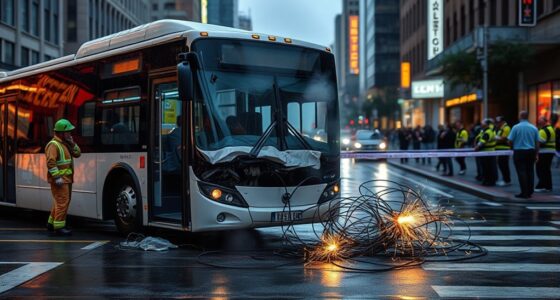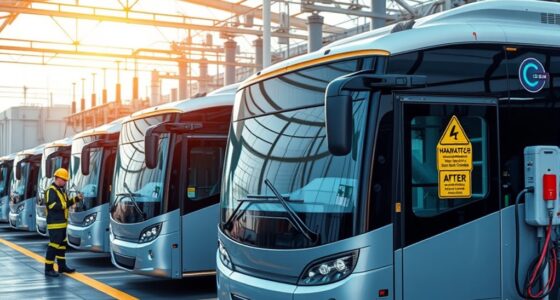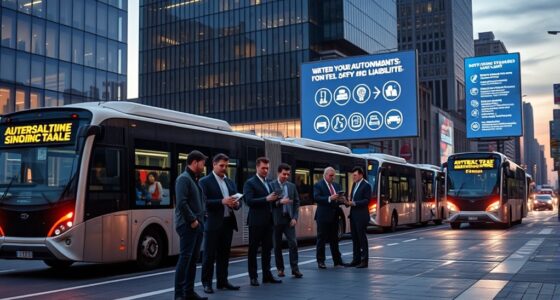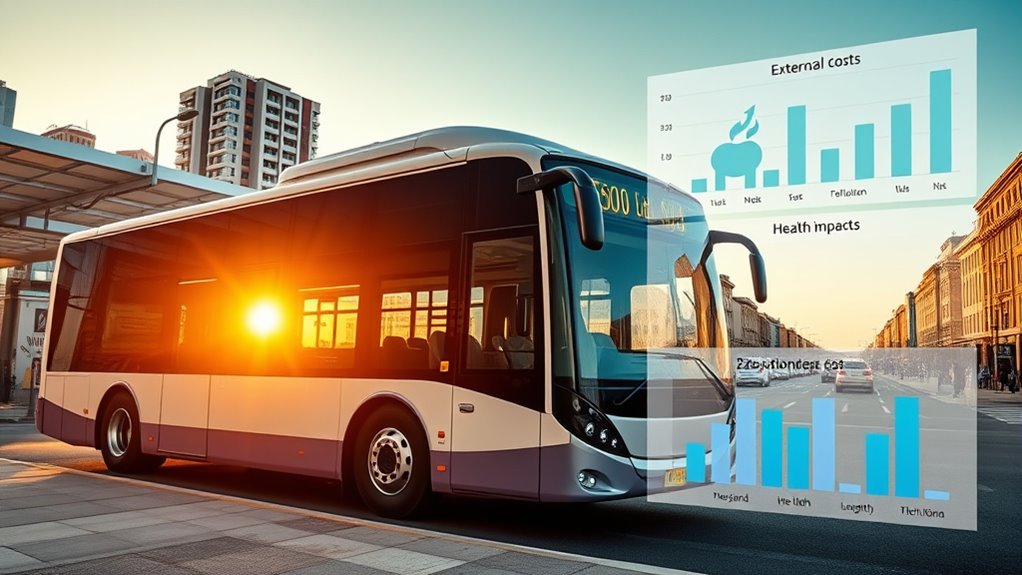
Including external costs like health impacts and environmental effects in bus procurement helps you see the full picture of true total costs. By considering these factors, you promote cleaner, safer, and more sustainable transportation options. This approach encourages investment in electric and hybrid buses, which can lead to long-term savings and healthier communities. If you want to explore how integrating these externalities can guide smarter decisions, there’s more to discover ahead.
Key Takeaways
- Incorporating external costs into TCO promotes cleaner, more efficient bus options, reducing pollution and health impacts.
- Factoring in environmental and health externalities ensures procurement aligns with sustainability and public well-being goals.
- Including external costs highlights true societal expenses, encouraging investment in low-emission and zero-emission bus technologies.
- Recognizing externalities supports social equity by improving air quality and safety for vulnerable and underserved populations.
- Integrating external costs fosters responsible decision-making, leading to long-term economic savings and healthier communities.
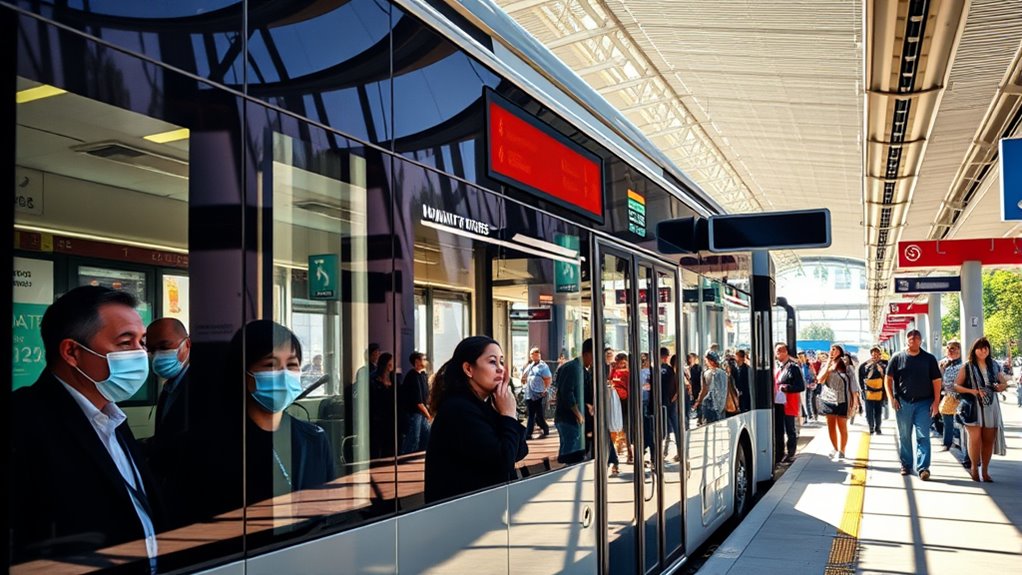
Including external costs in bus procurement processes is essential for promoting sustainable transportation. When you consider these costs, you’re not just buying a vehicle; you’re making a decision that impacts the environment and society at large. External costs, such as air pollution, greenhouse gas emissions, noise, and traffic congestion, often aren’t reflected in traditional procurement decisions. By accounting for these factors, you help guarantee that the buses you choose promote a lower environmental impact, which benefits communities and ecosystems alike. This approach encourages manufacturers to develop cleaner, more efficient vehicles, ultimately reducing air pollution and carbon footprints. As a result, you contribute to a healthier environment, safeguarding air quality and combating climate change.
Beyond environmental considerations, including external costs also advances social equity. Public transportation plays a critical role in providing mobility for marginalized communities, and the choice of buses directly influences accessibility and safety. When you factor in external costs, you’re acknowledging the social implications of transportation decisions. For instance, buses that produce fewer emissions tend to improve air quality in densely populated neighborhoods, which often include vulnerable populations. This reduces health disparities linked to pollution exposure, offering everyone a fairer chance at living in healthier environments. Additionally, by prioritizing buses with lower external costs, you support equitable access to reliable transportation, enabling more people to participate fully in education, employment, and social activities.
Incorporating external costs isn’t just about environmental and social benefits; it also makes economic sense. When you account for health impacts and environmental degradation, the true cost of bus operation becomes clearer. This broad view can lead to smarter investments, such as purchasing electric buses or hybrid models that, although potentially more expensive upfront, save money over time through lower fuel and maintenance costs. These choices also reduce health-related expenses caused by pollution-related illnesses, benefiting communities and healthcare systems. Moreover, understanding the full lifecycle costs of vehicles can foster innovation and drive the development of more sustainable transportation solutions. By integrating external costs into procurement, you foster a more responsible, future-oriented approach that balances economic efficiency with social and environmental stewardship.

Terminal Blocks Ground Circuit Kit with Cover 12 PCS/6 Set 4+5+6 Position 600V 15A Dual Screw Bus Bar Wire Positive Pre Insulated Jumper Fuse Strip Lug for DIY Industrial Electrical Cabinet Meter Box
⚫【High-quality & Excellent Material 】- ElvesHome 4+5+6 positions terminal blocks are made from polycarbonate and high-quality flame retardant…
As an affiliate, we earn on qualifying purchases.
As an affiliate, we earn on qualifying purchases.
Frequently Asked Questions
How Are External Costs Quantified in Bus Procurement Decisions?
You quantify external costs in bus procurement by evaluating emission valuation and noise impact. You assign monetary values to emissions like CO2 and pollutants, reflecting their environmental and health effects. For noise impact, you examine how noise pollution affects nearby residents and communities, translating it into costs. By integrating these factors into your decision-making, you guarantee a thorough understanding of true costs, promoting healthier, more sustainable transportation choices.
What Role Do Government Policies Play in Including External Costs?
Think of government policies as the compass guiding your journey through urban congestion and noise mitigation. They play a vital role in including external costs by setting standards and incentives that encourage cleaner, quieter buses. Policies like emission regulations and noise limits help you account for health and environmental impacts, ensuring procurement choices favor sustainable options. Ultimately, they steer your decisions toward reducing external costs and creating healthier cities.
How Do External Costs Impact Overall Bus Fleet Costs?
External costs considerably impact your bus fleet costs by adding expenses linked to environmental impacts and social costs. When these externalities aren’t included, your overall costs underestimate true expenses, leading to less sustainable choices. Incorporating environmental impact and social costs encourages you to select greener, healthier buses, which can lower long-term expenses and improve community well-being. Recognizing these costs helps you make more informed, responsible procurement decisions.
Are There Specific Health Metrics Used to Assess External Costs?
Think of health metrics like a compass guiding your decisions. You use pollution metrics such as NOx, PM, and CO2 levels to assess health impacts of buses. These metrics reveal how emissions affect respiratory health and overall well-being. By analyzing health impacts through these indicators, you can better evaluate external costs, making more sustainable choices that prioritize cleaner air and healthier communities.
How Can External Costs Influence Long-Term Bus Procurement Strategies?
External costs greatly influence your long-term bus procurement strategies by shaping public perception and encouraging technological innovation. When you account for health-related externalities, you prioritize cleaner, more efficient buses, which boost community support. This focus pushes you to adopt innovative technologies, like electric or hybrid buses, reducing environmental impact and improving public health. Consequently, your procurement decisions align with sustainability goals, ensuring economic and social benefits over time.
hybrid bus
As an affiliate, we earn on qualifying purchases.
As an affiliate, we earn on qualifying purchases.
Conclusion
By including external costs like health impacts and environmental damage in bus procurement, you not only make smarter financial choices but also support a healthier society. While some argue these costs are hard to quantify, recent studies show they’re significant and should be factored into decision-making. Embracing this broader perspective can lead to more sustainable, cost-effective transportation, proving that considering externalities isn’t just ethical but also practical for long-term success.

Showcast Classic New York City Central Station White Passenger Bus 6 Diecast Commercial Vehicle, Small
Quality diecast with plastic interior parts
As an affiliate, we earn on qualifying purchases.
As an affiliate, we earn on qualifying purchases.

The New Future of Public Transportation
As an affiliate, we earn on qualifying purchases.
As an affiliate, we earn on qualifying purchases.