India’s FAME II and PM-eBus Sewa policies aim to make electric buses more affordable and widespread. FAME II offers subsidies that lower the upfront costs and encourages infrastructure growth, while PM-eBus Sewa helps local transit systems shift with financial support and fast-charging networks. These initiatives focus on reducing emissions, cutting fuel costs, and modernizing urban transport. Keep exploring to discover how these schemes are shaping India’s sustainable mobility future.
Key Takeaways
- FAME II provides subsidies to reduce electric bus purchase costs and supports charging infrastructure development nationwide.
- PM-eBus Sewa offers financial assistance to municipal fleets, promoting electric bus adoption in urban transit systems.
- Both schemes aim to foster a robust electric bus ecosystem through subsidies, infrastructure, and technological upgrades.
- FAME II emphasizes scaling up charging stations and battery technology improvements for operational efficiency.
- The combined policies drive India’s shift toward sustainable urban mobility and reduced vehicular emissions.
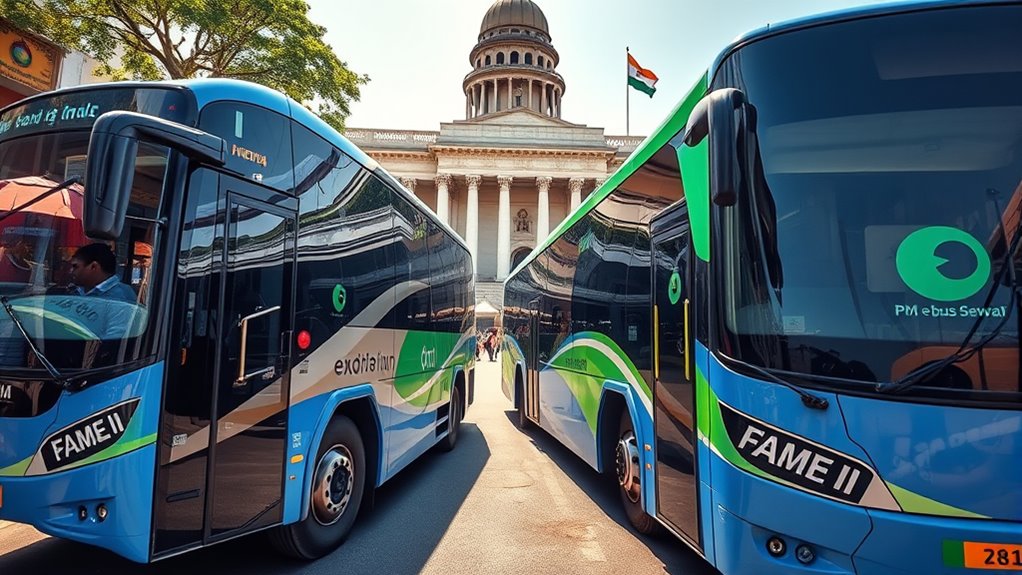
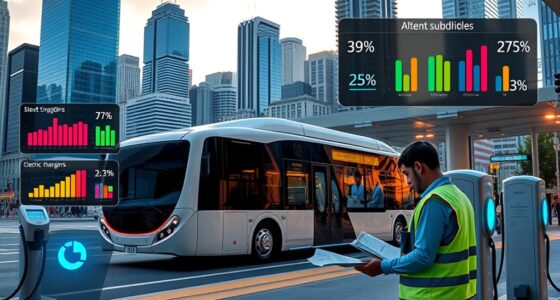
India is rapidly transforming its public transportation landscape by promoting electric buses through a range of subsidies and policies. These initiatives aim to reduce emissions, cut fuel costs, and modernize urban mobility. At the heart of this transformation lies significant investment in battery technology and charging infrastructure. As you explore the landscape of electric bus adoption, you’ll find that advancements in battery tech have made these vehicles more viable, offering longer ranges and faster charging times. This progress directly influences how efficiently electric buses can operate, ensuring they can meet the demands of busy city routes. Simultaneously, the development of extensive charging infrastructure is essential. Governments and private players are working together to deploy charging stations at bus depots and along main routes, making recharging more accessible and convenient. This infrastructure not only supports larger fleets but also reduces downtime, encouraging more operators to switch to electric buses.
Additionally, ongoing innovations in battery efficiency and durability are crucial for extending the lifespan and performance of electric buses, further boosting their adoption. The FAME II scheme is a cornerstone of India’s push toward electric mobility. It provides substantial subsidies to manufacturers and operators, lowering the upfront cost of electric buses and making them more attractive financially. By reducing the price barrier, FAME II accelerates the adoption of electric buses across urban centers. The scheme also incentivizes the deployment of charging infrastructure, ensuring that buses can be recharged efficiently. As you observe cities implementing FAME II, you’ll notice a strategic focus on creating a robust network of charging stations, which is indispensable for maintaining operational reliability. The scheme’s support extends to technological upgrades, pushing manufacturers to innovate in battery efficiency and durability, which in turn enhances the overall performance of electric buses.
Similarly, the PM-eBus Sewa program complements FAME II by focusing on the deployment of electric buses in municipal and local transit systems. It offers financial assistance to city transport undertakings, helping them transition their existing fleets. This program emphasizes building a detailed charging network, often involving fast chargers that minimize downtime and keep buses on schedule. The combined impact of these policies makes electric buses more practical and economically feasible for operators, especially in densely populated urban areas. As you see more cities adopting these policies, the importance of ongoing advancements in battery technology and charging infrastructure becomes clear—they are the backbone of a sustainable and efficient electric bus ecosystem. Together, these initiatives aim to make electric buses a mainstream choice, transforming urban transportation into a cleaner, more sustainable system that benefits everyone.
Frequently Asked Questions
How Sustainable Are Electric Buses Compared to Traditional Diesel Buses?
Electric buses are more sustainable than traditional diesel buses because they substantially cut emissions and promote cleaner air. You benefit from reduced greenhouse gases and lower operating costs. However, their sustainability depends on proper battery recycling to prevent environmental harm. As technology improves, electric buses will become even greener, making them a smarter choice for long-term transportation. So, you can see their potential for a cleaner, more sustainable future.
What Are the Long-Term Economic Benefits of Electric Bus Adoption?
By adopting electric buses, you’ll boost economic growth through reduced fuel costs and lower maintenance expenses. This shift creates new employment opportunities in manufacturing, charging infrastructure, and maintenance services, fostering long-term economic benefits. As you shift to cleaner transportation, you’ll also attract investments, improve urban air quality, and support sustainable development, all of which contribute to a stronger economy and more job prospects for communities.
How Do Local Manufacturing Policies Support Electric Bus Deployment?
You’re hitting the nail on the head by recognizing that local manufacturing policies are a game-changer for electric bus deployment. These policies incentivize domestic production, reducing costs and creating jobs. When government offers benefits like tax breaks or subsidies for local manufacturers, it’s easier for companies to scale up. This not only boosts the electric bus ecosystem but also guarantees a sustainable, self-reliant industry that drives long-term growth.
What Challenges Do Smaller Cities Face in Adopting Electric Buses?
Smaller cities face significant challenges in adopting electric buses due to limited urban infrastructure and funding constraints. You might struggle with inadequate charging stations and maintenance facilities, which hinder deployment. Additionally, securing sufficient funding for procurement and infrastructure development can be tough. These hurdles require targeted investments and policy support to improve urban infrastructure, making it easier for smaller cities to shift to electric buses and promote sustainable transport.
How Are Private Operators Incentivized Under Current Policies?
You’re encouraged to adopt electric buses through private incentives like subsidies and reduced taxes, making the switch more affordable. However, policy gaps sometimes limit these benefits, causing uncertainty about long-term profitability. To maximize incentives, you need clear, consistent policies that address charging infrastructure, operational costs, and maintenance support. These improvements can motivate you to invest confidently, accelerating electric bus adoption across smaller cities and helping reduce urban pollution.
Conclusion
As you navigate India’s electric bus landscape, remember that these policies are more than just numbers—they’re the heartbeat of a cleaner future. With programs like FAME II and PM-EBUS Sewa, the shift to sustainable transport accelerates, lighting the path toward a greener India. Don’t underestimate the power of these initiatives; they’re the wings that will lift your city into a new era of eco-friendly mobility. The future isn’t just coming—it’s riding on electric buses.