
Managing insurance for high-voltage bus fleets involves implementing strict safety protocols, regular maintenance, and staff training to reduce risks like fires or electrical faults. Insurers look closely at your safety measures, incident records, and use of data technologies to assess liability coverage. Demonstrating proactive risk management can help secure better policy terms and lower premiums. Staying on top of safety standards is key—keep exploring to learn how to strengthen your fleet’s insurance position even further.
Key Takeaways
- Robust safety protocols and regular maintenance are essential to mitigate electrical faults and fire risks, influencing insurance coverage terms.
- Comprehensive staff training on high-voltage systems and emergency procedures can lead to more favorable insurance evaluations.
- Keeping detailed incident and maintenance records demonstrates proactive risk management, positively impacting liability coverage.
- Implementing safety technologies and data analytics shows insurers a commitment to ongoing risk reduction efforts.
- Elevated risks from high-voltage systems may result in higher premiums or coverage restrictions if safety measures are inadequate.
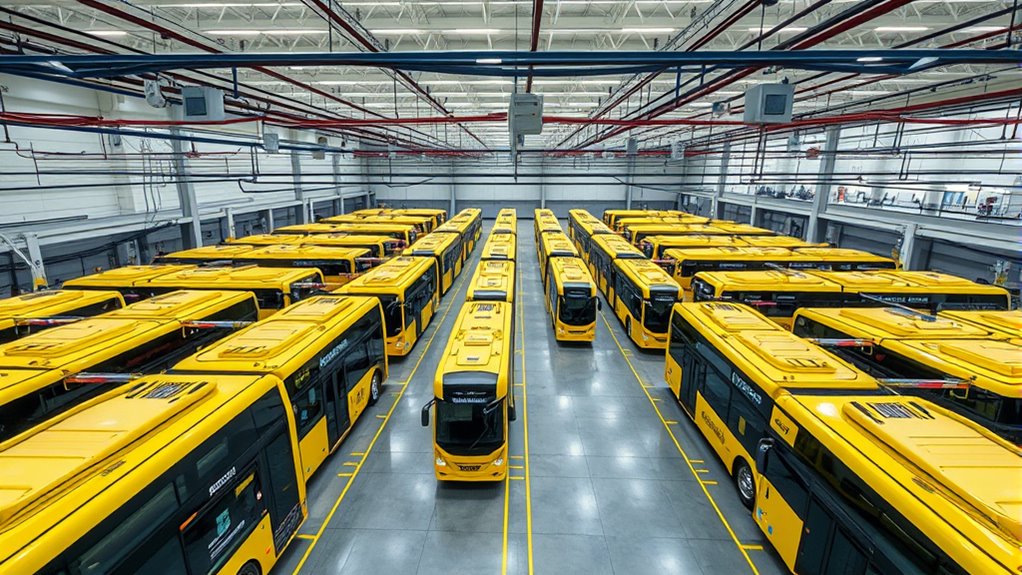
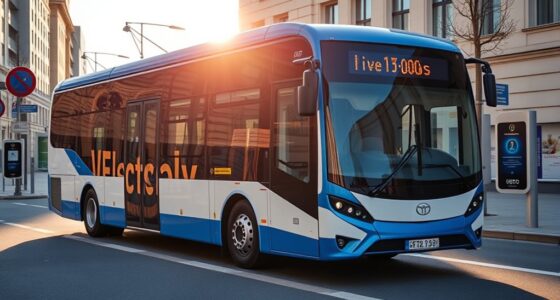
Have you considered how managing high-voltage bus fleets impacts your insurance requirements? Operating these buses introduces unique risks that directly influence your coverage needs. One of the most critical aspects is battery safety. High-voltage batteries are powerful but can pose serious safety concerns if not properly maintained or handled. A battery malfunction or fire could lead to significant property damage, passenger injuries, or even fatalities. Insurance providers are increasingly scrutinizing how well fleet operators manage battery safety protocols. They want assurance that you’ve implemented strict maintenance schedules, safety training, and emergency procedures to mitigate the risks associated with high-voltage batteries. Demonstrating strong battery safety practices can help you secure more favorable insurance premiums and reduce potential liability coverage costs.
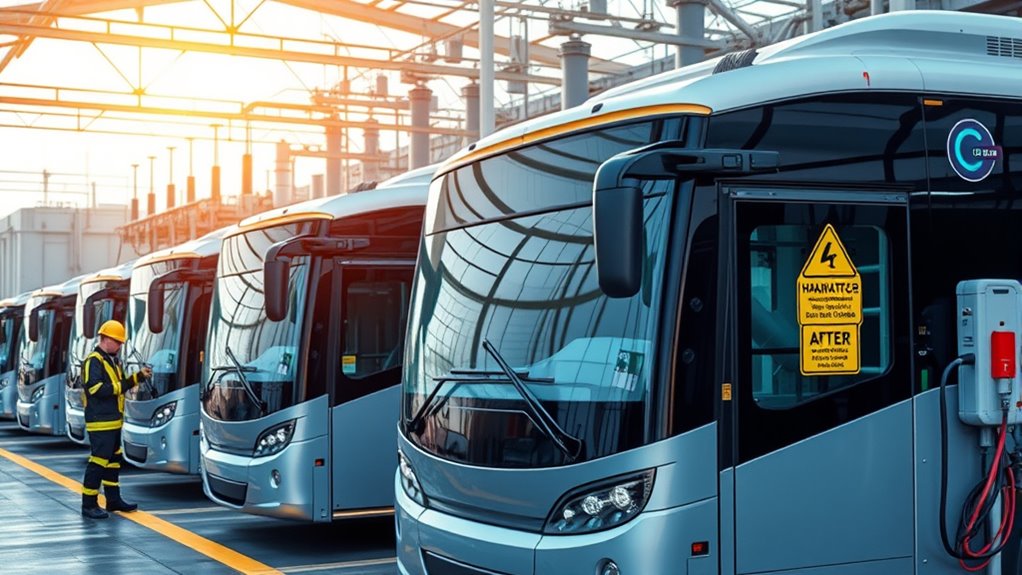
Managing high-voltage bus fleets requires strict safety protocols to reduce insurance and liability risks.
Liability coverage becomes even more essential in this scenario. With the added risks of high-voltage systems, there’s a heightened chance of accidents involving electrical faults, fires, or injuries to passengers and pedestrians. If an incident occurs, your liability coverage needs to be robust enough to handle costly claims. Insurance companies will evaluate your safety measures, incident response plans, and staff training programs to determine your level of risk. Failing to address these concerns adequately could result in higher premiums or difficulty obtaining coverage. Conversely, proactively investing in safety measures and thorough training can demonstrate your commitment to risk mitigation, possibly leading to better policy terms.
Furthermore, the intricacy of high-voltage systems means that insurers are paying closer attention to your fleet’s maintenance records and incident history. Regular inspections, adherence to manufacturer guidelines, and prompt repairs show insurers that you prioritize safety and reduce the likelihood of electrical failures. They also look for evidence of proper driver training, especially around handling emergency situations involving high-voltage components. If you can prove that your staff is well-trained and your fleet is maintained to the highest safety standards, you’re more likely to obtain favorable liability coverage terms.
Additionally, utilizing AI-driven data analysis can help monitor and predict potential safety issues before they lead to incidents, further reassuring insurers of your proactive risk management approaches. Ultimately, managing a high-voltage bus fleet means you need to be vigilant about safety and proactive about risk management. Your insurance coverage will reflect how effectively you address these concerns. Ensuring battery safety and solid liability coverage isn’t just about compliance; it’s about protecting your investment, your drivers, and your passengers. By demonstrating a thorough understanding of these issues and implementing best practices, you position yourself to negotiate better insurance terms and minimize your exposure to costly claims.

Workplace Safety Basics English Training Kit- J. J. Keller & Associates – High-Level Overview of Many Safety topics: Slips, Trips, Falls, PPE, Electrical Safety, Loto, HAZWOPER & More
The Video Training Book is a portable training format that allows you to train anytime, anywhere.
As an affiliate, we earn on qualifying purchases.
As an affiliate, we earn on qualifying purchases.
Frequently Asked Questions
How Do Current Insurance Policies Cover High-Voltage Electrical Failures?
Your insurance policy typically covers high-voltage electrical failures through specific clauses, but coverage varies. Battery warranties may help cover battery-related issues, while data breaches might be included under cyber coverage. Always review your policy to understand exclusions, especially for electrical failures. You should also confirm if your insurer covers repair costs, replacement, or potential liabilities, ensuring you’re protected against unexpected failures and associated risks.
What Specific Liability Risks Are Associated With High-Voltage Bus Fleet Accidents?
You face liability risks like battery fires and electrical shocks during high-voltage bus fleet accidents. If a battery fire causes property damage or injuries, you could be held responsible, leading to substantial claims. Electrical shocks may also result in worker injuries, increasing your liability exposure. Proper safety measures and insurance coverage are essential to mitigate these risks and protect your organization from costly legal and medical claims.
Are There Industry-Standard Safety Certifications Required for Insuring These Fleets?
You need to guarantee your high-voltage bus fleet meets industry-standard certifications and safety compliance requirements, which are vital for insurance coverage—without them, your fleet’s safety reputation could be shattered like glass. These certifications, such as UL or ISO standards, demonstrate your commitment to safety and help insurers assess risk. Staying compliant not only secures better insurance terms but also protects your fleet from costly liabilities and accidents.
How Does Vehicle Maintenance Impact Insurance Premiums for High-Voltage Buses?
Maintaining your high-voltage buses with a focus on battery durability and proper driver training can lower your insurance premiums. When you guarantee batteries are well-maintained, you reduce the risk of costly failures, and trained drivers minimize accidents involving high-voltage systems. Insurance providers see these safety measures as proactive, so they often reward your efforts with lower rates. Regular maintenance and extensive training are key to keeping your fleet safer and more affordable to insure.
What Are the Best Practices for Risk Mitigation in Insuring High-Voltage Bus Operations?
You can effectively mitigate risks in high-voltage bus operations by prioritizing fleet management and emergency preparedness. Regular maintenance and safety training reduce accidents and equipment failure, lowering insurance costs. Implement all-encompassing emergency protocols, including quick response plans and staff drills, to handle incidents swiftly. By proactively managing your fleet and preparing for emergencies, you demonstrate responsible practices, which can lead to better insurance premiums and enhanced safety for everyone involved.

4 Pieces Electrical Motor Maintenance Marking Feet Repairing Tools Maintenance Tools Easy To Install
and
As an affiliate, we earn on qualifying purchases.
As an affiliate, we earn on qualifying purchases.
Conclusion
Managing high-voltage bus fleets means understanding unique insurance risks. Did you know that electric buses have a 40% lower accident rate than traditional diesel buses? This highlights the importance of tailored coverage and proactive safety measures. By staying informed about evolving policies and investing in safety, you can minimize costs and protect your fleet. Embrace these insights to ensure smoother operations and better insurance outcomes for your high-voltage fleet.

52V Ebike Battery 21.2Ah Rechargeable Lithium Batteries with 60A BMS for 500-3000W Motor Electric Bike Triangle Battery for Electric Bicycle/Motorcycle/Mountain Bike/Scooters/Trike (52V 21.2Ah)
BATTERY PARAMETERS: This high-power, high-capacity 52V 21.2Ah lithium battery delivers stable voltage for e-bikes, e-motorcycles, and scooters with…
As an affiliate, we earn on qualifying purchases.
As an affiliate, we earn on qualifying purchases.

110kV High Voltage Insulated Rescue Hook | Retractable Fiberglass Pole (3.3-6.6FT) | 18" Detachable Hook + Storage Bag | Non-Slip Handle for Substation/Fire/Construction(Yellow)
⚡ 110kV Safety Protection: Engineered for substation rescue & power line maintenance with reinforced fiberglass-epoxy insulation (120°C heat…
As an affiliate, we earn on qualifying purchases.
As an affiliate, we earn on qualifying purchases.