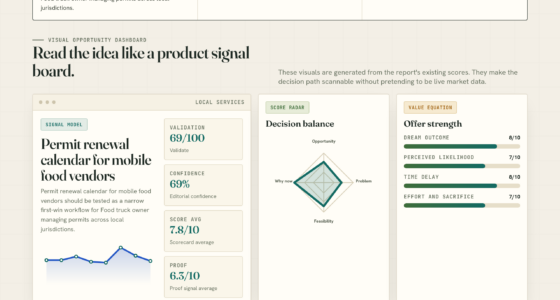
📊 Full opportunity report: The European Bet: How Mistral, Aleph Alpha, and Black Forest Labs Are Playing a Different Game on ThorstenMeyerAI.com — validation score, market gap, and execution plan.

Get business pricing on monitors, keyboards and dev gear
- Business-only prices and quantity discounts
- Tax-exempt purchasing
- Multiple users, one account, clear invoices
TL;DR
European AI companies are adapting to the upcoming EU AI Act enforcement, emphasizing compliance, open-weight transparency, and sovereign deployment. Mistral, Aleph Alpha, and Black Forest Labs are leading this strategic shift, contrasting with US and Chinese models focused on frontier capabilities.
Three European AI companies—Mistral, Aleph Alpha, and Black Forest Labs—are strategically positioning themselves for the upcoming enforcement of the EU AI Act, focusing on compliance, transparency, and sovereign deployment rather than frontier model capabilities. This shift reflects a broader European approach to AI regulation that could reshape market dynamics.
Mistral, based in France, has raised €2.8 billion and is developing open-weight large language models (LLMs) under Apache 2.0 licensing, aiming for sovereign deployment within Europe. Aleph Alpha, headquartered in Heidelberg, has raised €500 million and pivoted from foundational models to a platform emphasizing explainability and on-premise deployment aligned with regulated industries. Black Forest Labs, a Freiburg-based startup, specializes in modality-specific models for image and video generation, leveraging open-weight architectures and European IP to address regulatory infrastructure and compliance demands.
All three companies are aligning their strategies with the EU AI Act, which enforces strict compliance, risk management, and transparency standards starting in 89 days. The regulation emphasizes auditable deployment, data residency, and open weights, creating a structural advantage for European-native vendors that meet these criteria. The regulation also introduces procurement preferences for open-source models, favoring companies like Mistral that release models under open licenses, potentially challenging US and Chinese firms focused on closed-weight, frontier capabilities.
The European bet.
Mistral, Aleph Alpha, Black Forest Labs are playing a different game.
In 89 days the EU AI Act’s high-risk system requirements become enforceable. Penalties: €35M or 7% of global revenue. The European AI bet is not a frontier-model bet. It is a regulated-market bet. The vendors structurally aligned with the substrate that goes live August 2 are about to capture the EU regulated AI market while U.S. hyperscalers spend 36 months retrofitting.
The substrate goes live August 2, 2026.
Dr. Lucilla Sioli’s European AI Office. Conformity assessments. Annex III high-risk obligations. Penalties up to €35M or 7% of global annual revenue. Brussels Effect — non-EU vendors must comply for market access.
Three vendors. Three bets. One regulated market.
The European AI thesis is not “Europe will produce one frontier-tier vendor.” The thesis is Europe will produce a portfolio of regulatory-and-deployment-optimized vendors across AI modalities, each adequate-to-frontier-tier on their specific axis, collectively serving the EU regulated market. Three companies show how this works.
Three structural features change the competitive shape.
The post-August 2026 EU AI market is not a single global market. It is a regulated market with three features that change which vendors win.
Brussels Effect market gating.
Non-EU vendors must comply for EU market access. SME compliance: €160K–330K per audit. EU-native vendors absorb compliance as their existing operating model. U.S. vendors absorb it as additional engineering and legal investment.
Procurement preference in Article 53(2).
Open-source GPAI models with truly free licenses get a meaningful exemption. Mistral’s Apache 2.0 base models qualify. Meta’s Llama Community License does not, per Jan 2026 EU AI Office determination. Open-weight European = procurement advantage.
Sovereign deployment as procurement requirement.
Public sector, defense, critical infrastructure increasingly require on-prem or sovereign-cloud with EU data residency. American hyperscalers retrofitting. European vendors designed for it from day one. The architectural gap is the regulatory advantage.
The bet is coherent. The bet is not certain.
A combination of two failure modes would be sufficient to invalidate the European bet. Single-failure scenarios are absorbable. The next 18 months will reveal which combination, if any, is materializing.
What could break the bet over 18 months.
None of these is independent. A combination of any two is sufficient to invalidate the European thesis at the scale Mistral’s €11.7B valuation implies. Watch for the first signals over the August–December enforcement window.
The Brussels Effect dilutes.
If non-EU vendors choose to exit rather than comply at scale, the EU market shrinks to major U.S. providers + EU-native cohort. The regulatory advantage thins. Unlikely in 2026 (market too large to abandon) — but the 36–60 month risk if enforcement is overly burdensome.
U.S. retrofits succeed faster than predicted.
Microsoft Sovereign Cloud, AWS EU partition, Google compliance retrofit. If these neutralize the deployment-flexibility advantage within 12–18 months, European vendors win less than the trajectory implies. Most plausible failure mode.
Capability gap widens beyond “adequate.”
If the next two generations of frontier models (Anthropic, OpenAI, Google) add capability that meaningfully changes what enterprise AI can do, EU enterprises substitute U.S. models even with regulatory friction. The “adequate” standard moves up faster than European vendors can match. Longer-horizon failure mode.
The European bet is not a frontier-model bet. It is a regulated-market bet. The substrate goes live in 89 days. The vendors structurally aligned with that substrate are about to capture the EU-regulated AI market while the U.S. hyperscalers spend 36 months retrofitting their architectures.
Four assignments. By role.
Make the procurement preference explicit.
Update vendor selection to weight EU AI Act compliance posture, sovereign deployment, open-weight transparency. The vendors who designed for these constraints are about to be the structurally easier procurement choice — saving 40–60% of compliance overhead per major AI deployment over the next 18 months.
Sovereign-cloud retrofit is the strategic priority of 2026.
Microsoft is ahead. Most others are behind. The window to be a viable EU-market vendor closes in 12–18 months as enforcement maturity fills the gap. If you are not deeply engaged with the EU AI Office service desk, this is the gap to close.
The 89 days are about execution, not strategy.
Strategic position is set. Procurement window opens August 2. The customer references signed in Q3–Q4 2026 will compound through the next three years. Anything you can do in the next 89 days to convert pilots to production deployments will pay off disproportionately.
Track the “middle powers” axis. Cohere × Aleph Alpha is the leading edge.
The non-U.S., non-China sovereign AI alliance is forming. Investments at this intersection are the highest-conviction sovereign-AI plays for 2026–2028. The infrastructure spend (EuroHPC, AI factories, sovereign cloud) is the public-sector substrate. Both deserve more capital.
Implications of the EU AI Act for European AI Vendors
This strategic shift matters because it redefines competitive advantages in the AI market. Instead of frontier model capability alone, compliance, transparency, and sovereign deployment become critical differentiators. European companies like Mistral, Aleph Alpha, and Black Forest Labs could dominate the EU market by aligning their development and deployment models with regulation, potentially creating a new regional AI ecosystem that prioritizes auditable and sovereign AI solutions over raw capability.
European open-source large language models
As an affiliate, we earn on qualifying purchases.
As an affiliate, we earn on qualifying purchases.
European Regulatory Framework and Market Dynamics
The EU AI Act, set to be enforced in 89 days, introduces strict requirements for high-risk AI systems, including compliance costs, risk management, and governance documentation. The regulation emphasizes open weights and transparency, creating a structural advantage for European vendors releasing models under open licenses. Historically, US and Chinese firms have focused on frontier capabilities, but the regulation shifts the competitive landscape towards compliance and deployment sovereignty. European companies have been preparing for this shift, aligning their strategies with the regulation’s requirements to secure market share and influence.
“The enforcement of the AI Act will ensure that AI systems in Europe are transparent, auditable, and aligned with sovereign interests.”
— Dr. Lucilla Sioli, European AI Office
on-premise AI deployment solutions
As an affiliate, we earn on qualifying purchases.
As an affiliate, we earn on qualifying purchases.
Uncertainties Surrounding EU Enforcement and Market Response
It remains unclear how US and Chinese firms will respond to the EU regulation—whether they will retrofit their architectures for compliance or seek alternative markets. The actual impact of the regulation on global AI market share distribution is still developing, and the pace of European vendors’ growth post-enforcement is uncertain. Additionally, the precise competitive advantages that open-weight licensing will confer in procurement and deployment remain to be fully tested in practice.
AI compliance and regulation software
As an affiliate, we earn on qualifying purchases.
As an affiliate, we earn on qualifying purchases.
Next Steps as Enforcement Date Approaches
In the coming weeks, European vendors will finalize their compliance strategies and ramp up deployment of regulation-aligned models. The European AI Office will begin enforcement activities, including audits and risk assessments, starting in 89 days. US and Chinese firms are expected to evaluate their options—whether to adapt or withdraw from the EU market—while cross-jurisdictional alliances may emerge. Monitoring regulatory compliance and market share shifts will be key indicators of the regulation’s impact.
As an affiliate, we earn on qualifying purchases.
Key Questions
How will the EU AI Act affect US and Chinese AI companies?
US and Chinese firms will need to retrofit their architectures for compliance if they wish to continue selling in the EU. Some may seek to create separate, compliant European versions of their models, or focus on markets outside Europe. The regulation’s compliance costs and requirements could limit their ability to compete on raw capability within the EU.
What advantages do European vendors have under the new regulation?
European vendors that release open-weight models under open licenses, like Mistral, have a procurement advantage due to the regulation’s favoring of open-source models. They also benefit from alignment with data residency, transparency, and sovereign deployment standards, which are prioritized in the regulation.
Will the regulation stifle innovation or create barriers for startups?
The regulation introduces compliance costs that may be challenging for smaller firms, potentially favoring established vendors with resources to meet requirements. However, it may also foster innovation in compliance-native AI solutions tailored for regulated markets.
What is the strategic significance of European AI companies focusing on compliance?
This focus shifts the competitive landscape from frontier capability to regulatory alignment, potentially enabling European vendors to dominate the regional market and influence global standards for trustworthy AI deployment.
Source: ThorstenMeyerAI.com
Halloween Picks
halloween
As an affiliate, we earn on qualifying purchases.