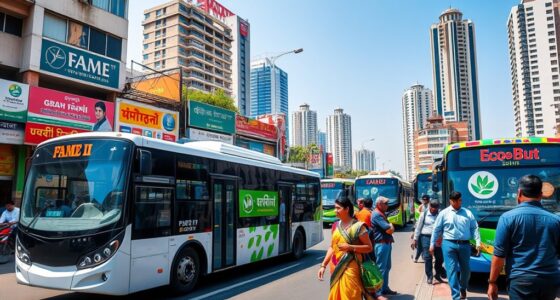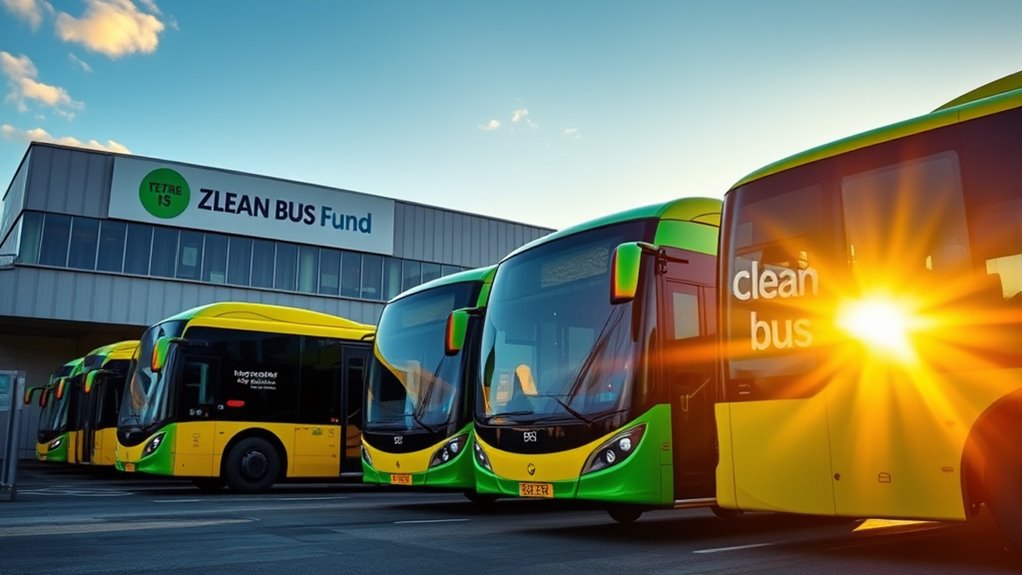

In the UK, bus procurement incentives like the ZEBRA scheme and the Clean Bus Fund help operators shift to cleaner, zero-emission buses by providing financial support for vehicle purchases and charging infrastructure. These programs aim to reduce emissions, improve air quality, and make sustainable buses more accessible. If you want to discover how these initiatives can benefit you and support your fleet upgrades, there’s plenty more to explore.
Key Takeaways
- The ZEBRA scheme provides funding to support the procurement of electric buses and charging infrastructure to accelerate zero-emission fleet adoption.
- The Clean Bus Fund offers financial assistance for deploying low-emission buses to improve air quality and reduce emissions.
- Both schemes aim to remove financial barriers, making electric and low-emission buses more accessible for operators.
- Funding supports large-scale fleet upgrades, fostering a transition to sustainable urban public transport.
- These incentives help operators meet environmental targets, reduce long-term costs, and promote cleaner, more efficient buses in the UK.
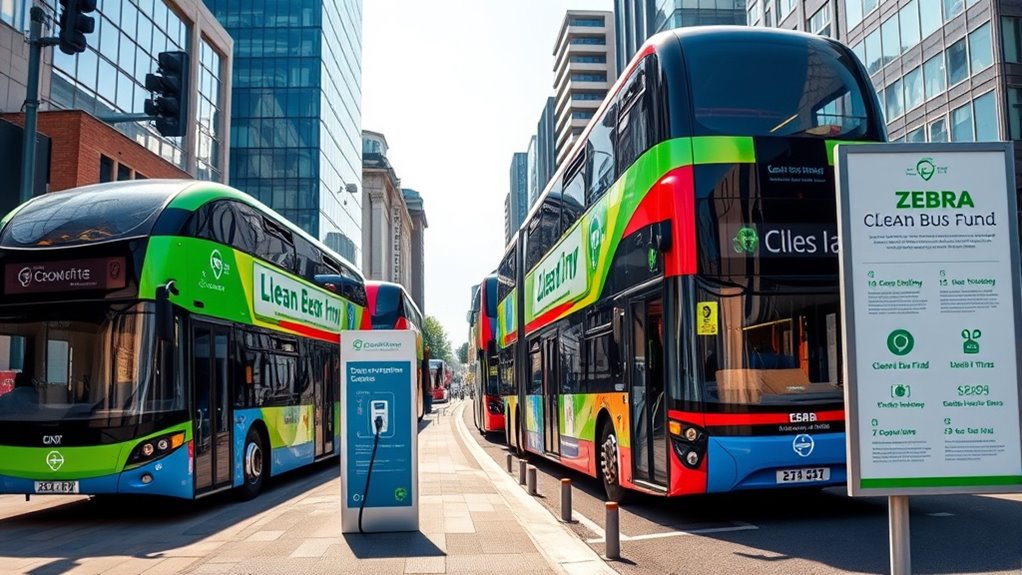
Bus procurement incentives in the UK are designed to encourage operators to adopt cleaner, more efficient vehicles while ensuring public transport remains affordable and reliable. If you’re involved in running or planning bus services, understanding these incentives can help you access the funding needed to upgrade your fleet. One of the key programs supporting this transition is the zero-emission bus acceleration (ZEBRA) scheme, which offers targeted electric bus incentives and procurement funding to help operators replace older, polluting buses with zero-emission models. Through ZEBRA, you’ll find that funding is available to support the upfront costs of purchasing electric buses, which are often a significant barrier for many operators. These incentives aim to make electric buses more accessible and financially viable, especially as the technology continues to improve and costs decrease.
The UK government’s approach to bus procurement funding emphasizes not just the purchase of electric vehicles but also the infrastructure needed to support them. This means that when you secure procurement funding, it often covers both the vehicles and the charging infrastructure, making the transition smoother and more cost-effective. The goal here is to remove financial obstacles that might prevent operators from adopting cleaner vehicles. By participating in schemes like ZEBRA, you’re positioned to benefit from substantial financial support, which can accelerate your fleet’s transition to zero-emission alternatives. Additionally, the Clean Bus Fund complements these efforts by providing grants for the deployment of low-emission buses, further expanding the options available for sustainable urban transport.
These incentives are part of a broader strategy to reduce emissions and improve air quality across the UK. As an operator, you’re encouraged to take advantage of these programs because they not only help you meet environmental targets but also offer long-term savings through lower fuel and maintenance costs associated with electric buses. Furthermore, the availability of procurement funding makes it easier to plan large-scale fleet upgrades, as the financial burden is alleviated. Keep in mind that applying for these incentives often involves demonstrating your commitment to sustainability and providing detailed plans for deployment.
In essence, the UK’s bus procurement incentives, through schemes like ZEBRA and the Clean Bus Fund, are designed to make clean buses a practical reality for operators. By leveraging electric bus incentives and procurement funding, you can modernize your fleet, reduce your environmental impact, and contribute to cleaner cities—all while ensuring your services remain reliable and affordable for the public.

The 2027-2032 World Outlook for Electric Bus Charging Stations
As an affiliate, we earn on qualifying purchases.
As an affiliate, we earn on qualifying purchases.
Frequently Asked Questions
How Are the Incentives Funded and Allocated in Each Program?
You should know that the incentives are funded through government budgets, with specific funding mechanisms like grants and subsidies. In ZEBRA, funds are allocated based on competitive bidding and emission reduction targets, ensuring efficient use of resources. The Clean Bus Fund uses allocation strategies such as prioritizing low-emission buses and regional needs, distributing funds to maximize environmental benefits and support the progression to cleaner public transportation.
What Criteria Determine Eligibility for ZEBRA and Clean Bus Fund Support?
Did you know over 1,200 buses have benefited from these programs? Eligibility criteria for ZEBRA and the Clean Bus Fund focus on environmental standards, emission reductions, and bus type. Funding allocation depends on project scope and impact, prioritizing zero-emission vehicles and retrofit solutions. If your project meets these criteria, you can access support to help fund cleaner, more sustainable bus fleets.
Are Private Operators Eligible for These Procurement Incentives?
Yes, private operators are eligible for these procurement incentives, provided they meet specific eligibility requirements. You need to demonstrate compliance with environmental standards, such as low emissions, and adhere to procurement rules set by the funding programs. Additionally, your operations must align with the objectives of reducing pollution and supporting sustainable transport initiatives. Meeting these criteria guarantees you can benefit from the ZEBRA and Clean Bus Fund support.
How Do These Programs Measure Environmental Impact Over Time?
Think of these programs as your environmental compass, guiding ongoing impact evaluation. You’re likely to see emission tracking as a core method, measuring pollutants over time, and comparing pre- and post-implementation data. They also analyze broader environmental benefits, like reduced carbon footprints. This continuous monitoring helps guarantee that investments genuinely improve air quality, allowing you to assess progress and refine strategies, ultimately making your transit greener and more sustainable.
What Are the Long-Term Sustainability Goals Linked to These Incentives?
Your long-term sustainability goals focus on increasing the use of renewable energy and improving urban air quality. By incentivizing cleaner buses and promoting renewable-powered fleet shifts, you aim to reduce emissions and reliance on fossil fuels. These programs support your vision for sustainable transportation, ensuring healthier cities and a greener future. Ultimately, you want to see lasting environmental benefits and cleaner air for communities across the UK.
Zero ‐ emission bus transit
As an affiliate, we earn on qualifying purchases.
As an affiliate, we earn on qualifying purchases.
Conclusion
By understanding the incentives like the Zebra and Clean Bus Fund, you can see how the UK is paving a smoother road toward greener transportation. These initiatives act as catalysts, steering bus operators toward cleaner, more efficient fleets. Think of it as planting seeds for a brighter, more sustainable future—each investment blossoming into cleaner air and quieter streets. Embracing these incentives helps you be part of the journey toward a cleaner, more sustainable UK.

Guidebook for Transitioning to an Electric Fleet
As an affiliate, we earn on qualifying purchases.
As an affiliate, we earn on qualifying purchases.
bus depot charging infrastructure
As an affiliate, we earn on qualifying purchases.
As an affiliate, we earn on qualifying purchases.