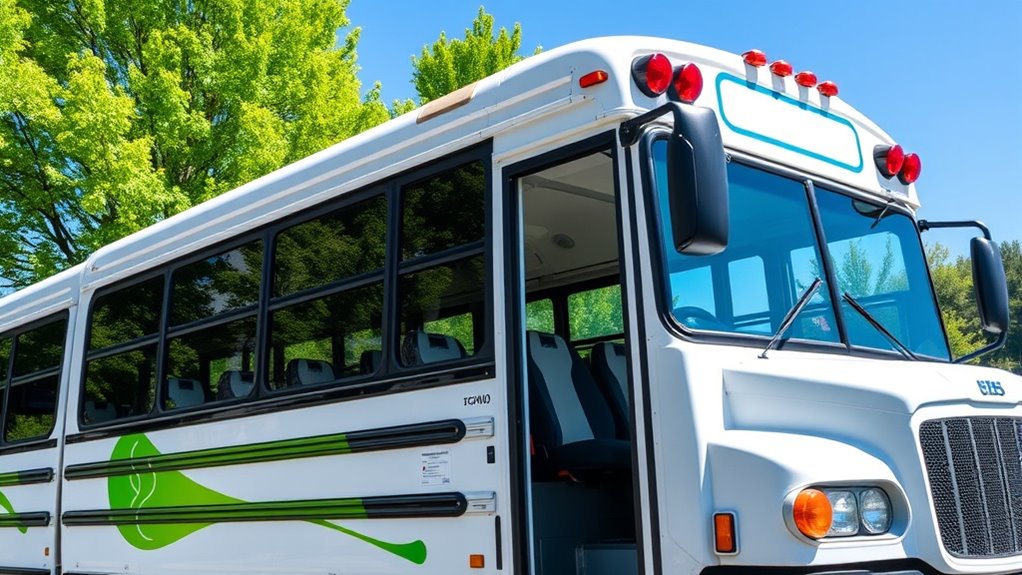

The Clean School Bus Program offers federal grants to help school districts replace diesel buses with electric or cleaner fuel options to improve air quality and protect student health. These grants cover a significant part of the costs, including vehicle purchases and charging infrastructure, and require districts to demonstrate a commitment to sustainable practices. If you want to learn more about eligibility, requirements, and how this program can benefit your community, keep exploring the details.
Key Takeaways
- The Clean School Bus Program funds the replacement of old diesel buses with electric or zero-emission models.
- It provides federal grants to cover costs for electric buses and charging infrastructure.
- Schools must demonstrate commitment to cleaner transportation and meet federal standards.
- The program emphasizes equitable distribution, prioritizing underserved communities.
- Benefits include improved air quality, healthier student environments, and reduced greenhouse gas emissions.
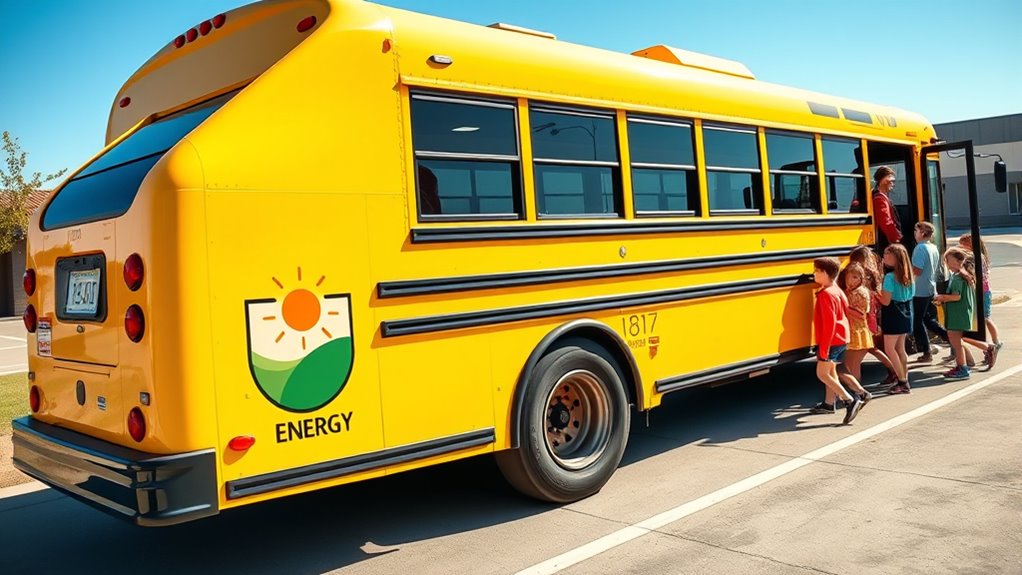
Have you ever wondered how school buses impact air quality and student health? It’s a valid concern. Traditional diesel-powered buses emit pollutants like nitrogen oxides and particulate matter, which can worsen air quality around schools and pose health risks to children. That’s where the Clean School Bus Program steps in, aiming to transform these vehicles into cleaner, healthier options. The program provides federal grants to help school districts replace old diesel buses with cleaner alternatives, primarily electric vehicles. These electric buses produce zero tailpipe emissions, substantially reducing harmful pollutants in the air students breathe daily. By prioritizing emission reductions, the program not only improves air quality but also promotes better health outcomes for students, especially those with asthma or respiratory issues.
The federal grants available through the Clean School Bus Program are designed to make the transition more affordable for school districts. These grants cover a substantial portion of the costs associated with purchasing electric vehicles and installing necessary charging infrastructure. This financial support removes some of the barriers that often prevent districts from upgrading to cleaner buses. The goal is to accelerate the adoption of electric vehicles across the country, creating a nationwide shift toward sustainable transportation. Not only do electric buses cut emissions, but they also operate more quietly, reducing noise pollution around schools. This contributes to a calmer, safer learning environment and less disturbance for students and staff.
To qualify for these grants, school districts must meet specific requirements. They need to demonstrate a commitment to replacing older diesel buses with cleaner alternatives and plan to operate electric vehicles that meet federal standards. Additionally, districts are encouraged to incorporate sustainable practices, such as installing solar panels to power charging stations, further amplifying emission reductions. The program also emphasizes equitable distribution, aiming to benefit schools in underserved communities where air pollution tends to be worse. By doing so, the initiative ensures that all students have access to healthier environments and cleaner transportation options. Emphasizing the importance of emission reductions and sustainable practices, the program aims to support comprehensive improvements in school transportation.
The Clean School Bus Program isn’t just about replacing vehicles; it’s about creating a healthier future for students and communities. The shift to electric vehicles reduces greenhouse gas emissions and promotes cleaner air, directly impacting students’ health. With federal grants supporting these upgrades, school districts can more feasibly make the switch, making cleaner transportation a standard rather than an exception. Overall, this program is a crucial step toward sustainable, clean, and safe school transportation that benefits everyone involved.

POSTACK 24V Kids Ride on School Bus, 2 Seater Ride on Car with Remote Control, Battery Powered Cars for Kids Boys Girls, Electric Ride on Toy with Microphone, Music, Yellow
[Unique Designed Ride on School Bus] Designed after a real school bus, POSTACK school bus ride on toy…
As an affiliate, we earn on qualifying purchases.
As an affiliate, we earn on qualifying purchases.
Frequently Asked Questions
How Can Schools Apply for Clean School Bus Program Grants?
You can apply for Clean School Bus Program grants by submitting a detailed grant application through the official EPA website. Make sure your application highlights your plans for bus retrofit projects, including replacing or upgrading older diesel engines with cleaner technologies. Gather all required documentation, such as bus inventory and emission data, and follow the specified guidelines to strengthen your grant application, increasing your chances of securing funding for your clean bus fleet.
What Are the Eligibility Criteria for Funding?
They say, “You’re only as strong as your weakest link,” and that applies to bus maintenance. To qualify for funding, your school must prioritize replacing older diesel buses with electric or zero-emission models, demonstrating your commitment to clean transportation. You also need to show proper planning for bus maintenance and a clear plan for funding allocation, proving your readiness to effectively use the grant to improve local air quality.
Are There Specific Emission Standards for Eligible Buses?
Yes, there are specific emission standards you must meet for bus eligibility. The program requires buses to adhere to strict Emission Standards that limit pollutants like NOx and particulate matter. To qualify, your buses must meet or exceed these standards, ensuring they’re cleaner and healthier for students. Keep in mind, meeting Emission Standards is essential for your Bus Eligibility and securing funding through the program.
How Long Does the Grant Approval Process Typically Take?
The grant approval process is like watching a pot that takes its sweet time to boil—it usually takes about 3 to 6 months. The grant timeline depends on how quickly you submit all required documents and how busy the review team is. Stay patient and organized, as a smooth approval process means you get to upgrade those buses faster, helping your students breathe cleaner air sooner.
Can Private School Districts Also Qualify for These Grants?
Yes, private school districts can qualify for Clean School Bus Program grants, but they usually need to explore private school funding options and verify they meet specific eligibility criteria. To increase your chances, follow grant application tips like thoroughly reviewing requirements, providing detailed project plans, and demonstrating environmental benefits. Keep in mind that private schools might face different application processes, so stay informed and prepared to submit compelling proposals.
30 Devices Mobile Charging Cart Cabinet, School Charging Cart Station with Lock, Up to 30 Units, Computer Charging Station for School, Busines (Black)
Durable Construction: The Mobile Charging Cart Station is crafted from high-class cold rolled steel, tempered glass, and aluminum…
As an affiliate, we earn on qualifying purchases.
As an affiliate, we earn on qualifying purchases.
Conclusion
By participating in the Clean School Bus Program, you can substantially reduce your school’s emissions and improve air quality for students. For example, a school district in California successfully replaced its diesel buses with electric models, cutting emissions by 90%. Taking advantage of federal grants not only helps you meet environmental standards but also promotes healthier, safer transportation for students. Embracing this program empowers you to make a positive impact on both community health and the environment.

New Flyer Xcelsior XHE40 Transit Bus AC Transit – Zero Emission White and Green with Graphics The Bus & Motorcoach Collection Limited Edition 1/87 (HO) Diecast Model 87-0535
Limited edition. Brand new box. Detailed exterior. Real rubber tires. True-to-scale detail. Officially licensed product. Does not have…
As an affiliate, we earn on qualifying purchases.
As an affiliate, we earn on qualifying purchases.
school bus electric charging infrastructure
As an affiliate, we earn on qualifying purchases.
As an affiliate, we earn on qualifying purchases.