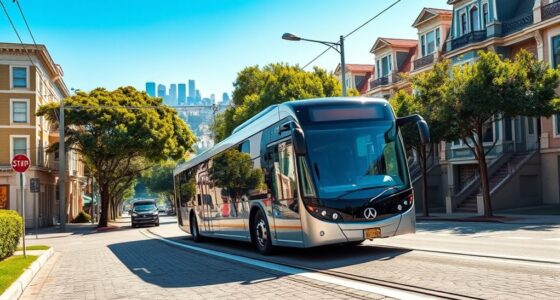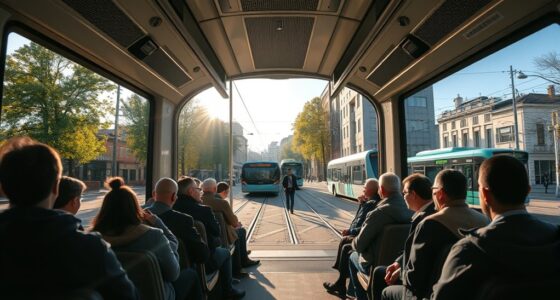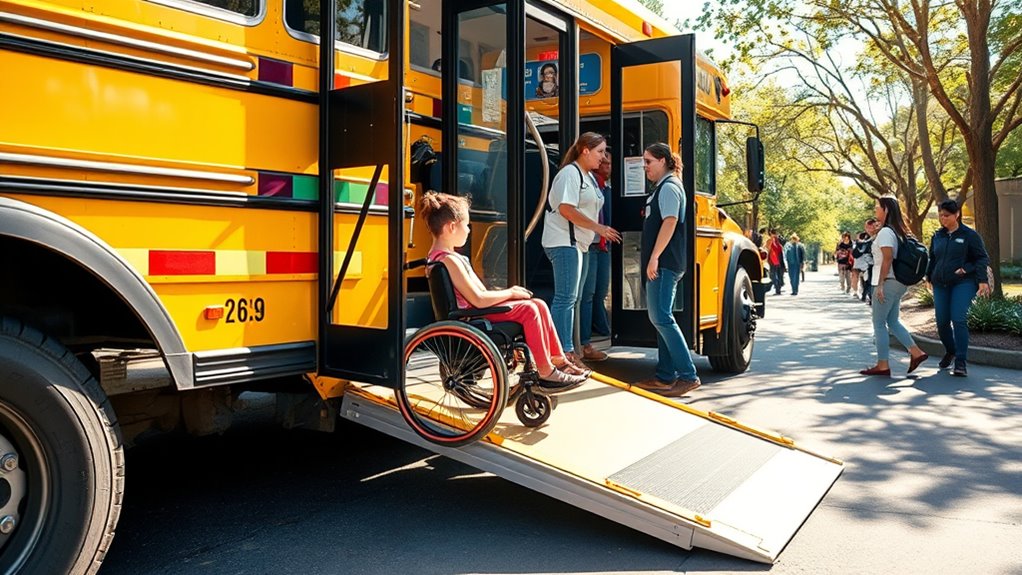

Electric buses improve accessibility for students with special needs by offering adaptive seating, sensory-friendly features, and quieter environments that reduce overstimulation. With adjustable lighting and designated quiet zones, these buses support various sensory and physical needs, promoting independence and comfort. They create safer, calmer journeys that help students arrive focused and ready to learn. If you want to discover how these features make a difference, there’s more to explore below.

Get business pricing on monitors, keyboards and dev gear
- Business-only prices and quantity discounts
- Tax-exempt purchasing
- Multiple users, one account, clear invoices
Key Takeaways
- Electric buses feature adaptive seating and sensory accommodations, promoting independence and comfort for students with disabilities.
- Reduced noise and adjustable lighting create a calmer environment, supporting students with sensory processing challenges.
- Accessible transportation fosters inclusivity, enabling students with special needs to participate fully in educational activities.
- Environmental and cost benefits of electric buses ensure sustainable, affordable transportation options for schools supporting diverse learners.
- Continuous safety features and thoughtful design enhance security and well-being for students with special needs during transit.
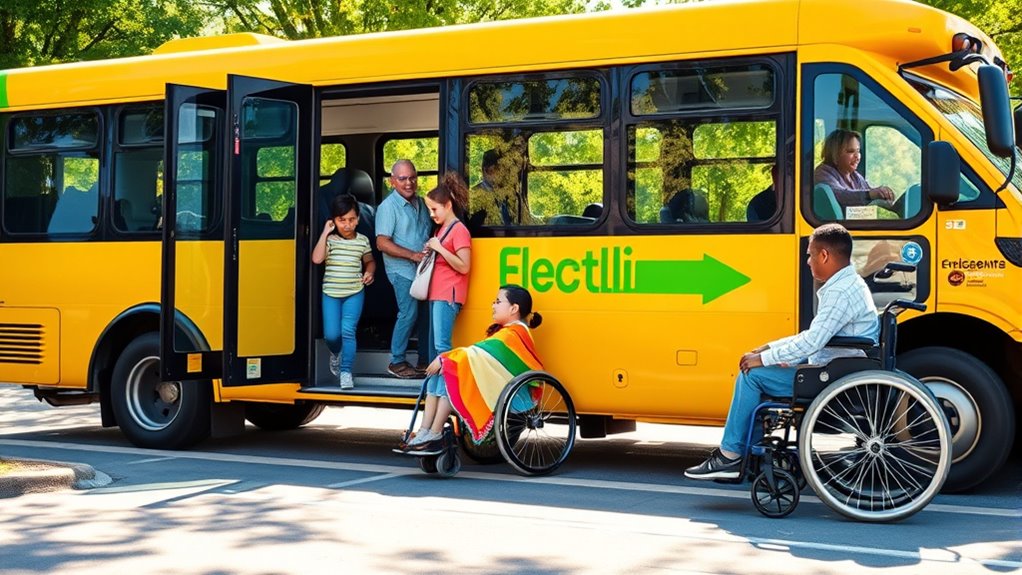
How can schools best support students with special needs? One effective way is by ensuring their transportation is accessible and accommodating. Electric buses are transforming the way schools approach mobility, offering features that make travel safer and more comfortable for all students. When considering transportation, focusing on adaptive seating and sensory accommodations is essential. Adaptive seating allows students with physical disabilities or those who need extra support to sit comfortably and securely. These specialized seats can be customized to meet individual needs, providing stability and reducing discomfort during transit. By installing adaptive seating, schools can help students feel more secure, minimize anxiety, and promote independence, ensuring they arrive at school ready to learn.
Sensory accommodations on electric buses also play a crucial role. Many students with sensory processing challenges become overwhelmed by noise, bright lights, or sudden movements. Electric buses are quieter than traditional diesel-powered vehicles, reducing auditory overstimulation and creating a calmer environment. Additionally, schools can equip buses with sensory-friendly features like adjustable lighting, soft interior textures, and designated quiet zones. These accommodations help students regulate their sensory input, making travel less stressful and more predictable. When students feel safe and comfortable during their commutes, they’re more likely to arrive at school focused and ready to participate.
Implementing these features isn’t just about comfort; it’s about fostering inclusivity and ensuring equal access to education. When transportation is thoughtfully equipped with adaptive seating and sensory accommodations, students with diverse needs can travel independently or with minimal assistance. This independence boosts their confidence and promotes social inclusion, as they’re more likely to participate fully in school activities. Schools also benefit because these adaptations reduce the need for constant supervision and support during transit, allowing staff to focus on other responsibilities.
Furthermore, electric buses are environmentally friendly and cost-efficient in the long run. Their lower emissions contribute to healthier school environments, benefiting all students and staff. As more schools adopt electric buses with adaptive seating and sensory accommodations, the message is clear: every student’s needs matter. Providing accessible transportation shows a commitment to equity, helping students with special needs reach their educational goals without unnecessary barriers. It’s a vital step toward creating a truly inclusive school community. When schools prioritize these features, they’re not just improving transportation—they’re supporting students’ overall well-being, independence, and success.
Research in AI security highlights the importance of continuous safety monitoring and safety measures to protect vulnerable populations, which can be applied to ensuring the safety of students with special needs during transit.
Popular right now

KitchenAid Artisan 5-Quart Tilt-Head Stand Mixer, Almond Cream

Vitamix 5200 Professional-Grade Blender, 64 oz. Container, Black

Ninja CREAMi 7-in-1 Ice Cream Maker, NC301
As an affiliate, we earn on qualifying purchases.
Frequently Asked Questions
How Do Electric Buses Accommodate Different Types of Disabilities?
Electric buses accommodate different disabilities by incorporating features like visual aids, such as clear signage and audio announcements, to assist students with visual or hearing impairments. They also provide sensory accommodations like lowered floors for easy access, quiet zones to reduce sensory overload, and adjustable seating. These features guarantee all students, regardless of their needs, can travel safely and comfortably, making transportation more inclusive and accessible.
What Training Do Drivers Receive for Assisting Students With Special Needs?
You receive specialized training focused on driver sensitivity and emergency procedures to help you assist students with special needs effectively. This training teaches you to recognize different disabilities, communicate respectfully, and respond calmly in emergencies. By understanding students’ unique requirements, you guarantee their safety and comfort during bus rides. You also learn how to operate accessible features on electric buses, making transportation safer and more inclusive for all students.
Are Electric Buses Cost-Effective Compared to Traditional Models?
Imagine driving a reliable, eco-friendly vehicle that costs less to run over time. Electric buses are generally more cost-effective than traditional models when you consider the cost comparison and long-term savings. They save money on fuel, maintenance, and repairs, making them an investment that pays off. Over years, these savings accumulate, proving electric buses to be a smart financial choice for transportation budgets.
How Do Electric Buses Ensure Safety During Emergencies?
Electric buses guarantee safety during emergencies by incorporating advanced safety features like emergency exit windows, reinforced structures, and fire-resistant materials. You can rely on clear emergency protocols, including quick evacuation procedures and communication systems, to respond swiftly. Their design prioritizes passenger safety, allowing you to manage emergencies efficiently, minimizing risks, and ensuring a secure environment for all students, especially those with special needs.
What Maintenance Is Required for Electric Buses Supporting Special Needs Students?
Maintaining electric buses supporting special needs students is like tending to a delicate garden. You’ll need to regularly perform battery checks to ensure peak performance and safety. Follow proper charging procedures, such as avoiding overcharging and scheduling regular charge cycles. Keep an eye on the electrical systems, tires, and brakes to prevent breakdowns. Routine inspections help you keep the bus reliable, safe, and ready to serve students with the care they deserve.
Conclusion
By embracing electric buses, you open a world where every student, regardless of needs, can access education without barriers. These buses don’t just move students—they symbolize hope and progress, transforming journeys into opportunities. As you support this change, remember that enhancing accessibility isn’t just about transportation; it’s about creating a future where every child’s potential can shine brightly, illuminating the path ahead like a guiding star in the night sky.