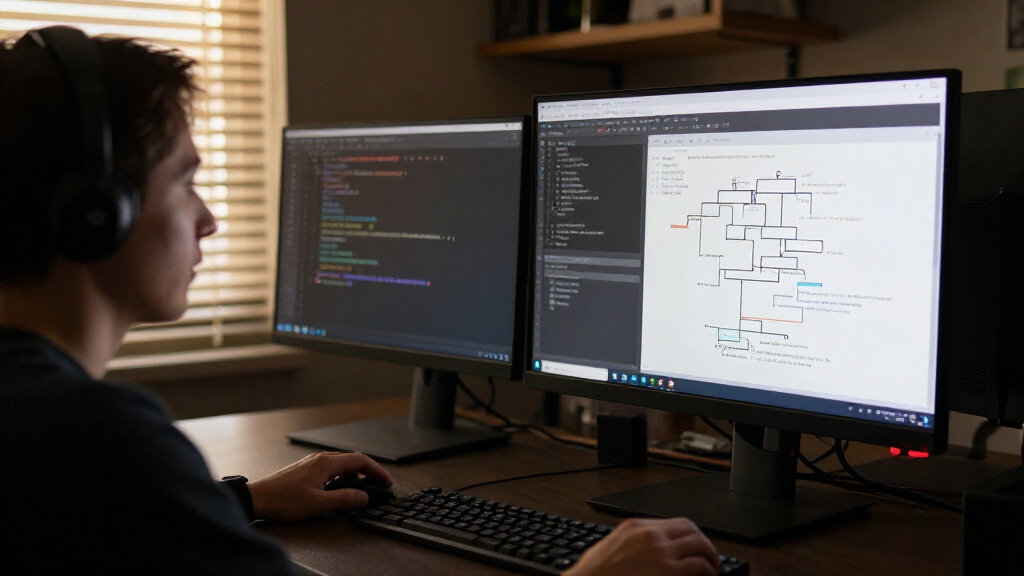

🔍 Read the full analysis: AI Storytelling Under Strain: Narrative Resource Depletion In “BLACKOUT” on ThorstenMeyerAI.com

Get business pricing on monitors, keyboards and dev gear
- Business-only prices and quantity discounts
- Tax-exempt purchasing
- Multiple users, one account, clear invoices
TL;DR
ThorstenMeyerAI.com has published BLACKOUT, a design case study set between 03:12 and 05:47 in Verlicht. It uses staged resource depletion and visible recovery to explore how automation interfaces might communicate system strain; the page does not provide measured user or system outcomes.
ThorstenMeyerAI.com has published BLACKOUT, the original design case study that makes resource depletion the central event in an automation interface rather than treating it as a brief interruption. Set between 03:12 and 05:47 in Verlicht, the experience shows capacity fading in stages and recovery unfolding on the page, raising a practical question for AI and workflow designers: how should an interface communicate strain while a system is still recovering?
The page is framed as a late-night field manual and follows an operation as it runs low on resources. Rather than presenting failure only through a progress bar or alarm, BLACKOUT uses changes in status, language and visual rhythm to signal that capacity is diminishing. The description presents those choices as a way to make scarcity legible to the person using the system.
Recovery is also part of the experience. The page describes it as something the reader witnesses over time, not as an invisible switch back to normal. A full design teardown is offered to explain the choices from the first signs of strain until the page begins to feel whole again. The supplied description hints that a detail in the return changes how the failure is understood, but does not identify that detail.
BLACKOUT is presented as a design exploration, not a report of a deployed AI system, a controlled study or measured performance results. No user testing, operational metrics, technical architecture or evidence of improved trust is included in the available description. Its claims about the effect of the presentation should therefore be read as design intent rather than established outcomes.
AI Storytelling
Under Strain
In BLACKOUT, resource depletion becomes the central event in an automation interface. A late-night experience in Verlicht follows capacity as it fades, then lets recovery unfold in view.
A defined late-night frame named by the case study.
What should an interface communicate while a system is still recovering?
A timed interface experience
Named as the story’s location
Depletion followed by visible recovery
No user or system outcomes reported
Make the difficult interval legible
Many automation interfaces show a task running or a task failed. BLACKOUT focuses on the less certain span between those states: resources are running low, but recovery has not yet happened.
Capacity changes
Status shifts are presented as cues that the operation is losing resources, instead of hiding strain behind a single progress bar or alarm.
Words carry the shift
Changing language helps frame the experience as a progression, giving the reader context as conditions worsen.
Recovery takes time
Visual rhythm makes the return part of the story. Recovery is something the reader witnesses, not an invisible switch back to normal.
“Capacity fades in stages; status, language, and visual rhythm carry the reader through the failure instead of pretending it is a brief interruption.”
ThorstenMeyerAI.com · Describing BLACKOUT
From reserve to return
The case study describes a broad progression from early strain toward normal operation. Its summary does not identify the underlying resource or exact implementation details.
Early strain
The operation begins to signal that it is short of what it needs.
Capacity fades
Status, language, and visual rhythm carry the reader through change.
Recovery begins
The return is presented over time rather than hidden from view.
Page feels whole
The experience moves toward normality; a hinted detail remains unnamed.
A design exploration, not an evaluation
BLACKOUT offers a visual and narrative approach to consider. The available description does not demonstrate that it improves understanding, trust, or intervention decisions.
What it presents
- A timed page experience set between 03:12 and 05:47 in Verlicht.
- Resource depletion as the central narrative event.
- Staged signs of strain and recovery shown over time.
- A full design teardown and live experience are offered by ThorstenMeyerAI.com.
What remains unknown
- The specific resource, technical architecture, or underlying system behavior.
- Whether the page connects to a deployed AI or automation workflow.
- User testing, feedback, operational metrics, or measured trust outcomes.
- The hinted recovery detail, publication date, and plans for product use.
“Recovery is something the reader witnesses rather than a switch flipped behind the scenes.”
ThorstenMeyerAI.com · Describing the recovery
Questions worth carrying forward
Use the case study as a prompt for interface decisions. Whether more detail helps depends on the task, the resource, and the system’s actual state.
What is BLACKOUT?
A timed design experience and case study from ThorstenMeyerAI.com about an automation interface showing resource depletion and recovery.
Is it a live AI system?
The available description does not establish a connection to a deployed AI system. It presents a page experience and design exploration.
Has it been shown to improve trust?
No. The project raises questions about trust during recovery, but no user measures or test results are provided.
Where can readers find more?
ThorstenMeyerAI.com links to the live BLACKOUT experience and a full design teardown. The described material gives no release date for further evaluation.
Making System Strain Visible
Automation interfaces often communicate whether a task is running or has failed, but this project focuses on the less clear interval when resources are running low and recovery has not yet happened. How that interval is presented can shape whether users understand what the system is doing, what it can still do and whether they should wait or intervene. BLACKOUT makes that communication problem its subject.
For teams building AI tools and automated workflows, the design raises questions about trust during degraded operation. A clear account of changing capacity could help users distinguish a temporary limitation from a completed failure, while unexplained status changes may leave them uncertain. The case study offers a visual and narrative approach to consider, but it does not show that this approach improves user understanding or trust. That distinction matters: the project is a prompt for interface design, not evidence that a particular pattern works across products.
The experience also draws attention to recovery as part of system communication. If an interface shows how normal operation returns, users may have more information than a simple failure notice provides. Whether that extra detail helps depends on the task, the resource being depleted and the system’s actual state—factors not specified in the page description.
As an affiliate, we earn on qualifying purchases.
A Failure Told in Stages
The BLACKOUT page begins from a critique of how automation pages are commonly designed: they tend to focus on the moment when everything works. Its alternative is to start when a system is short of what it needs. The experience then organizes the event into a progression, from early signs of strain through a return toward normality.
The title’s time range, 03:12–05:47, gives the page a defined late-night frame, while Verlicht is named as its setting. The available description does not explain whether Verlicht refers to a fictional location or a real one, or whether the time span represents simulated system time. It also does not identify a particular model, application or automation workflow being tested.
ThorstenMeyerAI.com directs readers to a full design teardown and a live version of the experience. The published description provides the project’s rationale and broad progression; the detailed design decisions and the hinted-at feature of the recovery are not specified in the material available here.
“Capacity fades in stages; status, language, and visual rhythm carry the reader through the failure instead of pretending it is a brief interruption.”
— ThorstenMeyerAI.com, describing BLACKOUT
workflow automation interface design
As an affiliate, we earn on qualifying purchases.
As an affiliate, we earn on qualifying purchases.
What the Case Study Does Not Show
The description does not identify the specific resource being depleted, the system behavior behind the experience or whether the page is connected to a live AI or automation workflow. It gives no testing results, user feedback or quantitative measures, so it is not possible to tell whether readers interpret the staged signals as intended or whether the approach changes trust or intervention decisions.
The promised design teardown is said to explain the choices in more detail, but its full contents are not included in the material described here. The hinted detail that changes how the failure reads is also left unnamed. No publication date, next release date or plan to apply the design to a working product is provided.
system resource depletion indicator
As an affiliate, we earn on qualifying purchases.
As an affiliate, we earn on qualifying purchases.
The Teardown Holds the Detail
Readers can view the live BLACKOUT experience and the full design teardown linked by ThorstenMeyerAI.com. The teardown is the next place to look for the specific decisions behind the progression, including how the interface signals early strain and represents recovery. Until those details and any evaluation are available, the project remains a design exploration rather than a validated pattern for AI interfaces.
Source: ThorstenMeyerAI.com
As an affiliate, we earn on qualifying purchases.
Key Questions
What is BLACKOUT?
BLACKOUT is a timed design experience and case study from ThorstenMeyerAI.com about an automation interface showing resource depletion and recovery.
What does the experience show?
Its description says capacity fades in stages, with status, language and visual rhythm guiding the reader through the strain and a visible recovery.
Is BLACKOUT a live AI system?
The available description does not establish that it is connected to a deployed AI system. It presents BLACKOUT as a page experience and design case study.
Has the design been shown to improve trust?
No test results or user measures are provided. The project raises the question of trust during system recovery, but the available material does not demonstrate an effect.
Where can readers find more detail?
ThorstenMeyerAI.com links to the live room and full design teardown. The description does not specify when additional material or evaluation will be published.
Source: ThorstenMeyerAI.com
Halloween Picks
halloween
As an affiliate, we earn on qualifying purchases.