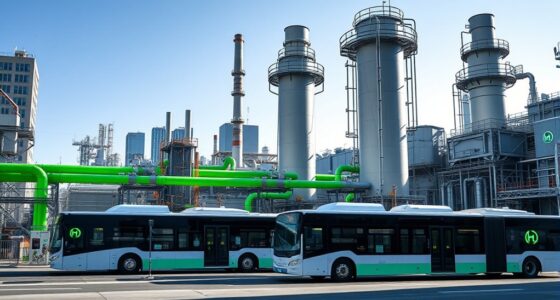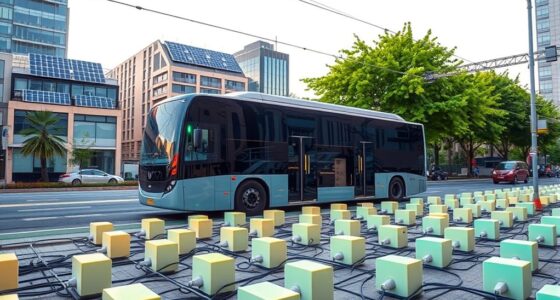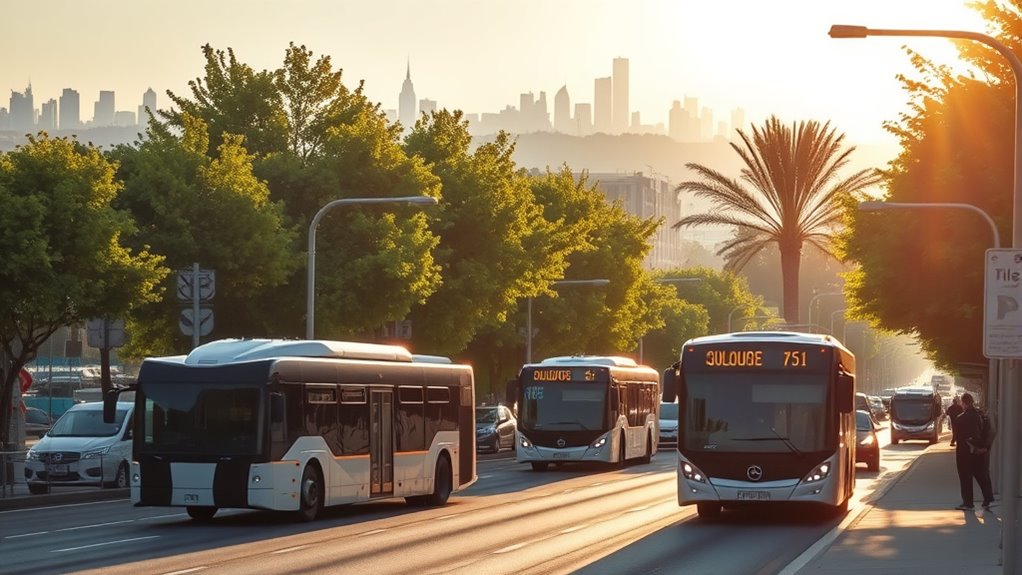

Switching to electric buses has led to noticeable improvements in urban air quality. As more electric buses replace diesel vehicles, you’ll see decreases in harmful pollutants like NOx and particulate matter, leading to clearer skies and healthier air. Monitoring systems provide real-time data that proves pollution levels fall over months and years. This success shows how targeted policies and technology work together to create cleaner, safer cities—discover how these efforts continue to evolve.
Key Takeaways
- Air quality monitoring systems track reductions in pollutants like NOx and PM following electric bus deployment.
- Data shows a correlation between increased electric bus usage and lowered urban pollution levels over time.
- Real-time monitoring highlights improvements such as clearer skies and fewer foul odors in cities.
- Policy measures, supported by data, include expanding electric fleets and establishing low-emission zones.
- Continued measurement confirms ongoing pollution declines, demonstrating the effectiveness of electric bus adoption.

Thanks to recent advancements and policy changes, air quality has remarkably improved in many regions. One of the most noticeable signs of these improvements is the cleaner air you now breathe in urban areas, thanks in part to the widespread adoption of electric buses. These buses have become a key part of pollution reduction strategies, helping cities reduce their reliance on diesel-powered vehicles. As a result, the levels of harmful pollutants like nitrogen oxides (NOx) and particulate matter (PM) have decreased markedly. You can see this reflected in data collected through air quality monitoring systems, which track real-time changes and help policymakers evaluate the success of these initiatives.
Recent policy changes and electric buses have significantly improved urban air quality, reducing harmful pollutants and benefiting public health.
When electric buses replace conventional diesel vehicles, they cut down on emissions that contribute to smog formation and respiratory problems. These buses operate quietly and produce zero tailpipe emissions, making a direct impact on air quality in densely populated areas. You might notice clearer skies and a reduction in foul odors, but the real evidence lies in the data. Air quality monitoring stations positioned across cities record the decline in pollutants that once plagued urban environments. Over months and years, these figures confirm that pollution reduction strategies centered around electric transportation are effective. You can also see improvements in health statistics, with fewer cases of asthma attacks and respiratory complaints linked to air pollution.
Implementing these strategies involves more than just replacing buses; it requires exhaustive planning and consistent monitoring. Cities use air quality monitoring data to identify pollution hotspots and tailor their policies accordingly. This process benefits from the air quality monitoring systems, which provide the crucial data needed for informed decision-making. This could include expanding electric bus fleets, establishing low-emission zones, or incentivizing the use of cleaner transit options. Your community benefits from these efforts as air gets cleaner and health risks diminish. The positive trend emphasizes that targeted pollution reduction strategies, supported by robust air quality monitoring, lead to tangible environmental and public health gains.
As these electric bus programs grow, they demonstrate how technological innovation, coupled with effective policy, can lead to cleaner air. The decrease in harmful emissions is not accidental but a result of deliberate efforts to reduce reliance on fossil fuels and implement sustainable transportation solutions. You’re witnessing a shift toward healthier, more sustainable cities, where air quality monitoring plays an essential role in tracking progress and guiding future initiatives. This ongoing progress proves that strategic investments and data-driven policies can make a meaningful difference in the environment you live in. The cleaner air you experience today is a reflection of these concerted efforts and a promising sign of continued improvement.
Top picks for "quality gain measur"
Open Amazon search results for this keyword.
As an affiliate, we earn on qualifying purchases.
Frequently Asked Questions
How Do Electric Buses Compare to Diesel Buses in Cost?
You’ll find that electric buses generally have a higher initial cost compared to diesel buses, but the cost comparison shifts over time. Electric buses tend to have lower maintenance costs due to fewer moving parts and no engine oil changes. While upfront expenses are higher, the savings on fuel and maintenance can make electric buses more cost-effective in the long run, especially with government incentives and decreasing battery prices.
What Are the Main Sources of Pollution Reduced by Electric Buses?
Electric buses markedly reduce vehicular emissions, including nitrogen oxides and carbon monoxide, compared to diesel buses. They also cut particulate matter, which harms air quality and public health. By eliminating tailpipe emissions, electric buses help lower overall pollution levels, especially in urban areas with high traffic density. This shift leads to cleaner air, fewer respiratory issues, and a healthier environment for everyone.
How Long Does It Take to See Air Quality Improvements After Adoption?
You can typically see air quality improvements within a few months after adopting electric buses, though it varies based on factors like fleet size and local pollution levels. The timeline expectations depend on how quickly electric buses replace diesel ones and how much pollution they eliminate. As electric buses operate, expect gradual declines in emissions, leading to cleaner air in your community, often noticeable within six months to a year.
Are Electric Buses Effective in All Climate Conditions?
Electric buses are generally effective across various climate conditions, but climate variability and urban heat can influence their performance. In hot, humid climates, battery efficiency might decrease, reducing range and charging times. Conversely, colder weather can slow battery charging and discharging. Still, advancements in battery technology are improving resilience against urban heat and climate variability, making electric buses a viable, eco-friendly option in most environments.
What Policies Support Electric Bus Deployment in Cities?
Think of city policies as the tailwind behind your electric bus fleet. You benefit from fleet incentives that reduce costs and encourage adoption, while zoning regulations can prioritize dedicated lanes and charging stations. These policies create a supportive environment, making it easier for you to shift to electric buses. By aligning incentives and regulations, cities help you reduce emissions, improve air quality, and meet sustainability goals more effectively.
Conclusion
By switching to electric buses, you can see real improvements in air quality. Imagine a city where residents breathe cleaner air, just like in Cityville’s recent switch, which saw nitrogen oxide levels drop markedly within months. You have the power to make similar changes by supporting electric transportation. Every step toward cleaner buses helps reduce pollution, making your community healthier and more livable for everyone. Your choices truly can create a cleaner, brighter future.