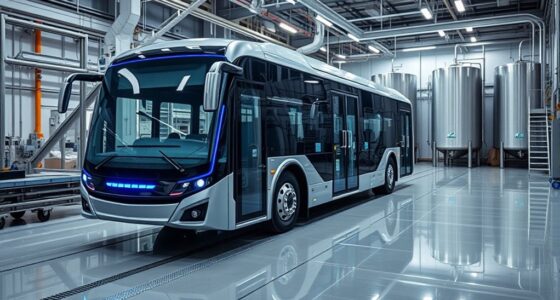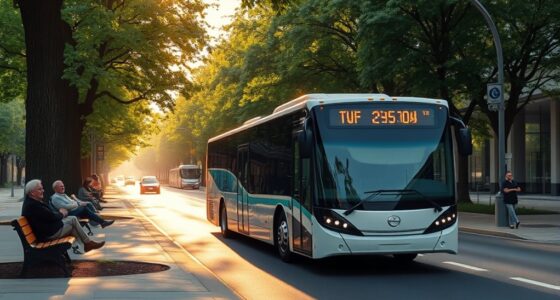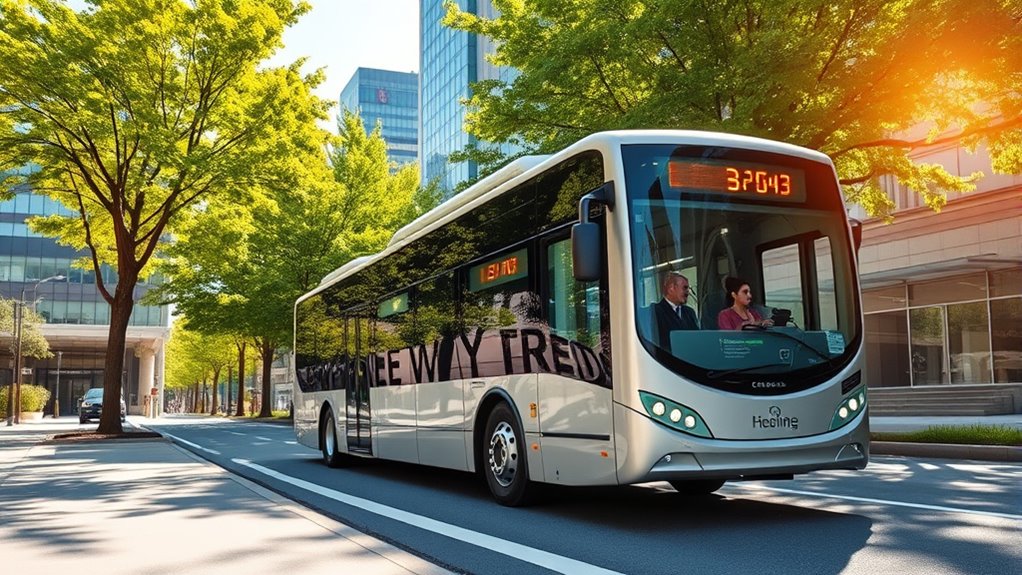

Electric buses are key to reaching net-zero emissions by drastically cutting greenhouse gases and improving urban air quality. They produce fewer emissions over their lifecycle and support the shift to renewable energy sources, which further reduces environmental impact. By replacing traditional diesel buses, you can help lower carbon output and noise pollution, making transportation cleaner and more sustainable. To discover how these innovations are driving change and what the future holds, keep exploring the possibilities.

Get business pricing on monitors, keyboards and dev gear
- Business-only prices and quantity discounts
- Tax-exempt purchasing
- Multiple users, one account, clear invoices
Key Takeaways
- Electric buses drastically reduce greenhouse gas emissions compared to diesel models, supporting net-zero targets.
- Transitioning entire fleets to electric can cut urban transportation emissions by up to 65%.
- Integration of renewable energy sources for charging enhances the zero-emission potential of electric buses.
- Advances in battery tech and charging infrastructure improve range and efficiency, enabling broader adoption.
- Policy mandates and incentives accelerate electric bus deployment, crucial for achieving net-zero emissions goals.

Electric buses are rapidly transforming public transportation by offering a cleaner, more sustainable alternative to traditional diesel and CNG vehicles. As you consider the shift to electric fleets, it’s clear that these buses substantially cut emissions—reducing annual carbon output by about 270,000 pounds per vehicle compared to diesel or CNG models.
Over their entire lifecycle, they emit roughly 0.81 pounds of CO₂ equivalent per passenger mile, which, while slightly higher than earlier estimates, still represents a major step toward reducing greenhouse gases. When you look at a full fleet transition, electrification can cut greenhouse gas emissions by up to 65%, saving around 40 million metric tons over 14 years.
Electric buses reduce greenhouse gases by up to 65%, saving 40 million tons over 14 years.
This shift not only benefits the climate but also improves urban air quality by lowering NOx, particulate matter, and noise pollution, contributing to healthier communities and better respiratory health.
Cost-wise, although electric buses typically come with higher upfront purchase prices, you benefit from lower fuel and maintenance costs over time. Electricity tends to be cheaper per mile than diesel, and as battery prices continue falling, electric buses are projected to reach cost parity with diesel vehicles by 2030.
These savings, combined with federal funding programs like FTA grants, make the transition more financially feasible. You’ll also need to make infrastructure investments—installing charging stations and upgrading electrical systems—but these costs scale down over time and can be offset by operational savings.
Smart planning guarantees charging is efficient and doesn’t strain the grid during peak times, especially if renewable energy sources like solar or wind power are integrated, making your fleet’s operations truly zero-emission.
Policy frameworks are driving your move toward electric buses. Federal mandates prioritize zero-emission transit, while local governments, such as New York City, aim for full electrification by 2040 to meet net-zero targets.
Incentive programs, grants, and tax credits further accelerate adoption, especially in underserved communities where pollution disparities are highest. Regulations are pushing transit agencies to retire diesel fleets quickly, and public-private partnerships support innovative projects and research to improve technology.
Advances in battery technology, wireless charging, regenerative braking, and smart grid integration boost the viability of electric buses. These innovations increase range, reduce charging times, and enable energy recapture—extending operational efficiency and supporting grid stability.
To deploy these buses effectively, your depots will need high-capacity chargers and electrical upgrades, and standardized charging protocols will improve interoperability.
Frequently Asked Questions
What Are the Main Challenges in Adopting Electric Buses Globally?
You face several challenges in adopting electric buses worldwide. Limited range and long charging times can disrupt service.
While high upfront costs and limited financing make purchases difficult. Infrastructure gaps, like insufficient charging stations and grid capacity issues, complicate deployment.
Additionally, weak governance, lack of policy support, and negative public perception hinder progress. Overcoming these hurdles requires coordinated efforts, investment, and supportive policies to fully realize electric buses’ potential.
How Do Electric Buses Impact Urban Air Quality Beyond Emissions?
You see that electric buses improve urban air quality beyond just reducing emissions. They cut down pollutants like NOx, particulate matter, VOCs, and CO, which directly benefit your health.
Their quieter operation also lowers noise pollution, creating a more livable city environment. By making transit cleaner and quieter, you’re likely to notice better air quality, fewer health issues, and a more pleasant urban atmosphere, encouraging you to rely more on public transportation.
What Is the Lifespan Comparison Between Electric and Diesel Buses?
You wonder about the lifespan of electric versus diesel buses. Electric buses typically last around 10 years, mainly limited by battery life, which covers about 700,000 km.
Diesel buses often have a longer lifespan because of their durable engines. However, electric buses require less maintenance, which can extend their effective operational period.
Ultimately, while diesel buses may last longer physically, electric buses offer comparable lifespan with lower maintenance needs.
Are There Government Incentives Supporting Electric Bus Deployment?
Yes, there are government incentives supporting electric bus deployment. You can access grants and funding to help cover purchase costs and infrastructure, making electric buses more affordable.
Tax incentives and operational support, like reduced electricity rates, are also available. These incentives encourage you to adopt electric buses, helping improve air quality, reduce emissions, and support local jobs.
All of these measures work together to advance environmental goals and foster economic growth.
How Do Electric Buses Influence Public Transportation Costs Long-Term?
You’ll find that electric buses lower your long-term public transportation costs by substantially cutting fuel and maintenance expenses. Although upfront costs are higher, savings from reduced fuel use, fewer repairs, and longer-lasting components quickly add up.
With proper route planning, off-peak charging, and available incentives, you’ll likely recoup your investment within five years, making electric buses a cost-effective choice for sustainable, efficient transit operations over time.
Conclusion
Switching to electric buses isn’t just an eco-friendly choice; it’s a strategic move toward achieving net-zero emissions. While some skeptics argue that manufacturing and energy sources might offset benefits, studies show that, over their lifetime, electric buses markedly cut greenhouse gases. Embracing this shift aligns with the theory that technological innovation, when thoughtfully implemented, can overcome initial hurdles and deliver lasting environmental benefits. So, investing in electric buses truly paves the way for a cleaner, sustainable future.
Halloween Picks
halloween
As an affiliate, we earn on qualifying purchases.