
Choosing green hydrogen for buses considerably reduces your environmental impact since it’s produced using renewable energy and emits no carbon during production. In contrast, grey hydrogen comes from natural gas and releases a lot of CO2, contributing to climate change and pollution. By opting for green hydrogen, you support cleaner transportation and healthier communities. If you want to discover how these options compare in detail, keep exploring the benefits and challenges of green versus grey hydrogen.
Key Takeaways
- Green hydrogen produces zero emissions, making it environmentally sustainable for bus fuel; grey hydrogen releases significant carbon emissions.
- Transitioning to green hydrogen reduces pollution, air quality issues, and supports climate change mitigation efforts.
- Green hydrogen supports renewable energy growth and job creation, whereas grey hydrogen relies on fossil fuels and exacerbates environmental degradation.
- Although currently more expensive, green hydrogen technology is becoming more scalable and cost-effective for bus applications.
- Using green hydrogen in buses promotes cleaner transportation, improves public health, and aligns with long-term sustainability goals.
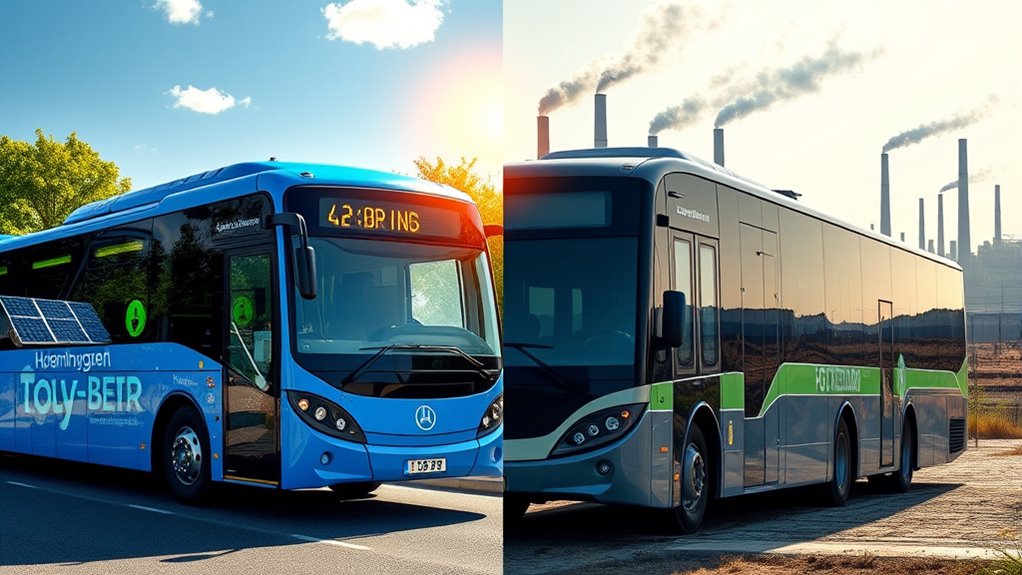
Hydrogen fuel production offers a promising path toward cleaner energy, but it also has significant environmental and societal impacts. When you consider how hydrogen is produced, it’s essential to understand the difference between green and grey hydrogen. Green hydrogen is generated using renewable sources, like wind or solar power, which means it produces no carbon emissions during the production process. This makes green hydrogen a sustainable option that aligns with global efforts to reduce greenhouse gases. On the other hand, grey hydrogen is made from natural gas through a process called steam methane reforming, which releases a substantial amount of carbon emissions into the atmosphere. This process considerably contributes to climate change and air pollution, making grey hydrogen less environmentally friendly.
Green hydrogen produced from renewable sources offers a sustainable, zero-emission alternative to environmentally harmful grey hydrogen.
If you’re thinking about adopting hydrogen fuel for buses, the choice between green and grey hydrogen isn’t just about cost—it’s about environmental responsibility. Using renewable sources to produce green hydrogen ensures that you’re not adding to the existing carbon footprint. Since renewable energy is abundant and becoming more affordable, producing green hydrogen is increasingly feasible and scalable. It allows you to operate your fleet with minimal impact on the environment, helping cities meet emission reduction targets and improve air quality. Conversely, relying on grey hydrogen might seem cheaper upfront, but it perpetuates reliance on fossil fuels and increases carbon emissions, which can undermine your sustainability goals.
The societal impacts of choosing green over grey hydrogen are also profound. Shifting to green hydrogen supports the growth of renewable energy industries, creating jobs and encouraging technological innovation. It promotes energy security by reducing dependence on finite fossil fuel resources and helps communities move toward cleaner air and healthier environments. Conversely, continued use of grey hydrogen contributes to environmental degradation and public health issues caused by air pollution. Additionally, advancements in hydrogen production technology are making green hydrogen more accessible and cost-effective, further supporting its adoption.
While green hydrogen production currently faces challenges like higher costs and the need for extensive infrastructure, advancements in renewable energy technology are making it more accessible. As you consider your options, it’s clear that investing in green hydrogen aligns with long-term sustainability and societal benefits. It offers a way to power buses without exacerbating climate change or pollution, making it an essential part of future transportation strategies. Ultimately, choosing renewable sources for hydrogen production means you’re supporting a cleaner, healthier planet while also promoting economic growth in green industries.
Frequently Asked Questions
How Does Hydrogen Fuel Impact Urban Air Quality?
Hydrogen fuel markedly improves urban air quality by reducing emissions from buses, cutting down on urban pollution. When you switch to hydrogen-powered buses, you’re helping lower harmful pollutants like NOx and particulate matter, which cause smog and health issues. This shift supports emission reduction efforts, making cities cleaner and healthier. Plus, hydrogen fuel produces only water vapor as a byproduct, further enhancing air quality and fostering more sustainable urban environments.
What Are the Long-Term Sustainability Prospects of Green Hydrogen?
Your future with green hydrogen is brighter than a supernova. It holds immense long-term sustainability potential, especially as renewable energy sources expand and technological advancements accelerate. As we improve electrolysis efficiency and reduce costs, green hydrogen could become a cornerstone of clean transportation and industry. This sustainable energy form promises to profoundly cut carbon emissions, making it a viable, eco-friendly solution for decades to come, shaping a cleaner, greener planet.
Are There Regional Differences in Hydrogen Production Costs?
You’ll find significant regional disparities in hydrogen production costs due to factors like local energy prices, infrastructure, and resource availability. Cost variations are influenced by access to renewable energy, technology maturity, and government policies. In some regions, green hydrogen is more affordable because of abundant renewables, while grey hydrogen remains cheaper elsewhere due to lower production costs. These disparities shape the economic viability and adoption of hydrogen for transportation.
How Does Hydrogen Infrastructure Affect Bus Deployment Strategies?
Think of hydrogen infrastructure as the backbone of your bus deployment strategy. You need solid infrastructure planning and efficient supply chain logistics to guarantee seamless fueling stations and reliable hydrogen supply. This foundation influences where buses can operate, how quickly they can be deployed, and their operational costs. Without robust infrastructure, your fleet faces delays and inefficiencies, limiting your ability to expand and meet environmental goals effectively.
What Policies Are Most Effective in Promoting Green Hydrogen Use?
You should advocate for policy incentives like subsidies and tax breaks to encourage green hydrogen adoption. Implementing market regulation that favors renewable hydrogen production over grey hydrogen guarantees a level playing field. These policies make green hydrogen more affordable and attractive for bus operators, accelerating adoption. By prioritizing sustainable fuel sources through targeted incentives and regulations, you help reduce carbon emissions and promote a cleaner, more sustainable transportation future.
Conclusion
As you weigh the impacts of green versus grey hydrogen, one thing remains clear: the future of bus fuel hinges on choices we make today. While green hydrogen promises a cleaner path, its true potential is still unfolding, leaving you to wonder—will it fully revolutionize transportation or stumble before reaching its promise? The stakes are high, and the next move could shape a sustainable world. Are you ready to watch this critical transformation unfold?