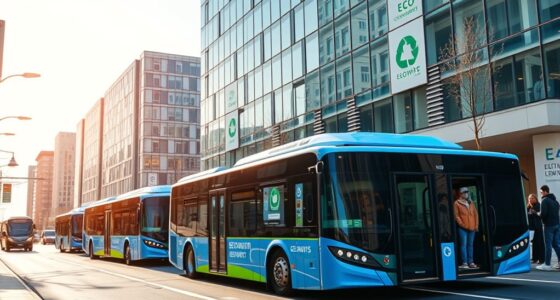
Life cycle assessments help you understand the full environmental impact of bus technologies by examining every stage, from extracting raw materials to disposal. You’ll see that manufacturing energy sources like renewable or fossil fuels profoundly influence emissions, while choosing sustainable materials and recycling can cut resource use. Operational energy, especially if from renewable sources, greatly affects overall footprint. If you want to explore how these factors compare across different bus types, keep exploring these insights.
Key Takeaways
- LCAs evaluate environmental impacts of bus technologies across manufacturing, operation, and end-of-life stages for comprehensive sustainability assessment.
- Manufacturing energy sources, especially renewable versus fossil fuels, significantly influence overall lifecycle emissions of buses.
- Electric buses powered by renewable electricity have lower operational carbon footprints compared to fossil-fuel-powered buses.
- Material choices, including recycled and lightweight components, affect resource depletion and environmental impacts throughout the lifecycle.
- Extended bus lifespan and effective end-of-life recycling strategies enhance sustainability and reduce overall environmental footprints.

Have you ever contemplated the full environmental impact of a product from start to finish? When it comes to bus technologies, this perspective is crucial. Life cycle assessments (LCAs) help you understand how each option affects the environment across all stages, from raw material extraction to disposal. One of the most critical factors in these assessments is the energy source used during manufacturing. Buses powered by renewable energy typically produce fewer manufacturing emissions, as renewable sources like solar, wind, or hydroelectric power generate minimal greenhouse gases during production. Conversely, buses manufactured using fossil fuels tend to have higher emissions, contributing more to climate change even before they hit the road.
Considering full lifecycle impacts, renewable energy reduces manufacturing emissions and boosts overall sustainability of bus technologies.
As you compare different bus technologies, consider that manufacturing emissions are just one piece of the puzzle. The environmental footprint extends to the operational phase, where the type of energy used for powering the bus makes a substantial difference. Electric buses charged with electricity from renewable sources tend to have a much lower overall impact than those charged from grids relying heavily on coal or natural gas. This is because renewable energy ensures that the electricity used during operation doesn’t generate additional emissions, making the entire lifecycle more sustainable.
The choice of materials also influences a bus’s environmental footprint. Buses built with recycled or sustainably sourced materials reduce resource depletion and decrease manufacturing emissions. For example, using lightweight composites can lower energy consumption during production and improve fuel efficiency during operation. Additionally, considering the durability and recyclability of components ensures that the bus’s end-of-life phase won’t result in excessive waste or environmental harm.
Another aspect to contemplate is the lifecycle management of the bus itself. Buses with longer lifespans and easier maintenance options tend to have a lower overall environmental footprint. This is because the impact of manufacturing emissions and resource use is spread over more years of service, making each mile traveled more environmentally friendly. Proper recycling at the end of a bus’s life can further reduce waste and reclaim valuable materials, completing a more sustainable lifecycle.
In essence, when you evaluate bus technologies through a life cycle assessment, it becomes clear that the environmental impact isn’t just about emissions during operation. The type of energy powering the manufacturing process, the choice of materials, and end-of-life management all play essential roles. Prioritizing renewable energy for manufacturing and operation can noticeably reduce the overall footprint, helping you make smarter, more sustainable transportation decisions. Additionally, incorporating natural materials in construction can further lessen environmental impacts and enhance the sustainability of the entire lifecycle.
Frequently Asked Questions
How Do Different Bus Technologies Impact Urban Air Quality?
You’ll notice that electric buses markedly reduce EV emissions and particulate matter compared to diesel options. By switching to electric or hybrid buses, you help lower harmful pollutants in urban air, improving air quality and public health. Their cleaner emissions mean fewer particulates and less smog, making your city’s environment healthier and more breathable. Moving to these technologies is a practical step toward reducing your city’s overall environmental impact.
What Are the Economic Costs Associated With Each Bus Technology?
Like a ledger balancing its scales, your cost analysis reveals that diesel buses often have lower upfront costs but higher ongoing fuel and maintenance expenses. Electric buses require significant infrastructure investment, such as charging stations, increasing initial costs. Hybrid buses strike a balance, but long-term savings depend on fuel prices and technology advancements. Weighing these factors helps you understand the true economic costs of each bus technology to make informed decisions.
How Do Maintenance Requirements Vary Among Bus Types?
You’ll notice that maintenance requirements differ across bus types. Electric buses often have longer battery longevity, reducing frequent replacements, but repair complexity can be higher due to specialized parts. Diesel buses may need more regular engine maintenance, while hybrid models balance the two. Overall, electric buses tend to require less routine maintenance but may need more attention for battery health, impacting long-term upkeep.
What Is the Role of Renewable Energy in Reducing Environmental Footprints?
Renewable energy plays a vital role in reducing your bus’s environmental footprint by enabling renewable integration, which minimizes reliance on fossil fuels. You can implement carbon offset strategies alongside renewable sources, further lowering emissions. This combination helps you cut greenhouse gases, improve sustainability, and promote cleaner transportation. Embracing renewable energy not only benefits the environment but also aligns your operations with global efforts to combat climate change.
How Do Lifecycle Assessments Account for Future Technological Advancements?
You should know that lifecycle assessments account for future innovation by including potential technological advancements and improvements in efficiency. They consider possible benefits from future innovations that could lower environmental impacts. However, they also factor in technological obsolescence, recognizing that older technologies may become less relevant or replaced over time. This approach helps you get an all-encompassing view of a technology’s long-term environmental footprint, balancing current data with potential future changes.
Conclusion
By now, you’ve seen how different bus technologies impact our environment throughout their entire life cycle. Did you know that electric buses can reduce greenhouse gas emissions by up to 50% compared to diesel buses? This staggering number shows the potential for cleaner transit options. Choosing the right technology can markedly cut your community’s carbon footprint. So, next time you ride, think about how these choices shape a greener future for everyone.