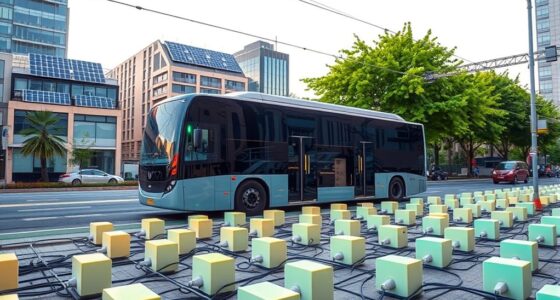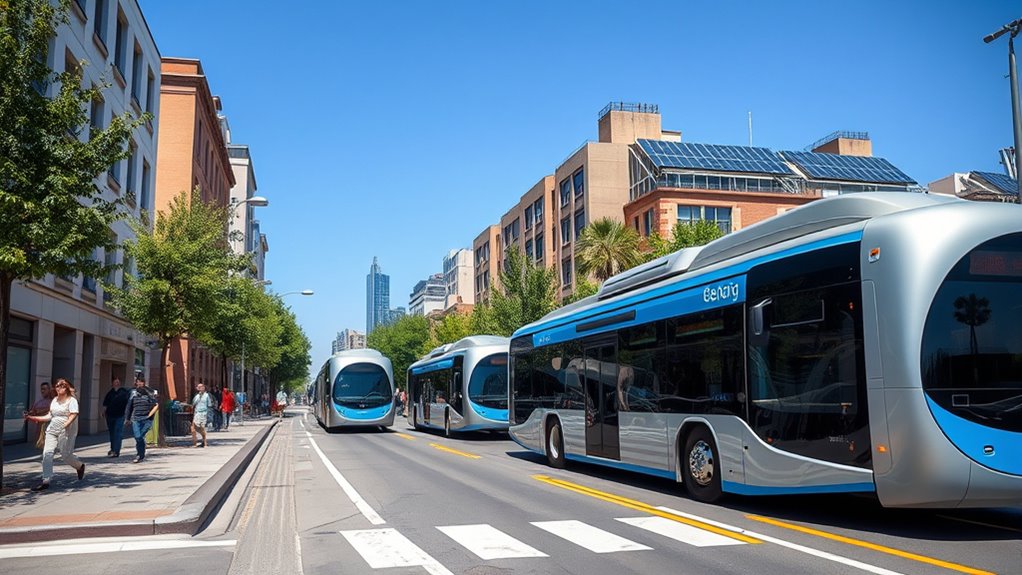

Switching to electric buses helps reduce your reliance on oil by utilizing cleaner, renewable energy sources like solar-powered charging stations. Advanced batteries provide longer ranges and faster charging, making electric buses more reliable and efficient. Integrating renewable energy into your charging infrastructure cuts carbon emissions and strengthens your energy independence. This shift not only boosts transportation resilience but also shields your community from fuel price fluctuations. Discover how these strategies can further enhance your energy security as you explore more options.
Key Takeaways
- Electric buses run on renewable electricity, reducing reliance on imported oil and fossil fuels.
- Advanced batteries enable longer routes and less frequent charging, decreasing dependence on fuel supply chains.
- Integrating solar-powered charging stations minimizes fossil fuel consumption for transit operations.
- Transitioning to electric buses enhances energy independence and stabilizes operational costs.
- Utilizing local renewable energy sources boosts resilience against oil supply disruptions and price volatility.

Electric buses are transforming public transportation by reducing emissions and dependence on fossil fuels. As you consider their impact, it’s clear that advancements in battery technology play a pivotal role. Modern batteries, such as lithium-ion and emerging solid-state types, offer higher energy densities, longer lifespans, and faster charging capabilities. These improvements enable electric buses to travel greater distances on a single charge, making them more practical for daily transit operations. By adopting these advanced batteries, transit agencies can reduce the frequency of charging stops, which minimizes downtime and operational costs. Additionally, improved battery safety and reliability help guarantee that electric buses are a dependable alternative to traditional diesel-powered vehicles. Incorporating reliable backup power solutions can further enhance operational resilience during power disruptions.
Renewable integration is another essential aspect of how electric buses bolster energy security. As you shift away from fossil fuels, integrating renewable energy sources—like solar and wind—into the power grid becomes increasingly important. Electric buses can be charged using clean energy, notably lowering their carbon footprint and reducing reliance on imported oil. In many regions, transit agencies are installing solar panels at depots to generate on-site renewable energy. This setup allows buses to be charged with locally produced, sustainable power, further decreasing oil dependence and enhancing resilience against fuel price fluctuations. When combined with smart grid technology, renewable integration ensures that energy use is optimized, balancing supply and demand efficiently.
Frequently Asked Questions
What Are the Main Barriers to Adopting Electric Buses Globally?
You face barriers like manufacturing challenges, which can limit the quality and availability of electric buses. Infrastructure development also poses hurdles, as charging stations and grid upgrades require significant investment and planning. These factors slow down adoption, especially in regions with limited resources. Overcoming these obstacles involves increasing production capacity and expanding infrastructure, making electric buses more accessible and practical for cities worldwide.
How Do Electric Buses Impact Urban Air Quality?
Sure, electric buses are like the superheroes of city air, swooping in to fight air pollution and boost public health. By zapping away tailpipe emissions, they remarkably improve urban air quality. No more choking on exhaust fumes! Your lungs thank you, and so do your local hospitals. These green giants make cities cleaner, healthier places to breathe, proving that going electric isn’t just smart — it’s essential.
What Is the Lifecycle Cost Comparison Between Electric and Diesel Buses?
You’ll find that electric buses often have higher upfront costs, but their lower lifecycle costs, particularly in maintenance expenses, make them more economical over time. Electric buses require less frequent repairs and have fewer moving parts, which reduces ongoing expenses. While initial investments are higher, the savings in maintenance and fuel make electric buses a cost-effective choice in the long run, improving overall financial sustainability.
How Can Governments Incentivize Electric Bus Adoption?
Governments can incentivize electric bus adoption by offering financial incentives like grants, tax credits, and subsidies to lower initial costs. They should also foster public-private partnerships to share infrastructure development and operational risks. Additionally, establishing favorable policies, such as priority lanes or reduced parking fees, encourages transit agencies to shift. These measures collectively drive adoption, enhance energy security, and reduce reliance on oil.
What Advancements Are Needed to Improve Electric Bus Battery Technology?
To revolutionize electric buses, you need batteries with insanely high energy density, making them last forever without weight issues. Rapid charging infrastructure must be everywhere, so buses refuel in seconds, not hours. Breakthroughs in solid-state batteries could make this possible, drastically boosting range and safety. These advancements will turn electric buses into unstoppable, long-distance, quick-charging marvels, transforming transportation and shattering dependence on oil forever.
Conclusion
Imagine your city’s buses as a fleet of steady, reliable ships sailing toward independence. By switching to electric, you’re steering away from shaky oil sources and toward a cleaner, more secure future. Just like a well-maintained engine runs smoother and longer, electric buses reduce your reliance on unpredictable oil markets. Embracing this change keeps your community moving forward—fueling progress while safeguarding energy security for generations to come.