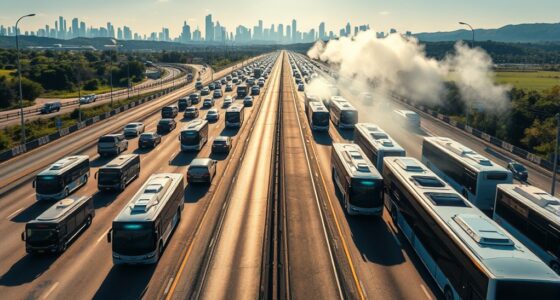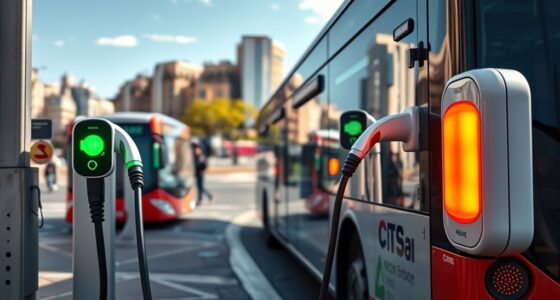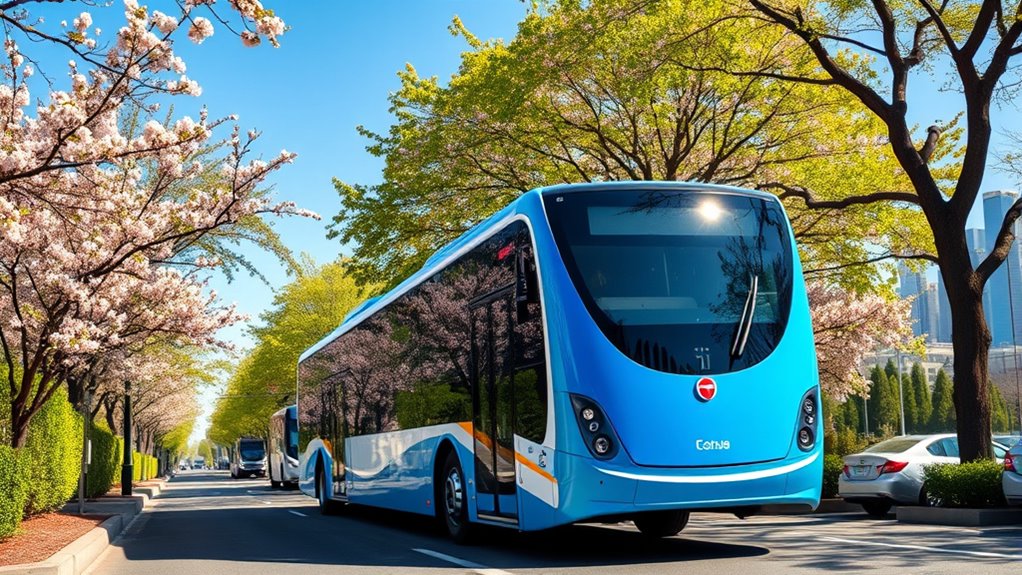

Electric buses help you lower CO₂ emissions by replacing traditional diesel-powered vehicles, especially in urban areas. They produce zero tailpipe emissions and work best when powered by renewable energy sources like wind and solar, further reducing their carbon footprint. Their adoption supports the shift toward cleaner energy and urban sustainability. By choosing electric buses, you contribute to climate change mitigation efforts and cleaner air. To learn more about their impact, keep exploring how these vehicles reshape our environment.

Get business pricing on monitors, keyboards and dev gear
- Business-only prices and quantity discounts
- Tax-exempt purchasing
- Multiple users, one account, clear invoices
Key Takeaways
- Electric buses produce zero tailpipe emissions, directly reducing urban CO₂ levels.
- When powered by renewable energy, they significantly lower the transportation sector’s carbon footprint.
- Widespread adoption supports renewable energy integration, decreasing reliance on fossil fuels.
- Electric buses encourage renewable energy investments, further reducing overall greenhouse gas emissions.
- Transitioning to electric buses contributes to broader climate goals and accelerates climate change mitigation efforts.
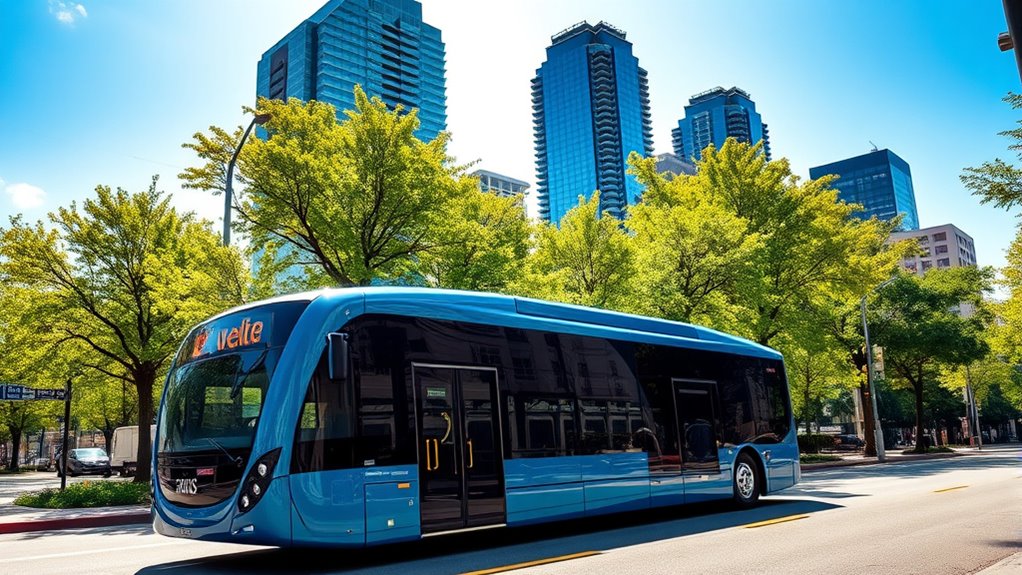
As cities seek effective ways to fight climate change, electric buses have emerged as a powerful tool for reducing carbon dioxide emissions. Their adoption not only cuts greenhouse gases but also supports the broader shift toward renewable energy adoption. When electric buses run on electricity generated from renewable sources like wind or solar, they substantially lower the carbon footprint of urban transportation. This shift helps cities meet their climate goals while reducing reliance on fossil fuels. As more cities invest in clean energy infrastructure, the environmental benefits of electric buses multiply, creating a cleaner, greener urban environment.
Reducing emissions from public transit has a direct impact on urban air quality. Traditional diesel buses emit pollutants like nitrogen oxides and particulate matter, which contribute to smog, respiratory problems, and other health issues. Electric buses produce zero tailpipe emissions, meaning the air remains cleaner and healthier for residents. Improved air quality also translates into fewer hospital visits and lower healthcare costs, making electric buses a smart investment for public health. Additionally, cleaner air enhances the overall quality of life in densely populated areas, making cities more livable and attractive.
Electric buses improve urban air quality by eliminating harmful emissions, leading to healthier residents and cleaner cities.
Implementing electric buses is more than just swapping engines; it’s about creating a sustainable urban mobility system. As you support or advocate for electric bus adoption, consider the importance of integrating renewable energy sources into the grid. Doing so amplifies the environmental benefits, ensuring that the electricity powering these buses comes from clean, renewable sources rather than fossil fuels. This synergy accelerates the transition to a low-carbon economy and helps cities meet ambitious climate commitments.
Moreover, electric buses can serve as catalysts for broader renewable energy adoption. Their charging infrastructure encourages investments in renewable power projects, fostering a cycle of sustainable development. As more electric buses hit the streets, the demand for green energy increases, driving innovation and expanding renewable capacity. This shift benefits not only transportation but also the entire energy landscape, reducing greenhouse gas emissions across sectors. Recognizing the importance of commercial grade heat pumps in building efficiency can further support urban sustainability efforts by reducing energy consumption in municipal facilities and transit hubs.
As an affiliate, we earn on qualifying purchases.
Frequently Asked Questions
How Do Electric Buses Impact Urban Air Quality Beyond Co₂ Reduction?
Electric buses improve urban air quality by reducing air pollution from exhaust emissions, decreasing harmful pollutants like NOx and particulate matter. They also substantially cut noise pollution, creating a quieter, healthier city environment. You’ll notice less engine noise and cleaner air around bus routes, making daily commutes more pleasant and safer. These benefits help protect your health and enhance overall urban living conditions, contributing to a more sustainable and livable city.
What Are the Long-Term Economic Benefits of Electric Bus Adoption?
You’ll find that adopting electric buses offers long-term economic benefits through significant cost savings on fuel and maintenance. While initial investments might seem high, they’re offset by reduced operating costs over time. Plus, this shift creates new jobs in manufacturing, charging infrastructure, and maintenance, boosting local economies. Ultimately, embracing electric buses helps you save money and fosters job growth, making your transportation system more sustainable and economically resilient in the future.
How Do Electric Buses Compare to Hybrid Models in Emission Reductions?
You’ll find electric buses generally produce fewer emissions than hybrid models, especially over their battery lifecycle, since they rely solely on electricity and not fossil fuels. They also benefit from developing charging infrastructure, which makes recharging more efficient and sustainable. Hybrids, while better than traditional buses, still emit some pollutants during their operation, so electric buses are a clearer choice for reducing overall emissions and achieving long-term environmental goals.
What Infrastructure Investments Are Required for Large-Scale Electric Bus Deployment?
Think of deploying electric buses like building a bridge—they need proper infrastructure. You’ll require numerous charging stations strategically placed along routes to keep buses ready. Additionally, grid upgrades are essential; just as a road needs smooth paving, the power grid must handle increased load. Investing in these components guarantees reliable operations, making large-scale electric bus deployment feasible and efficient, ultimately helping you reduce emissions and improve urban air quality.
How Does Battery Recycling Influence the Environmental Footprint of Electric Buses?
Battery recycling substantially reduces the environmental footprint of electric buses by extending battery life and minimizing waste. When you implement efficient recycling processes, you prevent harmful materials from polluting the environment and conserve resources for reuse. This means fewer new batteries need to be produced, cutting down on raw material extraction. By prioritizing recycling, you make electric bus fleets more sustainable and eco-friendly, helping to lower overall CO₂ emissions and promote greener transportation.
renewable energy solar panel kit
As an affiliate, we earn on qualifying purchases.
As an affiliate, we earn on qualifying purchases.
Conclusion
By switching to electric buses, you’re steering your community away from the storm of climate change. These clean vehicles act like a gust of fresh air, clearing the smog of CO₂ emissions and paving a greener road ahead. Every electric bus on the road is a step towards a healthier planet, showing that small changes can create a ripple effect. Together, you’re charting a course to a sustainable future, turning the wheels toward hope and resilience.
As an affiliate, we earn on qualifying purchases.
As an affiliate, we earn on qualifying purchases.
Fall Picks
fall essentials
As an affiliate, we earn on qualifying purchases.