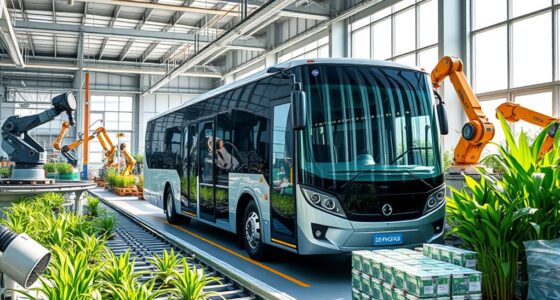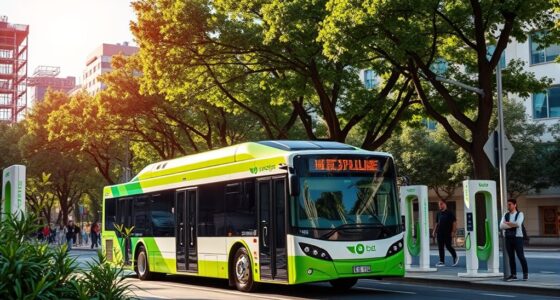

Lifecycle emissions of bus batteries come from multiple stages, starting with raw material extraction that disturbs ecosystems and uses water. During manufacturing, energy consumption and emissions depend on sourcing—especially if non-renewable. Throughout their use, emissions can be reduced with cleaner energy, but they spike again at the end of life without recycling. Proper recycling recovers valuable materials and cuts down on environmental harm. Learn how sustainable practices can lower your transportation footprint if you keep exploring.
Key Takeaways
- Emissions originate from raw material extraction, manufacturing, and disposal stages, impacting overall lifecycle greenhouse gases.
- Mining of lithium, cobalt, and nickel causes environmental disturbance, resource depletion, and water consumption.
- Manufacturing processes release pollutants and depend on non-renewable energy sources, increasing emissions.
- Recycling end-of-life batteries recovers materials, reducing the need for new extraction and associated emissions.
- Implementing renewable energy and sustainable practices across all stages can significantly lower lifecycle emissions.

Understanding the full environmental impact of bus batteries requires examining their entire lifecycle, from raw material extraction to disposal. When you consider battery manufacturing, you’re looking at the processes involved in transforming raw materials into usable battery components. This stage is energy-intensive, often relying on fossil fuels, which contribute profoundly to greenhouse gas emissions. Mining for materials like lithium, cobalt, and nickel involves large-scale operations that can disturb ecosystems, consume vast amounts of water, and produce harmful waste. As you evaluate the environmental footprint, keep in mind that the extraction process itself can be resource-depleting and environmentally disruptive.
Once these materials are processed, they move into the manufacturing phase. Here, you should recognize that producing a bus battery isn’t just about assembling parts; it involves complex chemical processes that can release pollutants if not carefully managed. The energy used during manufacturing—especially if derived from non-renewable sources—adds to the total emissions associated with the battery. This stage sets the foundation for the battery’s overall environmental impact, emphasizing the importance of cleaner manufacturing technologies and sustainable sourcing practices.
Producing bus batteries involves complex chemical processes and energy use that impact the environment.
As the battery reaches the end of its operational life, end of life recycling becomes vital. Proper recycling can markedly reduce the environmental burden by recovering valuable materials that would otherwise be discarded. When you properly recycle bus batteries, you help decrease the need for new raw material extraction, consequently lowering emissions from mining and processing activities. Recycling also prevents hazardous materials from leaching into soil and water, protecting ecosystems and communities. However, the efficiency of recycling depends on advanced technologies and infrastructure, which are still developing in many regions. If you neglect recycling, you risk increasing waste and environmental contamination, making the entire lifecycle more harmful.
Throughout the battery’s life, emissions are generated at each stage—mining, manufacturing, and disposal. While innovations are making strides in reducing these impacts, it’s clear that a holistic approach is necessary. You can support efforts to improve battery manufacturing processes, advocate for sustainable material sourcing, and promote effective end of life recycling programs. Additionally, the integration of renewable energy sources into manufacturing and transportation can significantly lower the lifecycle emissions of batteries. By understanding and addressing each phase of the lifecycle, you contribute to minimizing the environmental footprint of bus batteries, helping create a cleaner, more sustainable transportation future.

EZ on the Earth – Dry Cell Battery Recycling Container Kit – 1 Gallon Battery Recycling Pail – Pre-Paid/Mail-Back Recycle kit that Holds up to 13.2 lbs Batteries – Recycling Pail with Cardboard Box
UN Approved Container for Dry Cell Batteries — Easily recycle various dry cell batteries such as Alkaline, Nickel…
As an affiliate, we earn on qualifying purchases.
As an affiliate, we earn on qualifying purchases.
Frequently Asked Questions
How Do Battery Recycling Methods Impact Overall Emissions?
Battery recycling methods substantially reduce overall emissions by enabling efficient battery collection and using advanced recycling technology. When you support proper collection systems, fewer batteries end up in landfills, decreasing environmental harm. Recycling technology helps recover valuable materials, lowering the need for new resource extraction and cutting emissions from manufacturing. Your participation in responsible recycling directly contributes to minimizing lifecycle emissions and promotes a more sustainable approach to bus battery use.
What Innovations Are Reducing Mining-Related Environmental Impacts?
Mining innovations, like robotic extraction and eco-friendly processing techniques, are markedly reducing environmental impacts. You benefit from cleaner extraction methods that cut down on land disturbance and water usage, while advanced technologies minimize harmful emissions. These innovations also promote sustainable resource use by increasing efficiency and reducing waste. As a result, you help lower the carbon footprint associated with battery production, making electric buses a greener transportation option.
How Does Battery Longevity Influence Lifecycle Emissions?
Your battery longevity directly impacts lifecycle emissions because less degradation means fewer replacements, reducing associated manufacturing and disposal impacts. When you implement effective replacement strategies, you extend battery life, lowering the frequency of new batteries needed and cutting down emissions from production and recycling. By monitoring and managing battery degradation proactively, you maximize efficiency, minimize environmental impact, and contribute to a more sustainable lifecycle for bus batteries.
Are Second-Hand Bus Batteries More Eco-Friendly?
Yes, second-hand batteries are generally more eco-friendly because they extend the battery’s useful life, reducing demand for new ones and lowering overall lifecycle emissions. By reusing these batteries, you decrease environmental impact associated with mining, manufacturing, and disposal. This approach minimizes resource extraction and waste, making it a sustainable choice. So, opting for second-hand batteries helps you contribute to a greener, more eco-conscious transportation system.
What Policies Promote Sustainable Battery Production and Disposal?
Think of policies as the compass guiding your battery journey. They promote sustainable production and disposal by regulating battery supply chains, ensuring responsible sourcing, and incentivizing recycling programs. Governments also push for renewable energy integration, powering manufacturing with cleaner sources. These policies act like a steady wind beneath your wings, helping you reduce emissions and environmental impact from raw material extraction to end-of-life disposal.

SHONAN Pure Nickel Strips for Lithium Battery Packs- 0.1x5mm 32 ft, 99.6% Purity Nickel Strips for Battery Spot Welding
99.6% PURITY: 99.6% pure nickel strip is the material you want, the nickel strip here will never corrode…
As an affiliate, we earn on qualifying purchases.
As an affiliate, we earn on qualifying purchases.
Conclusion
By understanding the full lifecycle emissions of bus batteries, you realize the true environmental impact of your transit choices. Did you know that recycling just 1 ton of lithium batteries can save up to 70% of the raw material energy? This highlights how recycling can markedly reduce emissions and conserve resources. So, supporting battery recycling efforts isn’t just good for the planet—it’s essential for a cleaner, more sustainable future for public transportation.

Schumacher Electric 1.5A Car Battery Charger and Maintainer, 3-in-1 Solution, for 6V/12V Power Sport, Automotive, and Marine Batteries, SC1355.
PREVENT BATTERY FAILURE: Ensure reliable starts after storage with this 3-in-1 device that charges, maintains, and reconditions batteries…
As an affiliate, we earn on qualifying purchases.
As an affiliate, we earn on qualifying purchases.

From Zero to Battery Hero: Learn How BESS Works — Within three days! A Friendly Guide for professionals with Zero Background in Battery Energy Storage Systems industry
As an affiliate, we earn on qualifying purchases.
As an affiliate, we earn on qualifying purchases.