EV tires aren’t a gimmick—they’re specially built to handle the high torque and silent operation of electric vehicles. You’ll notice they have reinforced sidewalls, advanced compounds, and lighter materials to boost efficiency and durability. Their unique tread designs reduce noise and vibrations, making your ride smoother. Low rolling resistance extends your EV’s range, while improved materials enhance safety and longevity. Want to learn more about how these changes impact your EV experience? Keep exploring for the full details.

Get business pricing on monitors, keyboards and dev gear
- Business-only prices and quantity discounts
- Tax-exempt purchasing
- Multiple users, one account, clear invoices
Key Takeaways
- EV tires feature reinforced sidewalls and advanced compounds to handle high torque without excessive wear.
- They incorporate specialized tread designs and noise-reduction features for quieter, smoother rides.
- Low rolling resistance materials extend range and improve energy efficiency in electric vehicles.
- Rigorous testing ensures durability, safety, and performance tailored to EV driving conditions.
- Innovations like lightweight construction and adaptive structures optimize efficiency and longevity under real-world use.
As an affiliate, we earn on qualifying purchases.
Why Do Electric Vehicles Need Special Tires?

Electric vehicles require special tires because they handle the unique demands of silent, high-torque motors. These motors deliver instant power, which puts extra stress on tires to maintain efficiency and performance. Special EV tires help improve battery efficiency by reducing rolling resistance, so your vehicle uses less energy and extends range. Additionally, as charging infrastructure expands, drivers expect consistent performance, making tire durability even more important. You’ll notice that these tires are designed to handle immediate torque without excessive wear, ensuring your EV remains reliable on long trips and during frequent charging. Properly engineered tires optimize energy use and support the overall efficiency of your vehicle, making your driving experience smoother, more efficient, and better suited to the demands of electric mobility. Tire design considerations also influence overall vehicle safety and longevity, as they are tailored to meet the specific performance requirements of electric vehicles. Incorporating advanced material technology allows these tires to better withstand the stresses of high-torque acceleration, which is crucial for maintaining tire longevity and performance. Moreover, these specialized tires contribute to noise reduction, enhancing the quiet ride that electric vehicles are known for.
As an affiliate, we earn on qualifying purchases.
How Are EV Tires Built Differently From Conventional Tires?
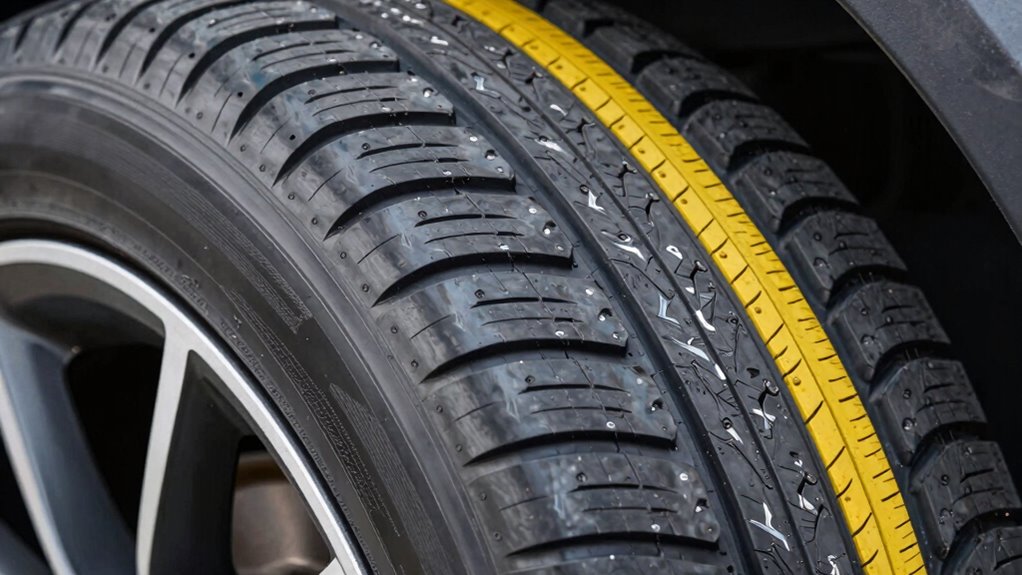
Because they face different stresses and performance demands, EV tires are built with specialized materials and manufacturing processes that set them apart from conventional tires. You’ll notice these differences in several key areas:
EV tires feature specialized materials and manufacturing to meet unique stresses and demands.
- Tire materials: EV tires use advanced compounds to enhance durability and reduce rolling resistance, helping improve range. These materials are chosen to withstand the unique wear patterns caused by electric vehicle acceleration and deceleration. Incorporating advanced rubber compounds further enhances their performance and longevity.
- Reinforced sidewalls: These withstand the higher torque from instant acceleration and braking.
- Manufacturing processes: Precision techniques ensure uniformity, minimizing vibrations and noise.
- Weight optimization: Lighter materials are incorporated to reduce overall weight, boosting efficiency.
- High-performance coatings: These improve color accuracy and resistance to wear, ensuring consistent performance over time.
These design modifications help EV tires handle the unique demands of electric vehicles while maintaining safety, performance, and efficiency.
noise reduction tires for electric vehicles
As an affiliate, we earn on qualifying purchases.
As an affiliate, we earn on qualifying purchases.
How Tread Design and Noise Reduction Improve EV Comfort
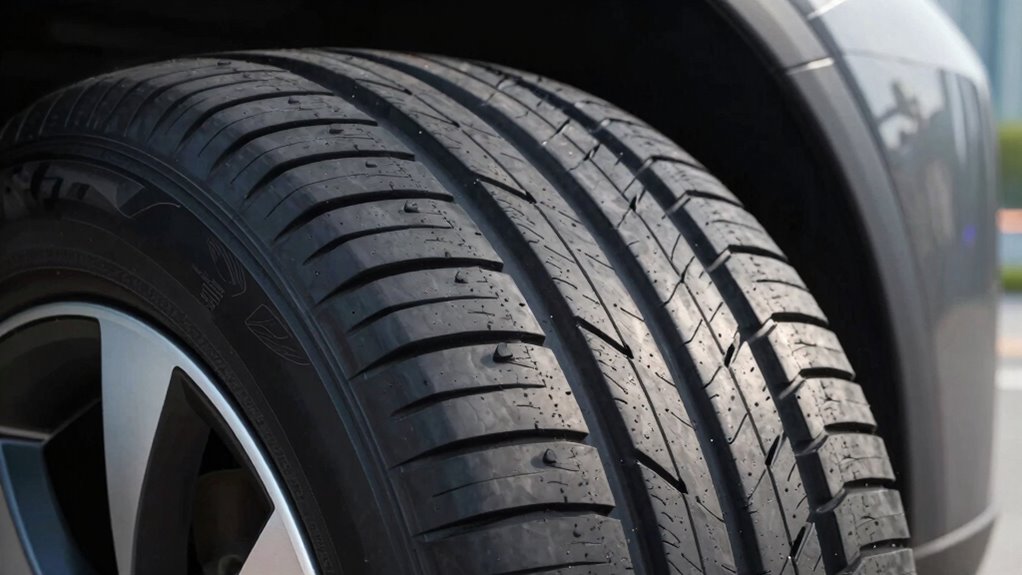
The unique stresses faced by EV tires make their tread design and noise reduction features essential for a comfortable ride. You’ll notice that tire material plays a key role in dampening vibrations and minimizing noise, creating a quieter cabin experience. Advanced tread patterns are engineered to reduce road noise by dispersing sound waves and limiting contact noise. These designs often include specific siping and variable pitch arrangements that break up noise frequencies. By optimizing both tire material and tread pattern, manufacturers boost comfort without sacrificing safety or efficiency. This focus on noise reduction and tread design ensures your EV remains smooth and quiet, even at higher speeds. Moreover, Free Floating tire constructions can further enhance ride comfort by allowing the tire to adapt more dynamically to road irregularities. Additionally, tread design innovations are continually evolving to meet the specific demands of electric vehicles, emphasizing both performance and comfort. One notable aspect is the use of advanced materials that improve durability and vibration dampening. Incorporating tire technology advancements enables manufacturers to better address the unique stresses of EV tires, resulting in improved longevity and performance. To maximize comfort, manufacturers are increasingly integrating noise-reducing features into tire design, addressing the needs of electric vehicle drivers. Ultimately, these features help deliver a more refined, enjoyable driving experience tailored to the unique demands of electric vehicles.
lightweight electric vehicle tires
As an affiliate, we earn on qualifying purchases.
As an affiliate, we earn on qualifying purchases.
Why Is Low Rolling Resistance Important for EV Range?

Reducing rolling resistance in your tires is essential because it directly impacts the distance you can travel on a single charge. When your tires roll more efficiently, your EV uses less energy to overcome friction, improving battery efficiency and conserving energy. Here’s why low rolling resistance matters:
- It minimizes energy loss during driving, extending your range.
- It reduces the workload on your motor, saving battery power.
- It helps maintain consistent performance over time.
- It supports overall energy conservation, making your EV more eco-friendly.
- Additionally, adopting climate-conscious tire technologies aligns with sustainable and impact-focused practices in the automotive industry. Understanding the importance of eco-friendly materials can further enhance your vehicle’s efficiency and sustainability.
- Incorporating advanced tire compounds can optimize rolling resistance without compromising traction or safety.
- Innovations in fabric technology are increasingly used in tire manufacturing to develop sustainable and durable materials that reduce environmental impact. Moreover, ongoing research into low-friction materials continues to drive improvements in tire performance and environmental sustainability.
What Should You Consider When Choosing EV Tires?
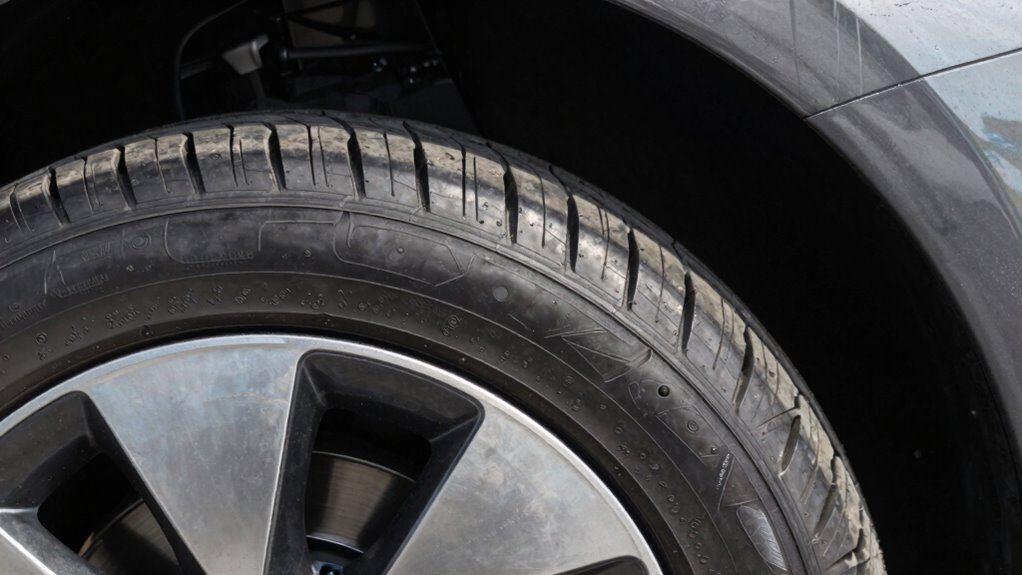
When selecting EV tires, it’s crucial to take into account how well they balance efficiency, durability, and safety. Focus on tire lifespan, as longer-lasting tires can save you money over time by reducing replacement frequency. Consider cost considerations carefully; while premium tires may offer better performance, they often come with higher upfront expenses. Think about how the tire’s materials and construction impact energy efficiency and grip, especially since EVs rely heavily on ideal traction and low rolling resistance. Don’t overlook reviews and manufacturer recommendations to ensure the tires meet your driving needs. Additionally, understanding the predictive validity of different tests can help you better assess your personal needs and priorities when selecting the right tires. It’s also important to consider how tires are tested for performance metrics, as these can provide insights into real-world behavior and longevity. Moreover, paying attention to how tires are evaluated based on testing standards can give you a clearer picture of their real-world performance. Staying informed about testing procedures used by manufacturers can further aid in making a well-rounded decision. For example, examining durability tests can reveal how well tires hold up over time and under various conditions. Ultimately, choosing the right EV tires involves balancing immediate costs with long-term benefits, ensuring your vehicle remains efficient, safe, and economical over its lifespan.
Frequently Asked Questions
How Long Do EV Tires Typically Last Compared to Conventional Tires?
EV tires typically last about 30% longer than conventional tires because of reduced tire wear and better tread life. You might find they wear more slowly due to lower rolling resistance and less heat generated during driving. As a result, you could enjoy extended tire durability, saving you money and hassle over time. Keep in mind, proper maintenance also plays a key role in maximizing their lifespan.
Are EV Tires More Expensive Than Standard Tires?
Yes, EV tires tend to be more expensive than standard tires due to advanced tire technology designed for electric vehicles. The cost comparison shows these tires incorporate specialized materials and construction to handle increased torque and weight. While you’ll pay a premium upfront, their durability and efficiency can save you money in the long run, making them a worthwhile investment for optimizing your EV’s performance.
Can I Use Regular Tires on My Electric Vehicle?
You can use regular tires on your electric vehicle, but it’s better to choose eco-friendly materials and consider tire recycling options. EV tires are designed for efficiency and durability, helping you maximize range and reduce environmental impact. Using standard tires might work temporarily, but upgrading to EV-specific tires ensures peak performance and sustainability. Always check manufacturer recommendations to keep your vehicle running smoothly and minimize your carbon footprint.
Do EV Tires Require Special Maintenance or Rotation?
Think of your EV tires like the tires on a race car—they need regular check-ups. You should routinely monitor tire pressure and tread depth, especially since EV tires wear differently due to instant torque. Rotate your tires every 5,000 to 8,000 miles to guarantee even wear and peak performance. Proper maintenance keeps your EV running smoothly, saving you money and extending tire life.
How Do EV Tires Perform in Extreme Weather Conditions?
In extreme weather, EV tires perform well when properly maintained. Cold temperatures can reduce tread wear and affect grip, so you should check tire pressure regularly to maintain battery efficiency. In hot conditions, high temperatures can accelerate tread wear, so confirm your tires are suited for such climates. Overall, good maintenance helps EV tires deliver ideal performance and safety, even in challenging weather, keeping your battery efficiency intact.
Conclusion
Choosing the right EV tires is like fine-tuning a symphony—you’ll enjoy smoother rides, quieter drives, and longer range. By understanding what makes these tires unique, you can make smarter choices that boost your vehicle’s performance and comfort. Don’t settle for just any tire; think of it as the heartbeat of your EV journey. With the right tires, every drive becomes a harmonious blend of power, efficiency, and peace of mind.
Halloween Picks
halloween
As an affiliate, we earn on qualifying purchases.