
TL;DR

Get business pricing on monitors, keyboards and dev gear
- Business-only prices and quantity discounts
- Tax-exempt purchasing
- Multiple users, one account, clear invoices
Hugging Face has announced Grabette, a portable system that captures human manipulation demonstrations without a robot. It converts recordings into datasets for training robots, aiming to lower data collection costs and enable broader research collaboration.
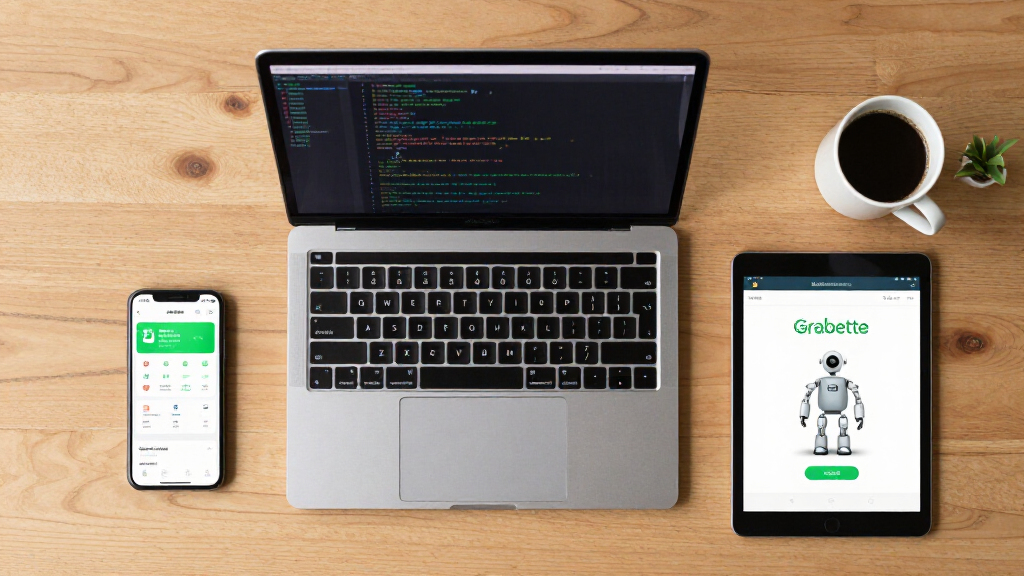
Hugging Face has introduced Grabette, an open-source, handheld data collection system designed to record human manipulation demonstrations without requiring a robot during collection. You can find more details in the original analysis. The device captures detailed sensor data and converts it into datasets compatible with robot training pipelines, aiming to lower the barriers to large-scale data collection for robot learning.
Grabette combines a handheld gripper, two cameras, an inertial measurement unit, and magnetic encoders, all powered by a Raspberry Pi. This approach aligns with recent innovations in robot data collection systems. During demonstration, users press a button, perform a task, then press again to save the episode locally. These recordings are uploaded via a browser-based dashboard to the Hugging Face Hub, where the system’s processing pipeline, including RTAB-MAP for trajectory recovery, converts the data into LeRobot format for training.
The system is estimated to cost around €490 in hardware, with an optional motorized end effector called Gripette costing about €120. All hardware files, software, and example workflows are open-source, encouraging community participation. The goal is to enable researchers to collect diverse manipulation data more easily and cost-effectively, without the need for dedicated robot setups during demonstration collection. For background, see the detailed report on open systems for robot data recording.
Impact on Robot Data Collection and Research Collaboration
Grabette addresses a persistent challenge in robot learning: the high cost and complexity of collecting large, varied manipulation datasets. By enabling humans to record demonstrations without operating a robot, it potentially expands access to data collection, allowing more institutions and researchers to contribute. The use of standard LeRobot datasets may facilitate cross-platform sharing and training, accelerating progress in robot manipulation skills. However, the system’s performance and reliability are yet to be independently validated, which will influence its adoption and impact.
handheld robot data collection device
As an affiliate, we earn on qualifying purchases.
As an affiliate, we earn on qualifying purchases.
Background and Foundation of Grabette’s Development
The concept of handheld data collection for robot learning was inspired by Stanford researchers’ Universal Manipulation Interface (UMI), which combined a handheld gripper and fisheye camera with SLAM techniques to record manipulation tasks outside fixed labs. Hugging Face credits UMI’s approach as foundational. Prior commercial options from companies like Agibot and Genrobot have existed, but Grabette’s open hardware and software ecosystem aims to democratize access, building on prior research and open-source trends in robotics.
“”The bottleneck isn’t the model. It’s the data.””
— Hugging Face Grabette team
portable manipulation demonstration recorder
As an affiliate, we earn on qualifying purchases.
As an affiliate, we earn on qualifying purchases.
Unverified Performance and Adoption Challenges
The announcement does not include independent testing results or peer-reviewed validation of Grabette’s accuracy, reliability, or robustness in various scenarios. It remains unclear how well the system tracks fast movements, occlusions, or reflective surfaces, and whether the datasets collected are sufficiently diverse and high-quality for training effective policies. Licensing, contribution governance, and long-term support also remain unspecified, which could impact widespread adoption.
Raspberry Pi sensor data capture kit
As an affiliate, we earn on qualifying purchases.
As an affiliate, we earn on qualifying purchases.
Next Steps for Community Testing and Dataset Expansion
The immediate focus will be on community members reproducing the hardware and software setup, recording diverse demonstrations, and uploading datasets to the Hugging Face Hub. Future milestones include validation of dataset quality, tracking accuracy, and policy transferability across different robot platforms. Updates to documentation, licensing, and benchmarking will clarify Grabette’s role in large-scale collaborative research efforts.
As an affiliate, we earn on qualifying purchases.
Key Questions
What exactly is Grabette used for?
Grabette is a handheld device that records human demonstrations of manipulation tasks, capturing camera, depth, motion, and gripper data for robot training datasets.
Does Grabette require a robot during demonstration?
No, the system is designed to record human manipulation without operating a robot, making data collection more accessible and flexible.
Can I contribute my own datasets using Grabette?
Yes, the system is open-source and encourages users to record tasks and upload datasets via the Hugging Face Hub for community use and research collaboration.
What are the hardware costs involved?
The estimated cost for the core hardware is around €490, with an additional €120 for the motorized end effector, Gripette, though actual prices may vary.
When will we see validated performance results?
Independent testing and validation are still pending; future updates will clarify Grabette’s reliability and effectiveness in various scenarios.
Source: ThorstenMeyerAI.com
Halloween Picks
halloween
As an affiliate, we earn on qualifying purchases.